
Vai al contenuto
Atlas Anatolia
NotizieIce Age teeth in Sulawesi push betel-nut use back as far as 25,000 yearsRoman mosaic and Eros head uncovered in the basilica at Pompeiopolis, Kastamonu
Illuminated columns reflected in water inside the Basilica Cistern, Istanbul

Wikimedia Commons (CC BY-SA 4.0)

Record nazionale

Oldest Complex in Turkey

PatrimonioComplesso

Basilica Cistern

Seyfi Cem Baskin

Yerebatan Sarnıcı527 d.C. – 1453 d.C.

The vast Byzantine cistern beneath Istanbul's Sultanahmet — 336 marble columns reflected in dim water, including the famous Medusa-head bases — is one of Turkey's most searched underground monuments and a essential counterpoint to the mosques above.

21
Interesse 72

Posizione

Turchia

41.01°N · 28.98°E · Europa

Built

6th century CE under Justinian I

Columns

336 marble columns in 12 rows

Capacity

~80,000 m³ stored water

Rediscovered

Petrus Gyllius, 1545

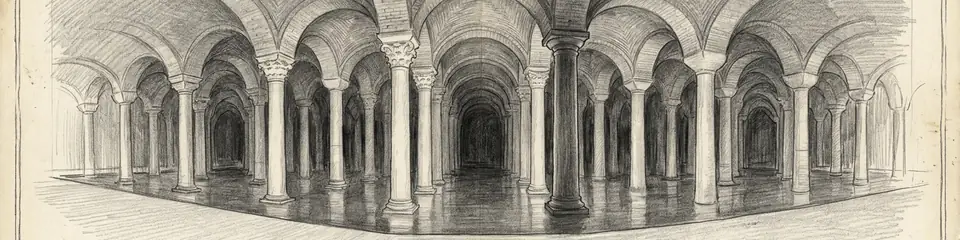
Graphite pencil sketch banner of Basilica Cistern

The Basilica Cistern reveals Byzantine Constantinople's hidden infrastructure — the water storage that made a million-person capital possible on a peninsula with limited freshwater.”

Posizione

Panoramica

The Basilica Cistern (Yerebatan Sarnıcı, "Sunken Cistern") lies a few metres below street level in Istanbul's Sultanahmet district, a short walk from Hagia Sophia and the Blue Mosque. Emperor Justinian I built it in the 6th century CE to store filtered water for the Great Palace and nearby buildings. The name "Basilica" comes from a public square that once stood above.

The chamber measures about 138 by 65 metres and can hold roughly 80,000 cubic metres of water. Three hundred thirty-six columns — mostly Ionic and Corinthian capitals recycled from earlier structures — rise from the floor in twelve rows. Two columns rest on carved Medusa heads, one inverted and one sideways, probably placed for size rather than superstition though legends flourish. Walkways installed in the 1980s let visitors circle the forest of columns above ankle-deep water stocked with carp.

Ottoman sultans maintained the cistern until modern pipes made it redundant; it was forgotten by many until the French scholar Petrus Gyllius rediscovered it in 1545. Today it is a museum and occasional concert venue. Its cool, mirrored darkness offers a radically different sensory experience from the sunlit domes overhead.

Perché è importante

The Basilica Cistern reveals Byzantine Constantinople's hidden infrastructure — the water storage that made a million-person capital possible on a peninsula with limited freshwater. Its spolia columns and Medusa bases document how Justinian's builders recycled the city's pagan and early Christian past into imperial utility.

Evidenze e interpretazione

Distinguere ciò che è ben consolidato da ciò che rimane dibattuto.

Fatti ben consolidati

2
  • Byzantine brick stamps and hydrological connections link cistern to Justinian's palace water system.
  • Column capitals show reused Early Christian and pagan spolia from earlier Constantinople buildings.

Deduzioni accademiche

1
  • Medusa heads placed for column height fit — apotropaic interpretation is popular but unproven.

Foto della comunità

Condividi la tua esperienza

Hai visitato questo sito? Carica le tue foto per aiutare gli altri a scoprirlo.

Come citare questa pagina

Atlas Anatolia. (527). Basilica Cistern. Atlas Anatolia. https://atlasanatolia.com/it/site/basilica-cistern

Contenuto con licenza CC BY-SA 4.0 — è richiesta l'attribuzione in caso di riutilizzo.

Fonti

  • Byzantine ArchitectureMango, Cyril (1976)
  • On Buildings (De Aedificiis)Procopius (555)

Domande frequenti

Dove si trova Basilica Cistern?

Basilica Cistern si trova in Turkey.

A quando risale Basilica Cistern?

Basilica Cistern risale all'incirca al 527 d.C. – 1453 d.C..

Quali civiltà sono associate a Basilica Cistern?

Basilica Cistern è associato alla civiltà Roman, Byzantine.

Perché Basilica Cistern è importante?

The Basilica Cistern reveals Byzantine Constantinople's hidden infrastructure — the water storage that made a million-person capital possible on a peninsula with limited freshwater.

Basilica Cistern è un sito Patrimonio Mondiale dell'UNESCO?

Basilica Cistern non è attualmente iscritto nella lista del Patrimonio Mondiale dell'UNESCO.