
Saltar al contenido
Atlas Anatolia
NoticiasIce Age teeth in Sulawesi push betel-nut use back as far as 25,000 yearsRoman mosaic and Eros head uncovered in the basilica at Pompeiopolis, Kastamonu
The Great Tumulus and royal tomb complex at Vergina (ancient Aigai), first capital of Macedon, Greece

Wikimedia Commons

Récord continental

Oldest Necropolis in Europe

NecrópolisUNESCO

Vergina

Seyfi Cem Baskin

Βεργίνα650 a. C. – 168 a. C.

Ancient Aigai, the first capital of the kingdom of Macedon and its royal necropolis — site of Greek archaeologist Manolis Andronikos's spectacular 1977 discovery of unlooted royal tombs beneath the Great Tumulus, including a golden larnax bearing the Macedonian sunburst emblem that Andronikos identified as the remains of King Philip II, father of Alexander the Great. The attribution remains debated among specialists, but the tombs' untouched contents make Vergina one of the richest and most important royal burial discoveries in the history of Greek archaeology.

211
Interés 60

Ubicación

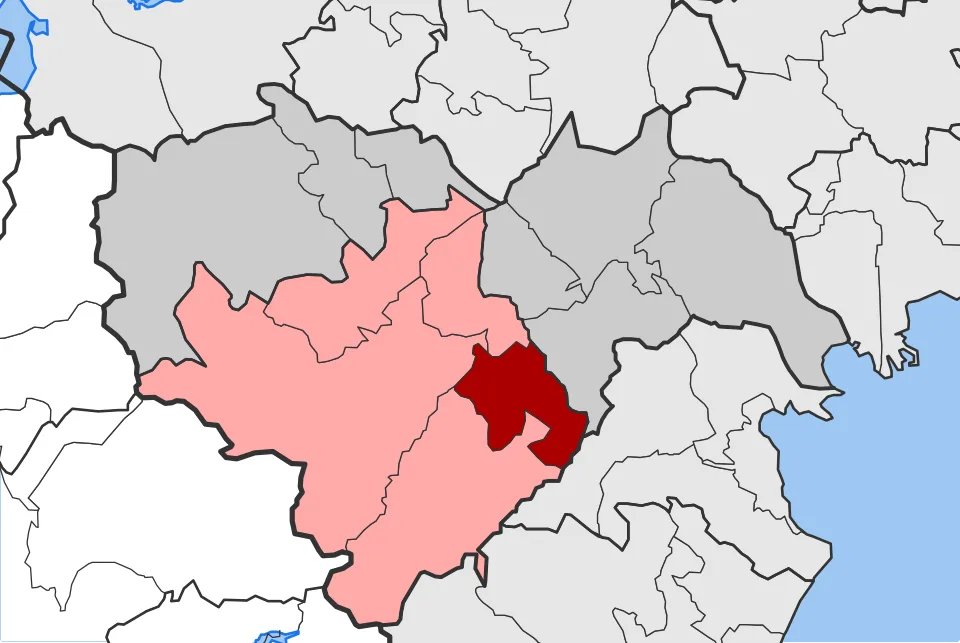
Central Macedonia · Grecia

40.48°N · 22.32°E · Europa

Ancient name

Aigai — first capital and royal necropolis of the kingdom of Macedon

Discovery

1977 — Manolis Andronikos uncovers unlooted royal tombs beneath the Great Tumulus

Tomb II

Gold larnax with Macedonian sunburst emblem, traditionally attributed to Philip II

Attribution dispute

Some researchers argue Tomb II instead belongs to Philip III Arrhidaeus

UNESCO

World Heritage Site 1996

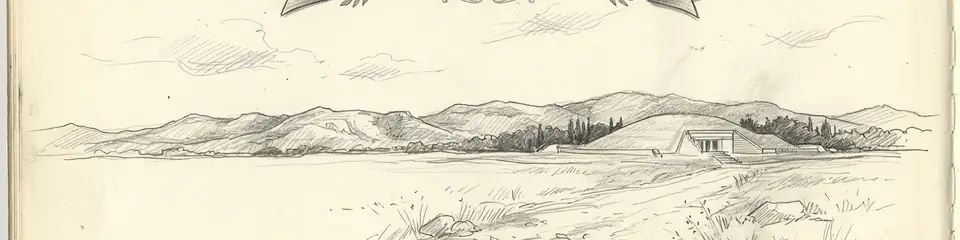
Graphite pencil sketch banner of Vergina

Vergina's unlooted tombs are an archaeological rarity of the first order: virtually every other major Macedonian royal burial was plundered, in many cases within decades of interment, making the intact contents of the Great Tumulus tombs an almost unique direct window into the material world of the Macedonian court at the exact historical hinge point between Philip II's kingdom-building and Alexander the Great's world conquest.”

Ubicación

Resumen

Vergina occupies the site of ancient Aigai, in Greek Macedonia near the modern city of Veria. Founded by the Argead dynasty as the first capital of the kingdom of Macedon, probably in the 7th century BCE, Aigai retained deep religious and ceremonial significance even after the Macedonian royal court relocated its main political seat to Pella in the 5th–4th century BCE — Macedonian kings continued to be crowned, and buried, at Aigai for generations afterward, making the site the kingdom's dynastic and spiritual centre even when it was no longer the seat of government.

The location of ancient Aigai was uncertain for centuries, associated with the modern village of Vergina only through the sustained fieldwork of French archaeologist Léon Heuzey in the 1850s and, decisively, Greek archaeologist Manolis Andronikos beginning in the 1930s and continuing across four decades. Andronikos's persistence culminated in November 1977, when his team excavating beneath the Great Tumulus — a large earthen burial mound long assumed to cover only minor or already-looted graves — uncovered a cluster of intact royal tombs that had remained sealed and undisturbed since antiquity, an exceptionally rare survival given that virtually every other known Macedonian royal tomb had been looted, in many cases in antiquity itself.

Tomb II, the most celebrated of the group, contained the cremated remains of an adult male alongside spectacular grave goods: gold and silver vessels, weapons and armour including an iron cuirass and a gilded ceremonial shield, and — most famously — a solid gold larnax (a small chest used to hold cremated bones) embossed with the sixteen-point Macedonian sunburst or star emblem, a symbol closely associated with the royal Argead dynasty. Andronikos identified the occupant as Philip II of Macedon, assassinated in 336 BCE at Aigai during his daughter's wedding celebrations, based on the tomb's date, its lavish royal-grade contents, and skeletal evidence of a healed eye injury consistent with historical accounts of a wound Philip suffered in battle.

This identification, while widely accepted and hugely influential in popular and scholarly understanding of Vergina's significance, has not gone unchallenged. Some researchers, re-examining the skeletal remains and the specific combination of grave goods, have proposed the tomb instead belongs to Philip III Arrhidaeus, Alexander the Great's intellectually disabled half-brother who briefly and turbulently held the Macedonian throne after Alexander's death in 323 BCE before being murdered in 317 BCE — a debate that continues to generate active scholarly research and re-analysis of the skeletal and material evidence decades after the original discovery.

Regardless of the identity dispute over Tomb II specifically, the broader royal necropolis at Vergina — encompassing multiple tombs, a large palace complex, and a theatre traditionally identified as the site of Philip II's assassination — provides an unparalleled, largely unlooted window into Macedonian royal culture at precisely the historical moment when Macedon, under Philip II and then Alexander, transformed from a regional Greek kingdom into the foundation of an empire stretching to India. Vergina was inscribed as a UNESCO World Heritage Site in 1996.

Por qué es importante

Vergina's unlooted tombs are an archaeological rarity of the first order: virtually every other major Macedonian royal burial was plundered, in many cases within decades of interment, making the intact contents of the Great Tumulus tombs an almost unique direct window into the material world of the Macedonian court at the exact historical hinge point between Philip II's kingdom-building and Alexander the Great's world conquest. The ongoing Philip II versus Philip III Arrhidaeus identification debate is a valuable illustration of how even spectacular, well-published archaeological discoveries can remain genuinely contested among specialists for decades, and how skeletal and material evidence can be reinterpreted as analytical techniques and comparative data improve — a live demonstration of archaeology as an evolving discipline rather than a set of closed conclusions. As the ceremonial and dynastic heart of the kingdom that produced Alexander the Great, Vergina anchors the material archaeological record for one of history's most consequential political transformations — the rise of Macedon from a peripheral Greek kingdom to the launching point of an empire that would carry Greek language, art, and culture across the ancient Near East and into Central Asia.

Evidencia e interpretación

Distinguir lo bien establecido de lo que sigue en debate.

Hechos bien establecidos

2
  • The tombs beneath the Great Tumulus, excavated by Manolis Andronikos from 1977, were found sealed and unlooted, an exceptional survival confirmed by the intact arrangement of grave goods within.
  • The gold larnax recovered from Tomb II bears the sixteen-point Macedonian sunburst emblem, a symbol securely associated with the royal Argead dynasty through comparison with coinage and other dynastic material.

Inferencias académicas

1
  • The identification of the site with ancient Aigai, the historically attested first Macedonian capital, is based on cumulative archaeological, epigraphic, and topographical evidence assembled over more than a century of investigation rather than a single definitive inscription confirming the name.

Interpretaciones debatidas

1
  • The identification of Tomb II's occupant as Philip II of Macedon, based on skeletal evidence of a healed eye wound and the tomb's date and lavishness, is contested by researchers who argue the skeletal and grave-good evidence better matches Philip III Arrhidaeus; the dispute remains unresolved among specialists.

Descubrimiento y excavación

1855

Léon Heuzey survey

First French-led archaeological survey of the Vergina area, beginning the process of identifying it with ancient Aigai.

1937–1977

Manolis Andronikos excavations

Four decades of fieldwork culminating in the 1977 discovery of the unlooted royal tombs beneath the Great Tumulus.

2000

Ongoing skeletal re-analysis

Continued forensic and skeletal re-examination of Tomb II's remains using updated techniques, feeding the ongoing Philip II / Philip III Arrhidaeus identification debate.

Fotos de la comunidad

Comparte tu experiencia

¿Has visitado este sitio? Sube tus fotos para ayudar a otros a descubrirlo.

Cómo citar esta página

Atlas Anatolia. (650). Vergina. Atlas Anatolia. https://atlasanatolia.com/es/site/vergina

Contenido bajo licencia CC BY-SA 4.0 — se requiere atribución al reutilizar.

Fuentes

  • Vergina: The Royal Tombs and the Ancient CityAndronikos, Manolis (1984)
  • The Lameness of King Philip II and Royal Tomb I at Vergina, MacedoniaBartsiokas, Antonis et al. (2015)
  • UNESCO — Archaeological Site of Aigai (modern name Vergina)Enlace

Preguntas frecuentes

¿Dónde se encuentra Vergina?

Vergina se encuentra en Central Macedonia, Greece.

¿Qué antigüedad tiene Vergina?

Vergina se fecha aproximadamente en 650 a. C. – 168 a. C..

¿Qué civilizaciones se relacionan con Vergina?

Vergina se relaciona con Macedon.

¿Por qué es importante Vergina?

Vergina's unlooted tombs are an archaeological rarity of the first order: virtually every other major Macedonian royal burial was plundered, in many cases within decades of interment, making the intact contents of the Great Tumulus tombs an almost unique direct window into the material world of the Macedonian court at the exact historical hinge point between Philip II's kingdom-building and Alexander the Great's world conquest.

¿Vergina es Patrimonio Mundial de la UNESCO?

Sí. Vergina está inscrito en la Lista del Patrimonio Mundial de la UNESCO.