
Saltar al contenido
Atlas Anatolia
NoticiasIce Age teeth in Sulawesi push betel-nut use back as far as 25,000 yearsRoman mosaic and Eros head uncovered in the basilica at Pompeiopolis, Kastamonu
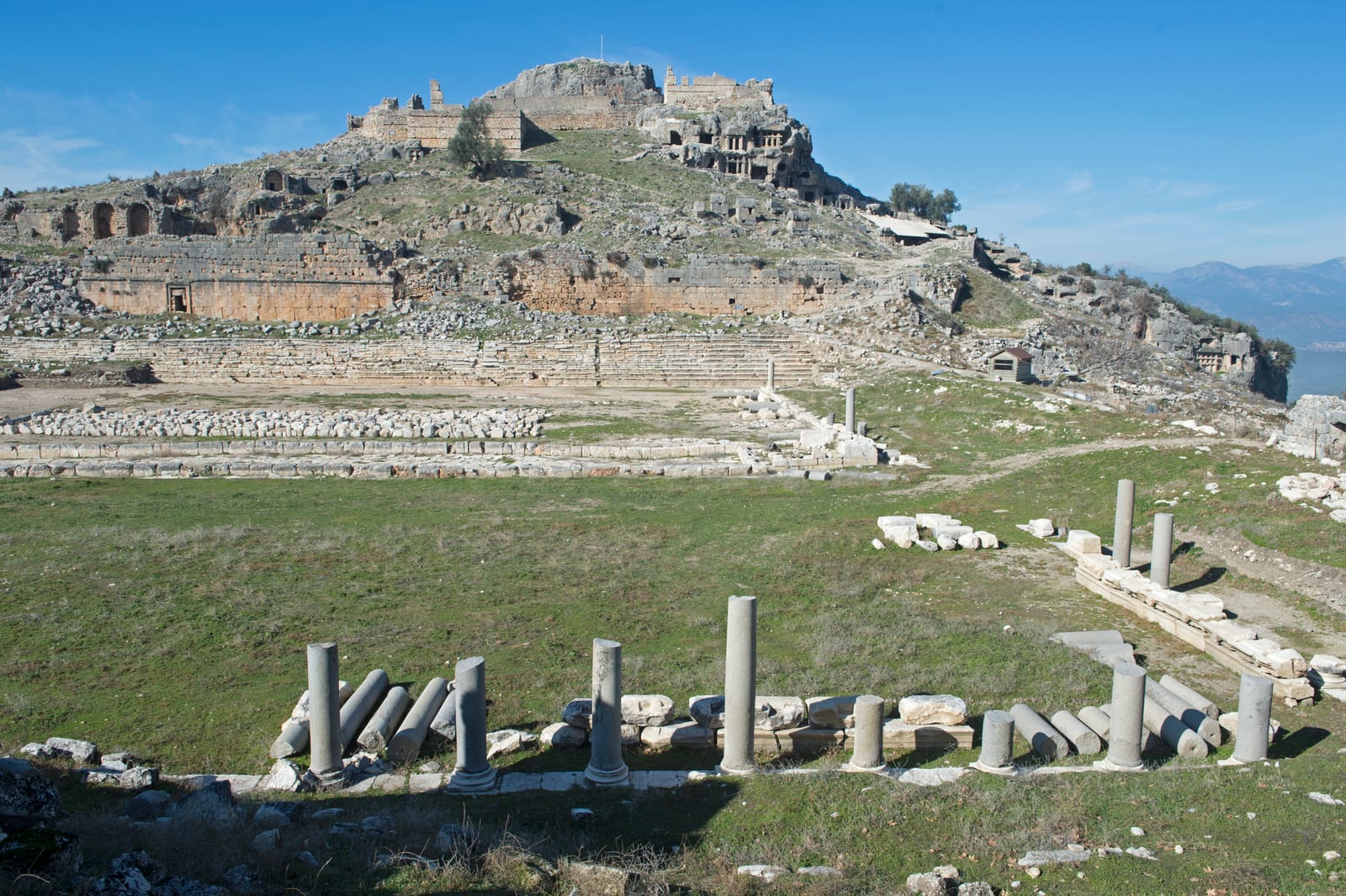
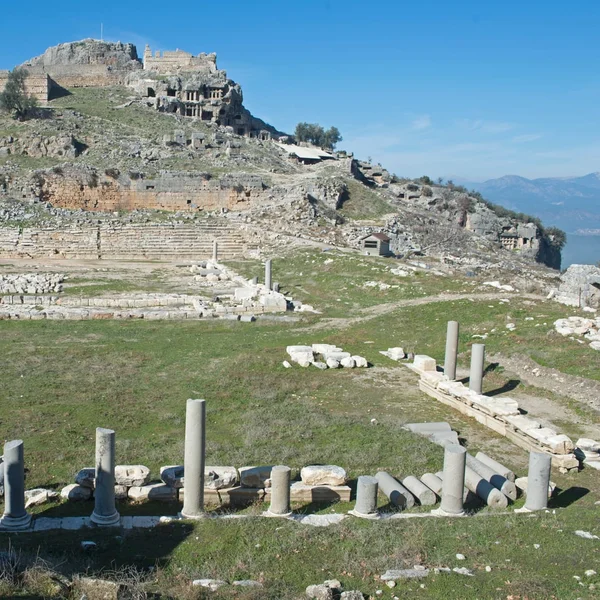
Stadium and fortress ruins at Tlos

Wikimedia Commons (CC BY-SA)

Ciudad

Tlos

Seyfi Cem Baskin

2000 a. C. – 1400 d. C.

One of the oldest and most important cities of Lycia, dominated by a dramatic rocky acropolis with Lycian rock tombs, a Roman theatre, and an Ottoman fortress crowning its summit.

411
Interés 45

Ubicación

Mugla · Mediterranean · Turquía

36.55°N · 29.42°E · Asia

Hittite Name

Dalawa/Tlawa (attested in Bronze Age texts)

Famous Tomb

Tomb of Bellerophon with Pegasus relief

Lycian League

One of six principal cities (3 votes)

Occupation Span

~4,000 years (Bronze Age to Ottoman)

Roman Stadium

A well-preserved stadium, built in the 2nd century CE, located at the base of the acropolis.

Byzantine Basilica

Remains of a large 5th-6th century CE three-aisled basilica with mosaic floors.

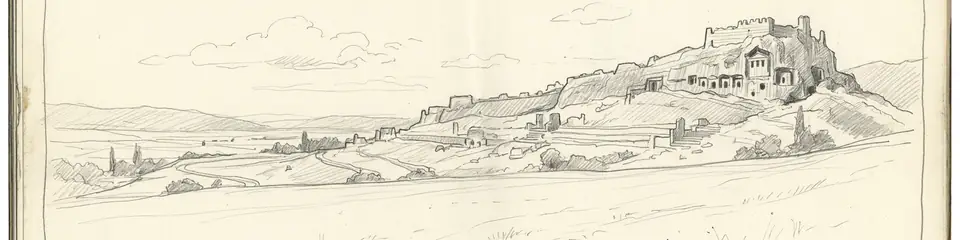
Graphite pencil sketch banner of Tlos

Tlos demonstrates continuous human occupation from the Bronze Age through the Ottoman period — roughly four thousand years of layered habitation on a single dramatic hilltop.”

De Wikipedia

Tlos is an ancient Lycian city in southwestern Turkey, one of the oldest and most important settlements in Lycia, known for its rock tombs and dramatic acropolis.

Leer el artículo completo en Wikipedia

Ubicación

Resumen

Tlos is one of the six principal cities of the Lycian League and among the oldest continuously inhabited settlements in Lycia. Its rocky acropolis rises dramatically above the Xanthos Valley, offering commanding views of the surrounding mountains and fertile plain. The site bears witness to nearly four millennia of occupation, from Bronze Age beginnings through Ottoman times.

The acropolis cliff face is carved with elaborate Lycian rock tombs, including the celebrated Tomb of Bellerophon — decorated with a relief depicting the mythological hero riding Pegasus. Below the acropolis, a well-preserved Roman theatre with seating for 3,400 spectators faces the valley. Nearby stand the remains of Roman baths, an agora, and a colonnaded street.

"Tlos, a city of the Lycians, is situated on a lofty mountain."
— Strabo, c. 7 BCE - 23 CE

Tlos appears in Hittite records as "Dalawa" or "Tlawa," confirming its antiquity. It was among the cities that formed the Lycian League, and inscriptions attest to its status as one of Lycia's most honored members with three votes in the federal assembly.

An Ottoman fortress crowns the summit of the acropolis, built over earlier fortifications. The warlord Kanli Ali Aga made Tlos his stronghold in the 19th century, adding to the already layered archaeological landscape. The site's setting — surrounded by forested mountains with the Saklikent Gorge nearby — is among the most scenic in Lycia.
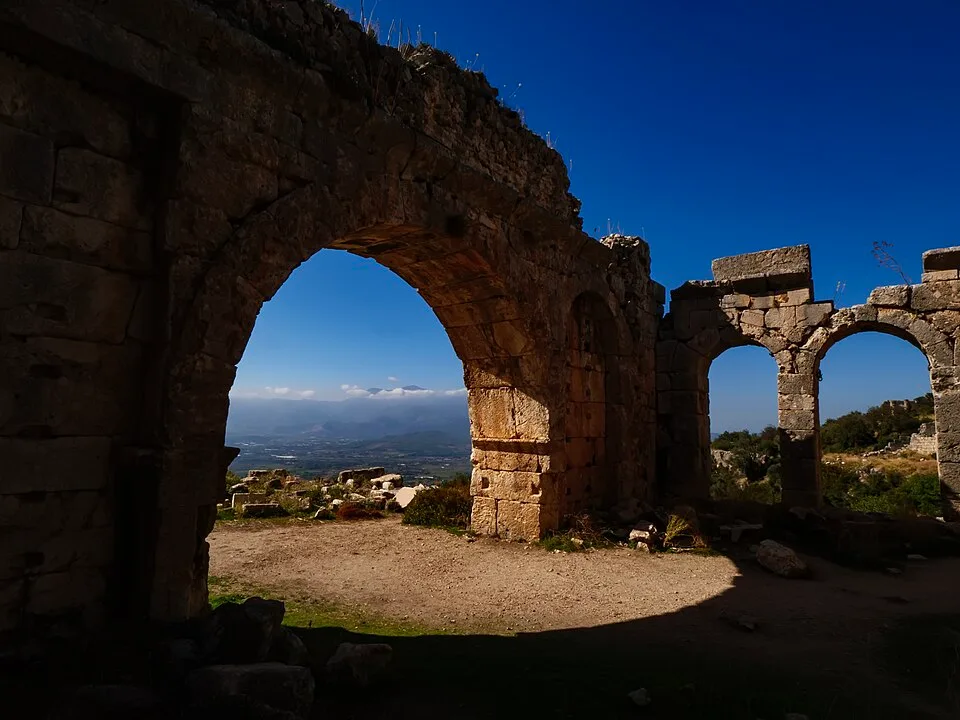
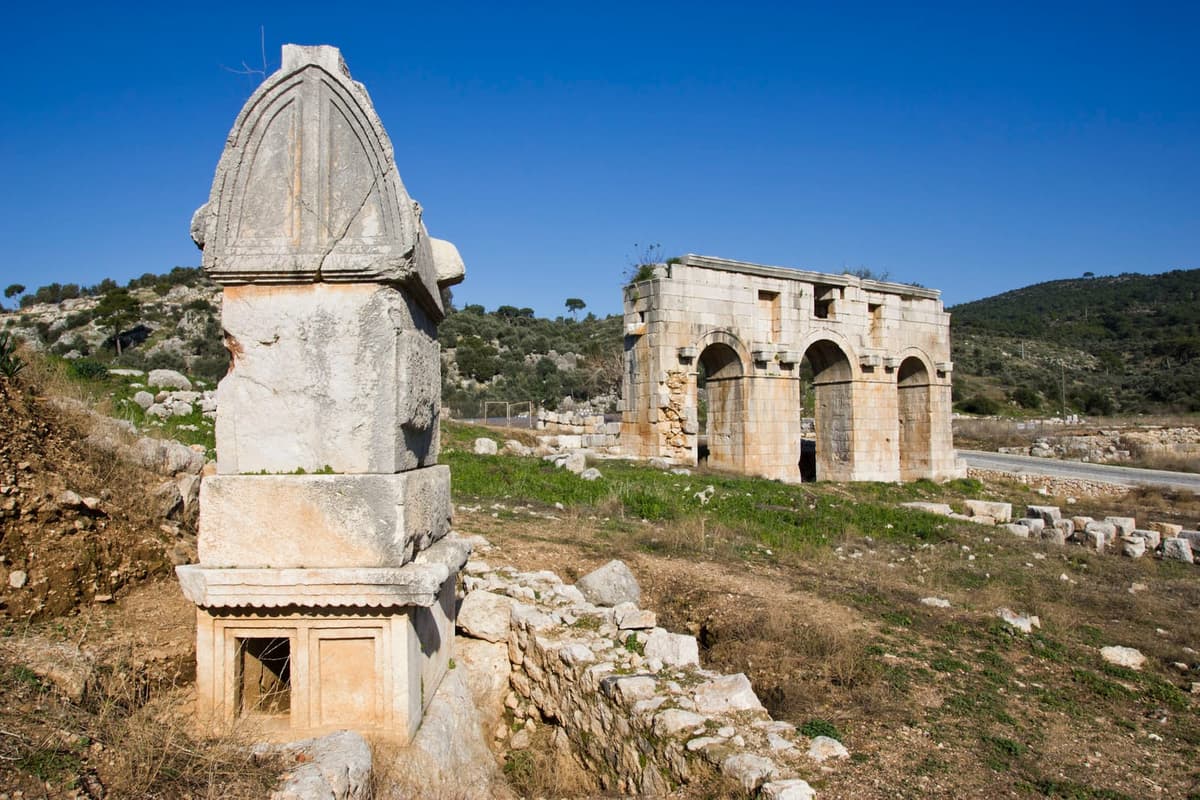
Arched ruins of the ancient city of Tlos
Arched ruins of the ancient city of Tlos | Buğra Kaan Ersoy (CC BY-SA 4.0)

Beyond the acropolis, the lower city reveals the scale of Roman Tlos. A large bath complex, with intact hypocaust systems, and a stadium capable of hosting athletic contests and spectacles, speak to its status as a major urban center. A colonnaded street likely formed the city's commercial spine. In the Byzantine era, the city's character shifted; the Roman theatre was repurposed into a fortified residential quarter, with dwellings constructed directly into the seating area, a vivid testament to changing needs and security concerns. The site's decline as a significant urban center accelerated in the later Byzantine period, though a small settlement persisted into the Ottoman era, culminating in the construction of a fortress atop the ancient acropolis, adding the final layer to this millennia-long palimpsest.
Por qué es importante

Tlos demonstrates continuous human occupation from the Bronze Age through the Ottoman period — roughly four thousand years of layered habitation on a single dramatic hilltop. Its mention in Hittite texts as Tlawa makes it one of the few Lycian cities whose ancient name can be traced back to the Late Bronze Age. The Tomb of Bellerophon connects the site to deep mythological traditions. Lycia was the homeland of Bellerophon in Greek mythology, and the presence of his image at Tlos underscores how ancient communities used mythological narratives to assert local identity and prestige.

Evidencia e interpretación

Distinguir lo bien establecido de lo que sigue en debate.

Hechos bien establecidos

4
  • Tlos appears as "Dalawa" in Hittite texts from the Late Bronze Age, confirming settlement before the Iron Age Lycian period.
  • The Tomb of Bellerophon features a carved relief of the mythological hero on Pegasus, one of the finest Lycian funerary reliefs extant.
  • Inscriptions confirm Tlos held three votes in the Lycian League assembly, designating it among the league's six most important cities.
  • Archaeological excavations have uncovered a Roman-era bath-gymnasium complex (palaestra) with inscriptions dating its construction to the reign of Emperor Vespasian (69-79 CE).

Inferencias académicas

1
  • The strategic position of the acropolis, commanding views of the Xanthos Valley, suggests the site was chosen primarily for defensive purposes in its earliest phase.

Interpretaciones debatidas

1
  • Whether the "Bellerophon" relief actually depicts Bellerophon or a local Lycian dynast represented as a heroic horseman remains a point of scholarly discussion.

Descubrimiento y excavación

1838

First European survey

Dirigido por Charles Fellows

Charles Fellows visited and recorded the Lycian rock tombs during his survey of Lycia.

1989–2010

Turkish excavations

Dirigido por Havva Iskan

Havva Iskan of Akdeniz University led systematic excavations of the stadium, baths, and agora.

2005

Systematic Excavations Begin

Dirigido por Professor Taner Korkut (Akdeniz University)

Large-scale, systematic archaeological excavations and restoration work at Tlos were initiated under the direction of Professor Taner Korkut of Akdeniz University.

2010

Continuing research

Dirigido por Taner Korkut

Taner Korkut continued excavation and conservation work, focusing on the Roman-period structures.

Fotos de la comunidad

Comparte tu experiencia

¿Has visitado este sitio? Sube tus fotos para ayudar a otros a descubrirlo.

Historias relacionadas

Cómo citar esta página

Atlas Anatolia. (2000). Tlos. Atlas Anatolia. https://atlasanatolia.com/es/site/tlos

Contenido bajo licencia CC BY-SA 4.0 — se requiere atribución al reutilizar.

Gráfico

Conexiones con sitios e historias relacionados.

Leer el artículo completo en World History Encyclopedia
World History Encyclopedia · CC BY-NC-SA

Fuentes

  • The Lycians: A Study of Lycian History and Civilisation to the Conquest of Alexander the GreatTrevor Bryce (1986)
  • Tlos: A Lycian City in the Light of New ResearchHavva Iskan (2005)
  • Wikipedia — TlosEnlace

Preguntas frecuentes

¿Dónde se encuentra Tlos?

Tlos se encuentra en Mugla, Mediterranean, Türkiye.

¿Qué antigüedad tiene Tlos?

Tlos se fecha aproximadamente en 2000 a. C. – 1400 d. C..

¿Qué civilizaciones se relacionan con Tlos?

Tlos se relaciona con Lycian, Greek, Roman, Byzantine, Ottoman.

¿Por qué es importante Tlos?

Tlos demonstrates continuous human occupation from the Bronze Age through the Ottoman period — roughly four thousand years of layered habitation on a single dramatic hilltop.

¿Tlos es Patrimonio Mundial de la UNESCO?

Tlos no está inscrito actualmente en la Lista del Patrimonio Mundial de la UNESCO.