Saltar al contenido
Atlas Anatolia
NoticiasIce Age teeth in Sulawesi push betel-nut use back as far as 25,000 yearsRoman mosaic and Eros head uncovered in the basilica at Pompeiopolis, Kastamonu
Colosseum — Italy

Wikimedia Commons (CC BY-SA)

MonumentoUNESCODestacado

Colosseum

Seyfi Cem Baskin

Colosseo72 d. C. – 80 d. C.

The Colosseum, Rome's iconic Flavian Amphitheatre, hosted gladiatorial combats and public spectacles, embodying imperial power and engineering innovation.

322
Interés 94

Ubicación

Rome · Lazio · Italia

41.89°N · 12.49°E · Europa

Built

AD 72–80 (with later additions)

Civilization

Roman Empire (Flavian dynasty)

Discovered

Never lost; scientific excavations from 19th century

Status

UNESCO World Heritage Site (part of Historic Centre of Rome, 1980)

Capacity

Estimated 50,000–80,000 spectators

Material

Concrete, travertine, and tuff

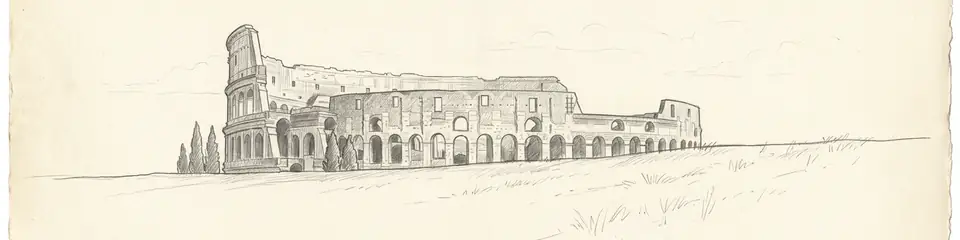
Graphite pencil sketch banner of Colosseum

The Colosseum epitomizes Roman architectural and engineering achievement at the scale of empire, illustrating how built environments shaped public life and reinforced social norms.”

Ubicación

Resumen

Historical Context

The Colosseum was commissioned around AD 72 by Emperor Vespasian of the Flavian dynasty as a gift to the Roman people, erected on the site of Nero’s artificial lake from his palatial complex, the Domus Aurea. This symbolic act reclaimed public land and countered Nero’s excesses. Vespasian’s successor, Titus, dedicated the completed structure in AD 80 with inaugural games lasting 100 days, featuring gladiatorial combat, animal hunts, and possibly mock naval battles. Further modifications, including the addition of the monumental hypogeum beneath the arena floor, were carried out under Domitian (reigned AD 81–96).

Architecture and Design

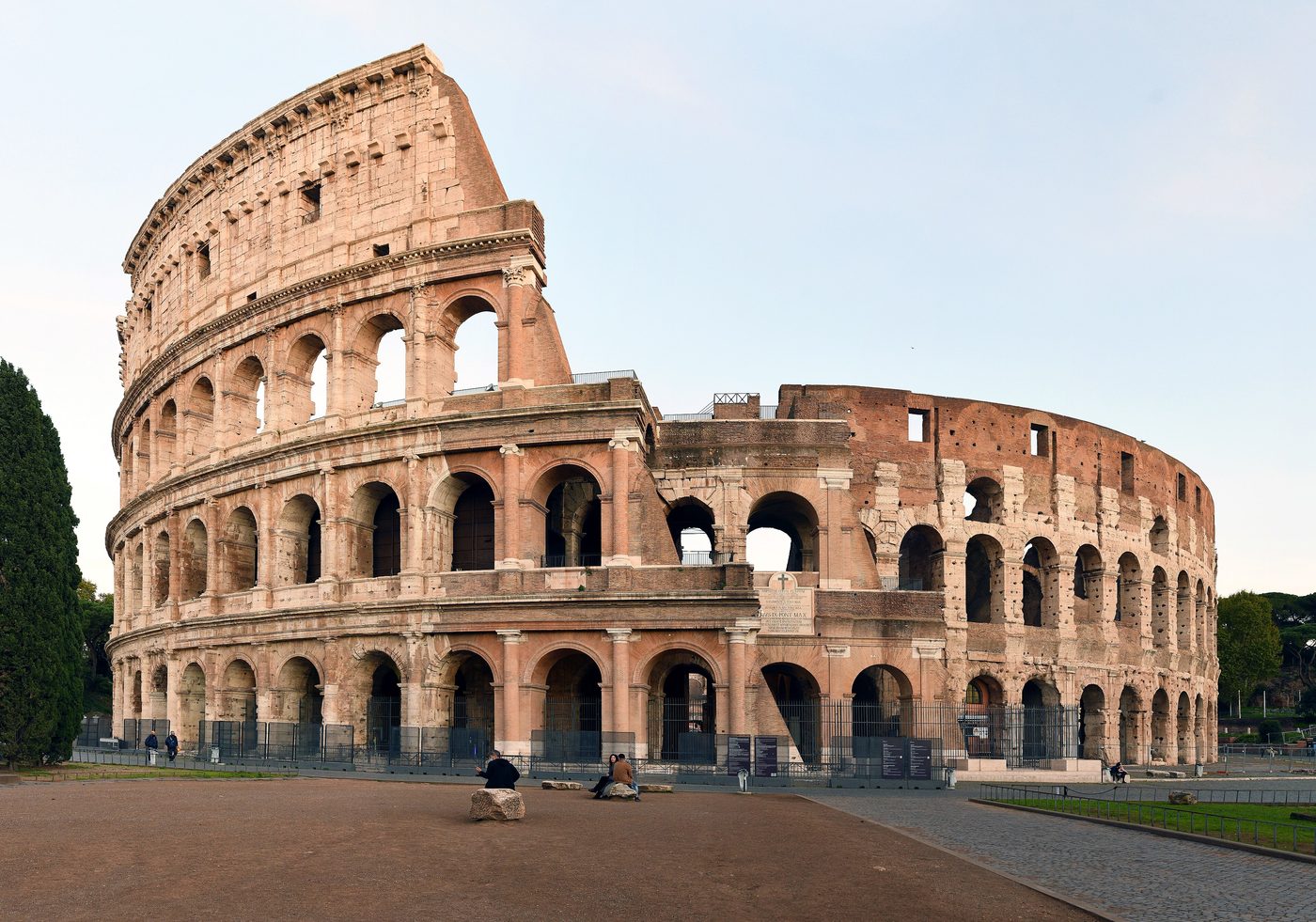
The elliptical amphitheatre is the largest ever built, measuring approximately 189 meters long, 156 meters wide, and 50 meters high, with an estimated seating capacity of 50,000 to 80,000 spectators. Its structural core of concrete faced with travertine and tuff exemplifies Roman mastery of durable construction. The exterior comprised three tiers of arched arcades punctuated by engaged columns—Doric, Ionic, and Corinthian in ascending order—crowned by a solid attic with corbels for the velarium, a retractable awning. Inside, a meticulous system of numbered entrances (vomitoria) and tiered seating strictly separated social classes, as confirmed by inscribed markers. The arena floor, originally wooden and covered with sand, concealed the elaborate two-level hypogeum of tunnels, lifts, and cages that enabled dramatic spectacle entries.
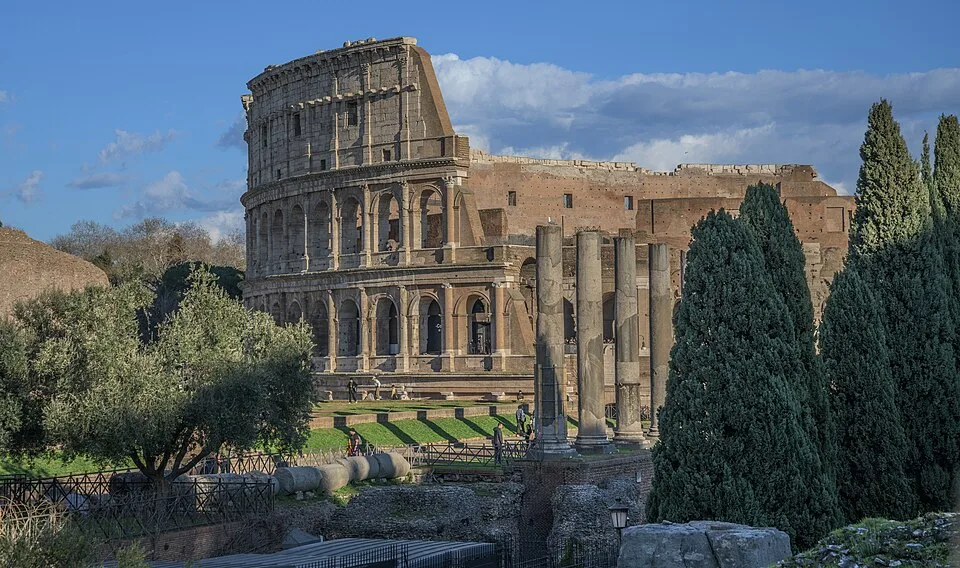
Colosseum of Rome and Roman forum
Colosseum of Rome and Roman forum | Wilfredor (CC0)
"While stands the Colosseum, Rome shall stand; when falls the Colosseum, Rome shall fall; and when Rome falls — the World."
— Attributed to the Venerable Bede (c. 8th century), as translated by Lord Byron
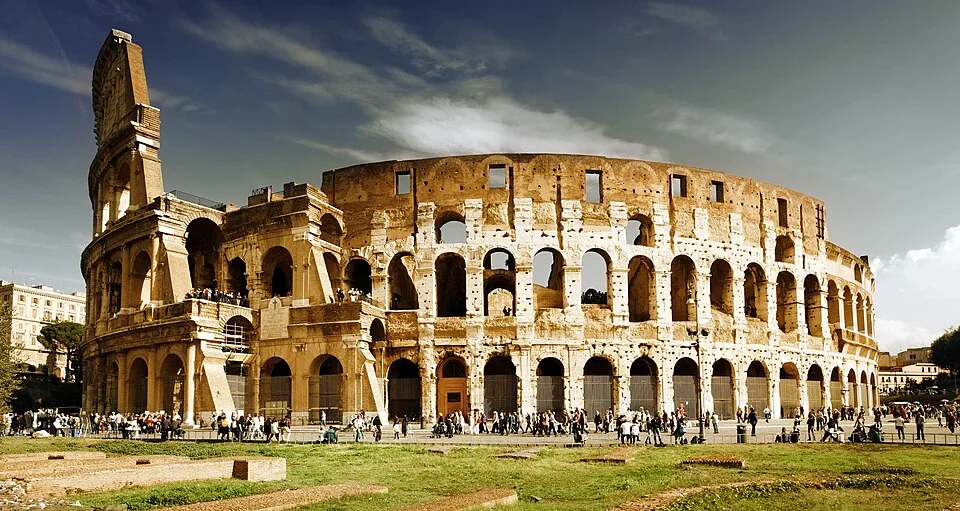
Colosseum - Rome - Italy 16800139540
Colosseum - Rome - Italy 16800139540 | Sam valadi (CC BY 2.0)

Discovery and Excavation

Though continuously visible and used as a fortress and quarry in the medieval period, systematic archaeological investigation began in the early 19th century. Architect Carlo Fea’s interventions (c. 1810) cleared debris, while Rodolfo Lanciani’s excavations in the 1870s–1880s first revealed the hypogeum’s complexity. Extensive campaigns under Mussolini in the 1930s fully exposed the subterranean structures. Since the late 20th century, digital documentation and conservation projects, including laser scanning and targeted excavations, have refined understanding of construction phases and decoration.
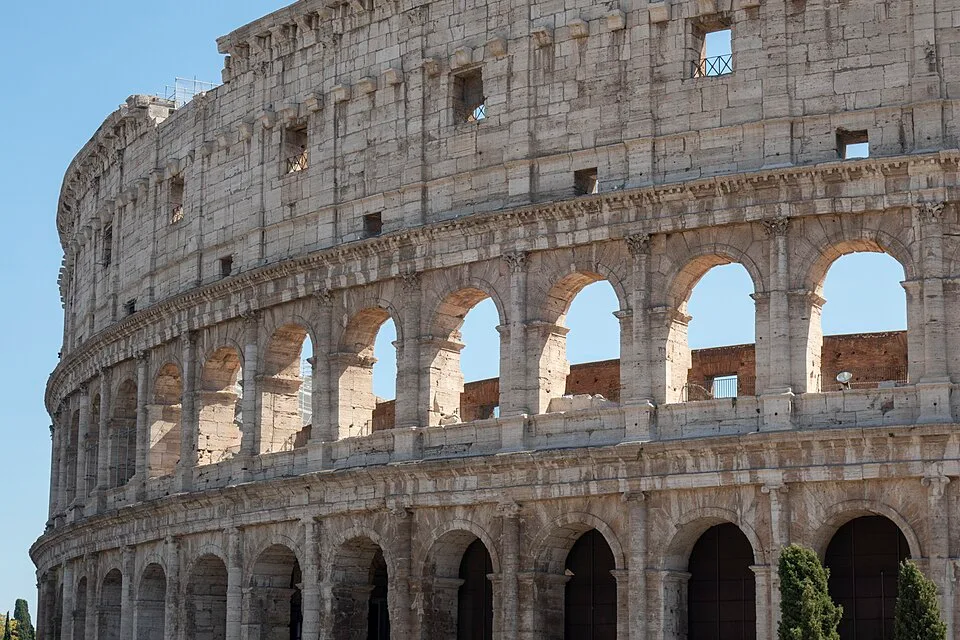
Rome Colosseum exterior 2
Rome Colosseum exterior 2 | Nicholas Hartmann (CC BY-SA 4.0)
"These shows go on and still Rome endures — but when the amphitheatre itself shall fall, the end of the world is near."
— Medieval proverb on the Flavian Amphitheatre (after Bede)

Significance

The Colosseum stands as a supreme testament to Roman engineering, social organization, and imperial ideology. It served as a stage for mass entertainment that reinforced hierarchical order and political authority through the demonstration of munificence and spectacle. Architecturally, it set the prototype for amphitheatres across the Roman world, its design echoed from El Djem to Italica. Today, as a UNESCO World Heritage Site and global cultural icon, it symbolizes both the grandeur and the brutality of ancient Rome, attracting millions of visitors and inspiring ongoing scholarly inquiry.
Por qué es importante

The Colosseum epitomizes Roman architectural and engineering achievement at the scale of empire, illustrating how built environments shaped public life and reinforced social norms. Its enduring presence provides an unparalleled window into ancient entertainment, political propaganda, and urban design. As a focal point of classical archaeology and heritage conservation, it challenges modern perceptions of antiquity’s cultural legacy.

Evidencia e interpretación

Distinguir lo bien establecido de lo que sigue en debate.

Hechos bien establecidos

3
  • Construction began under Vespasian in AD 72 and the amphitheatre was dedicated by Titus in AD 80, as recorded in Suetonius and Cassius Dio.
  • The hypogeum, a two-level subterranean system of corridors and lifts, was added during Domitian’s reign based on brick stamps and construction joints.
  • The building measures approximately 189 × 156 meters and could accommodate tens of thousands, confirmed by modern surveys and medieval records of seating sections.

Inferencias académicas

2
  • The Colosseum’s design directly influenced the layout of later amphitheatres across the empire, inferred from structural similarities and the spread of architectural treatises.
  • The velarium awning was operated by sailors from the Roman fleet, inferred from historic sources and the presence of bollards that match ship mooring techniques.

Interpretaciones debatidas

2
  • Whether the arena could be flooded for full-scale naumachiae (naval battles) is contested, with some scholars proposing a separate basin and others citing the hypogeum’s later addition as incompatible.
  • The extent of Christian martyrdom in the Colosseum remains disputed, as early Christian writers may have amplified numbers for rhetorical effect, and direct archaeological evidence is absent.

Descubrimiento y excavación

1810–1812

Early systematic clearing

Dirigido por Carlo Fea

Carlo Fea directed the removal of tons of debris and the stabilization of the outer ring, preventing further collapses and initiating scholarly study.

1874–1875

Hypogeum investigation

Dirigido por Rodolfo Lanciani

Rodolfo Lanciani excavated portions of the subterranean structures, documenting water channels and lifting mechanisms.

1938–1940

Full hypogeum exposure

Dirigido por A. M. Colini

Mussolini’s regime sponsored the complete excavation of the underground passages, revealing the intricate system of cages and ramps as part of grandiose urban renewal.

1980–1985

Modern conservation and survey

Dirigido por Soprintendenza Archeologica di Roma

A comprehensive photogrammetric and structural survey was conducted, leading to the first digital model and targeted restorations.

2010–2018

Hypogeum laser scanning and excavation

Dirigido por Soprintendenza Speciale di Roma

High-resolution laser scanning and targeted sondages refined the chronology of the hypogeum’s construction and documented water management features.

Fotos de la comunidad

Comparte tu experiencia

¿Has visitado este sitio? Sube tus fotos para ayudar a otros a descubrirlo.

Historias relacionadas

Cómo citar esta página

Atlas Anatolia. (72). Colosseum. Atlas Anatolia. https://atlasanatolia.com/es/site/colosseum

Contenido bajo licencia CC BY-SA 4.0 — se requiere atribución al reutilizar.

Gráfico

Conexiones con sitios e historias relacionados.

Fuentes

  • Hopkins, K. and Beard, M. (2005). The ColosseumKeith Hopkins and Mary Beard (2005)
  • Bomgardner, D. L. (2000). The Story of the Roman AmphitheatreDavid Lee Bomgardner (2000)
  • Lancaster, L. C. (2005). 'The Colosseum: An Engineering Marvel', American Journal of Archaeology, 109(3), 297–326.Lynne C. Lancaster (2005)
  • UNESCO World Heritage Centre: Historic Centre of Rome, the Properties of the Holy See in that City Enjoying Extraterritorial Rights and San Paolo Fuori le MuraEnlace
  • Rea, R. (2020). 'New Excavations in the Colosseum: The Hypogeum and Arena', Journal of Roman Archaeology, 33, 569–588.Rossella Rea (2020)

Preguntas frecuentes

¿Dónde se encuentra Colosseum?

Colosseum se encuentra en Rome, Lazio, Italy.

¿Qué antigüedad tiene Colosseum?

Colosseum se fecha aproximadamente en 72 d. C. – 80 d. C..

¿Qué civilizaciones se relacionan con Colosseum?

Colosseum se relaciona con Roman.

¿Por qué es importante Colosseum?

The Colosseum epitomizes Roman architectural and engineering achievement at the scale of empire, illustrating how built environments shaped public life and reinforced social norms.

¿Colosseum es Patrimonio Mundial de la UNESCO?

Sí. Colosseum está inscrito en la Lista del Patrimonio Mundial de la UNESCO.