
Saltar al contenido
Atlas Anatolia
NoticiasIce Age teeth in Sulawesi push betel-nut use back as far as 25,000 yearsRoman mosaic and Eros head uncovered in the basilica at Pompeiopolis, Kastamonu
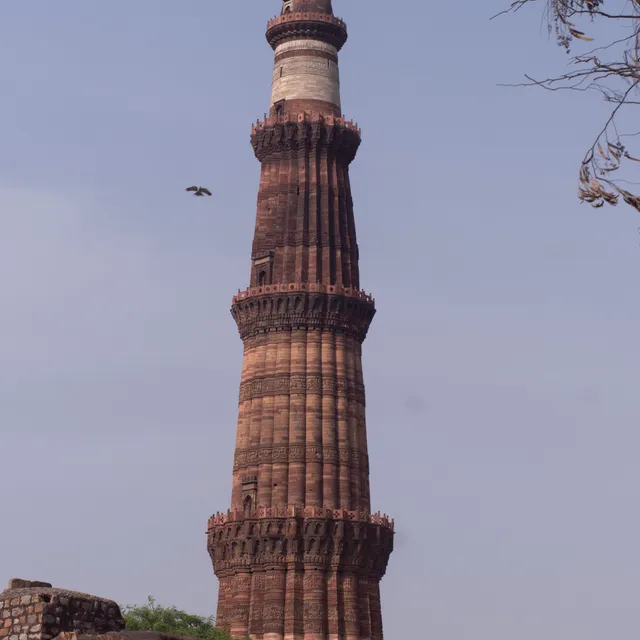
The Qutb Minar tower and Quwwat-ul-Islam mosque ruins, Delhi

Wikimedia Commons

PatrimonioComplejoUNESCODestacado

Qutb Minar

Seyfi Cem Baskin

क़ुतुब मीनार1192 d. C. – 1316 d. C.

The 72-metre tapering victory tower and mosque complex at Mehrauli, Delhi — begun by Qutb al-Din Aibak after 1192 — marking the arrival of Indo-Islamic architecture in northern India and among the most visited ASI monuments in the country.

21
Interés 77

Ubicación

India

28.52°N · 77.19°E · Asia

Minar height

~72.5 m; five storeys of sandstone and marble

Begun

1192 CE after Tarain; mosque by Qutb al-Din Aibak

Iron Pillar

Gupta-era pillar (~402 CE) with Sanskrit inscription

UNESCO

Qutb Minar and its Monuments (1993)

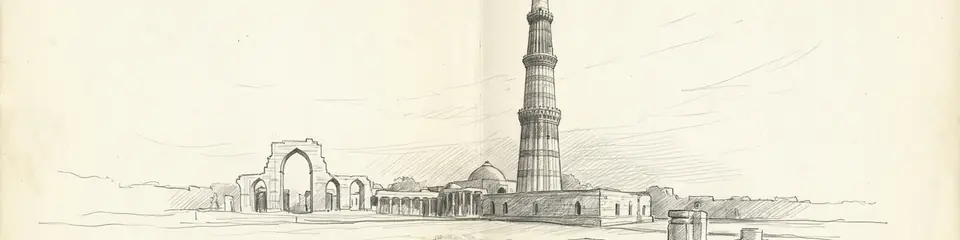
Graphite pencil sketch banner of Qutb Minar

The Qutb Minar is the earliest major Indo-Islamic monument in India — the physical beginning of Sultanate and Mughal Delhi.”

Ubicación

Resumen

The Qutb Minar complex occupies Mehrauli in south Delhi, the site of Lal Kot, an earlier Hindu and Jain city. After Muhammad of Ghor's victory at Tarain (1192), his general Qutb al-Din Aibak established Delhi Sultanate power and began the Quwwat-ul-Islam mosque (1192–1193) using spolia from demolished temples — visible in carved columns in the courtyard. The minar itself was started by Aibak and completed by Iltutmish and later rulers; the five-storey red sandstone and marble tower rises about 72.5 metres with projecting balconies.

The complex includes the Alai Darwaza gate (1311), Alai Minar (unfinished), the Iron Pillar of Chandragupta II (Gupta, 4th century CE, moved here), and tombs of Iltutmish and Imam Zamin. Earthquakes and lightning damaged upper storeys; Firoz Shah Tughlaq and the British restored sections in the 14th and 19th centuries.

UNESCO listed the Qutb Minar and its Monuments, Delhi in 1993 alongside Humayun's Tomb. The tower is the defining silhouette of early Sultanate Delhi and a mandatory stop on India's Golden Triangle route.

Por qué es importante

The Qutb Minar is the earliest major Indo-Islamic monument in India — the physical beginning of Sultanate and Mughal Delhi. Its reuse of temple spolia documents both destruction and creative adaptation at the moment of political transition in the Ganges plain.

Evidencia e interpretación

Distinguir lo bien establecido de lo que sigue en debate.

Hechos bien establecidos

2
  • Inscriptions name Qutb al-Din Aibak, Iltutmish, and later sultans as builders and restorers of the minar and mosque.
  • Architectural analysis confirms reused Hindu–Jain carved columns in the mosque courtyard and Sultanate arcuate forms.

Interpretaciones debatidas

1
  • Whether the minar was primarily a victory tower, call to prayer, or solar observatory remains discussed in art-historical literature.

Fotos de la comunidad

Comparte tu experiencia

¿Has visitado este sitio? Sube tus fotos para ayudar a otros a descubrirlo.

Cómo citar esta página

Atlas Anatolia. (1192). Qutb Minar. Atlas Anatolia. https://atlasanatolia.com/es/site/qutb-minar

Contenido bajo licencia CC BY-SA 4.0 — se requiere atribución al reutilizar.

Fuentes

  • Architecture of Mughal IndiaAsher, Catherine B. (1992)
  • UNESCO — Qutb MinarEnlace

Preguntas frecuentes

¿Dónde se encuentra Qutb Minar?

Qutb Minar se encuentra en India.

¿Qué antigüedad tiene Qutb Minar?

Qutb Minar se fecha aproximadamente en 1192 d. C. – 1316 d. C..

¿Qué civilizaciones se relacionan con Qutb Minar?

Qutb Minar se relaciona con Islamic / Medieval, Delhi Sultanate.

¿Por qué es importante Qutb Minar?

The Qutb Minar is the earliest major Indo-Islamic monument in India — the physical beginning of Sultanate and Mughal Delhi.

¿Qutb Minar es Patrimonio Mundial de la UNESCO?

Sí. Qutb Minar está inscrito en la Lista del Patrimonio Mundial de la UNESCO.