
Saltar al contenido
Atlas Anatolia
NoticiasIce Age teeth in Sulawesi push betel-nut use back as far as 25,000 yearsRoman mosaic and Eros head uncovered in the basilica at Pompeiopolis, Kastamonu
Masada — Israel

Wikimedia Commons (CC BY-SA)

Récord nacional

Earliest Known Site in Israel

FortalezaUNESCODestacado

Masada

Seyfi Cem Baskin

מצדה100 a. C. – 73 d. C.

Masada is a dramatic desert fortress built by Herod the Great, renowned as the site of the Jewish Zealots' last stand against the Roman Empire in 73 CE.

412
Interés 79

Ubicación

Southern District · Judaean Desert · Israel

31.32°N · 35.35°E · Asia

Built

37–31 BCE (Herod the Great's fortress palace)

Civilization

Second Temple Judaism / Roman Judea

Discovered

Identified 1838; major excavations 1963–65 by Yigael Yadin

Status

UNESCO World Heritage Site (2001)

Height

Plateau ~400 m above Dead Sea level

Final Siege

73–74 CE (fall to Roman Legio X Fretensis)

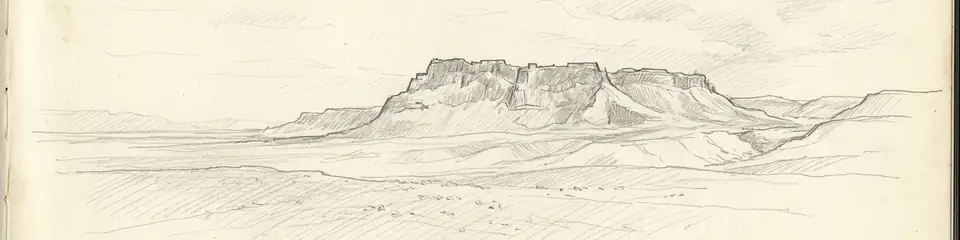
Graphite pencil sketch banner of Masada

Masada stands as a poignant testament to the tenacity of the Jewish revolt against Rome, marking the dramatic conclusion of the First Jewish-Roman War.”

Ubicación

Resumen

Historical Background

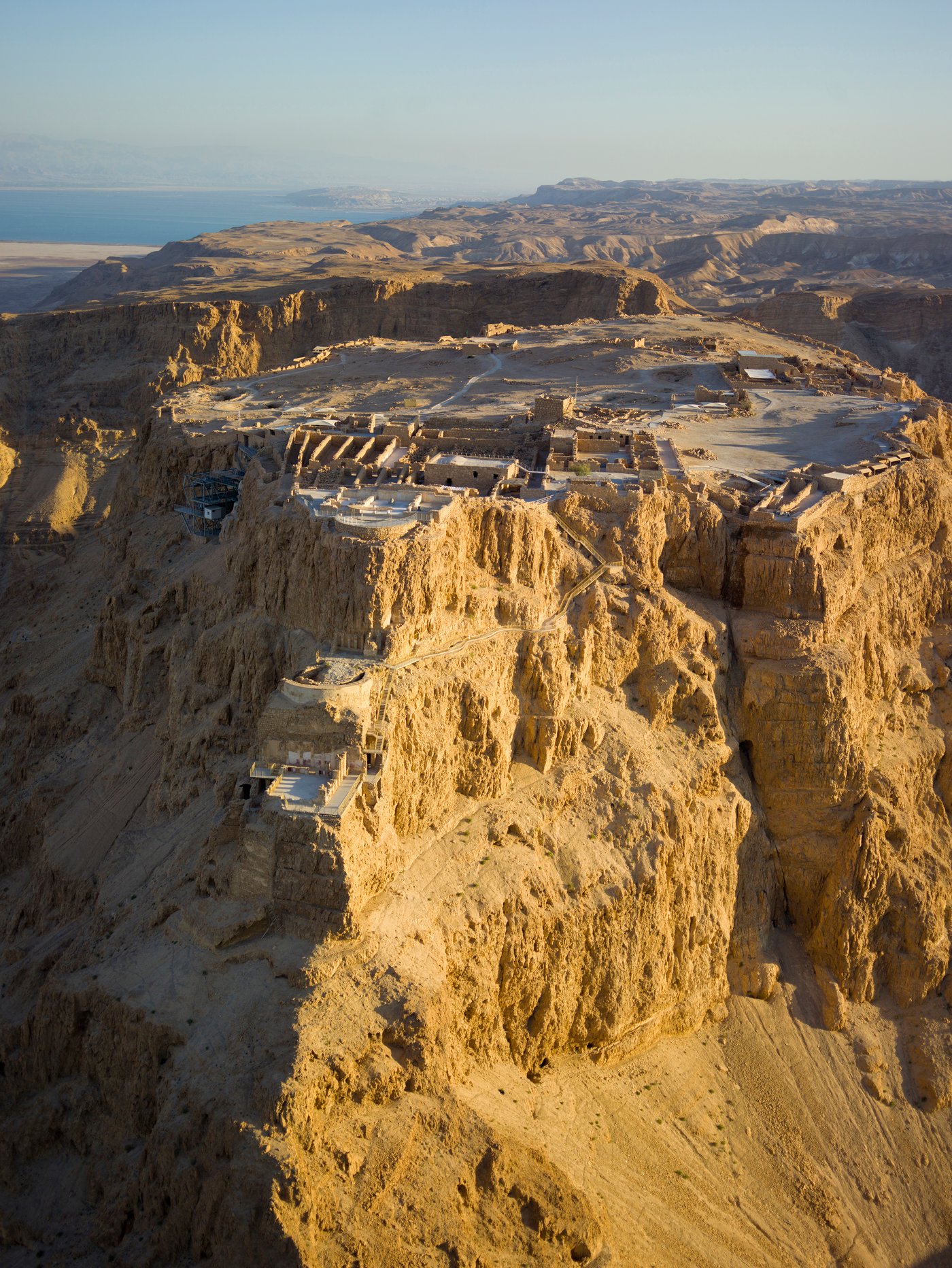
Masada, a natural mesa rising 400 meters above the Dead Sea, served as a palatial fortress complex constructed by King Herod the Great between 37 and 31 BCE. Located in the Judaean Desert, it was designed both as an impregnable refuge and a display of Herodian grandeur, featuring two ornate palaces, storehouses, barracks, and a sophisticated water system. Following Herod’s death, a Roman garrison occupied the site until it was seized by Jewish rebels at the outset of the First Jewish-Roman War (66–73 CE). Masada became the last bastion of resistance, holding approximately 960 Zealots and their families under Eleazar ben Yair.

"Let our wives die before they are abused, and our children before they have tasted of slavery; and after we have slain them, let us bestow that glorious benefit upon one another mutually, and preserve ourselves in freedom, as an excellent funeral monument for us."
— Eleazar ben Yair, addressing the defenders of Masada, recorded by Josephus, The Jewish War VII.8.6 (c. 75 CE)
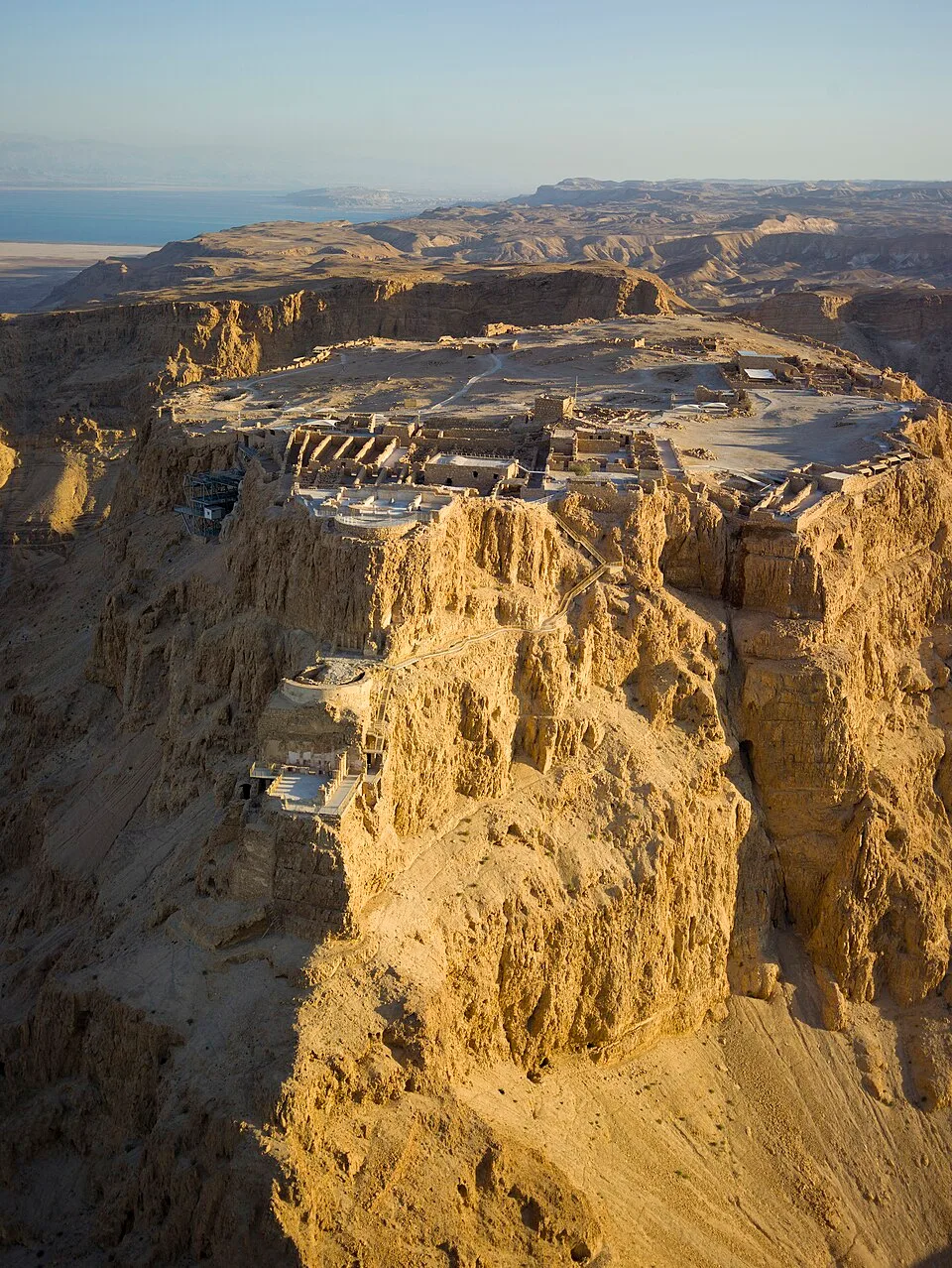
Israel-2013-Aerial 21-Masada
Israel-2013-Aerial 21-Masada | Godot13 (CC BY-SA 4.0)

Architectural Features

Herod’s architects adapted the diamond-shaped plateau (300 by 600 meters) into a self-sufficient enclave. The Northern Palace, built on three rock-cut terraces descending the cliff face, provided royal quarters with panoramic views and frescoed walls. The Western Palace, the largest structure, likely housed administrative functions. An elaborate water system collected flash floods from the western wadis, channeling them into massive rock-hewn cisterns that held up to 40,000 cubic meters. A casemate wall encircled the summit, integrating rooms into the fortifications. These features cemented Masada’s reputation as a marvel of Hellenistic-Roman engineering.

Archaeological Discoveries
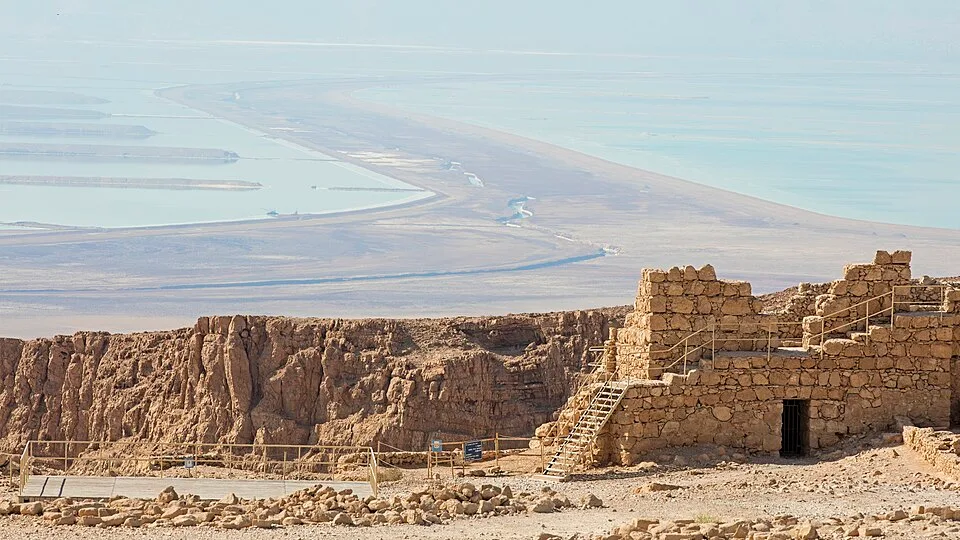
ISR-2016-Masada 04
ISR-2016-Masada 04 | Godot13 (CC BY-SA 4.0)

The first systematic excavations, led by Yigael Yadin (1963–1965) with an army of international volunteers, uncovered much of the site. Findings include mosaic floors, ritual baths (mikvaot), thousands of coins (including rare silver shekels from the revolt), storage jars still bearing inscriptions, and remains of the defenders’ daily life. Most poignant were eleven ostraca bearing single names, one reading “Ben Yair,” which some scholars link to the lots cast before the mass suicide recounted by Josephus. The Roman siege works—a circumvallation wall, eight camps, and an assault ramp on the west—remain strikingly visible.

The Siege and Josephus’s Account
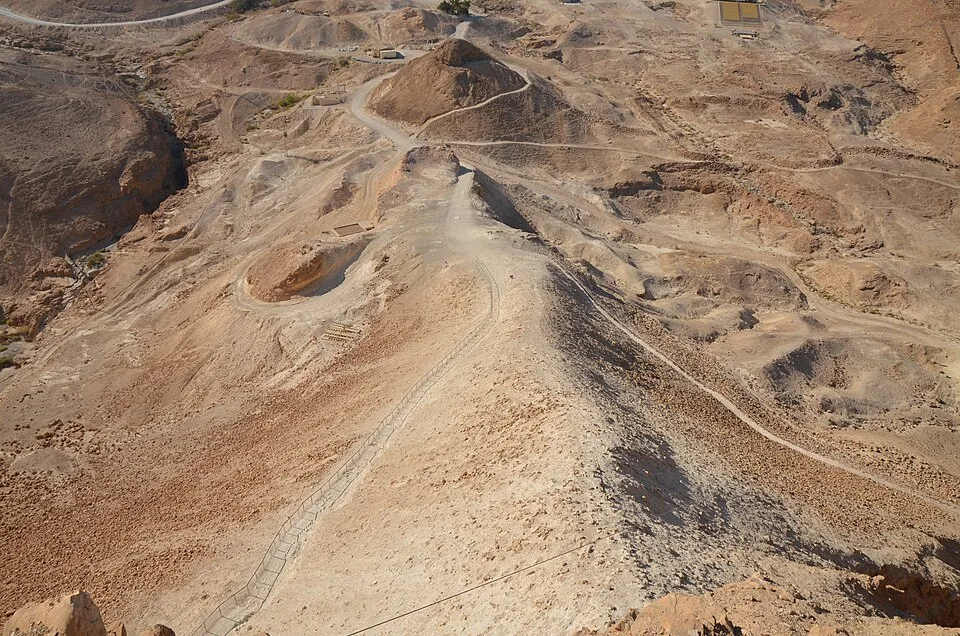
The Roman siege ramp seen from the hilltop, Masada (15444361849)
The Roman siege ramp seen from the hilltop, Masada (15444361849) | Carole Raddato from FRANKFURT, Germany (CC BY-SA 2.0)

Flavius Josephus’s The Jewish War is the sole ancient narrative of Masada’s fall. He describes a protracted siege culminating in the mass suicide of the defenders when Roman forces breached the walls (traditionally dated 73 CE, though 74 CE is debated). Modern archaeology confirms many details: the ramp, the assault, and evidence of destruction layers. However, the suicide story—only recorded by Josephus—has been questioned; no mass grave has been found, and the narrative may have been shaped by Greco-Roman literary tropes or Josephus’s political agenda. The ostraca with names are often cited as support, but their connection to the lots is inferential.

Significance and Legacy

Masada’s excavation transformed Israeli archaeology, becoming a national symbol of courage and determination. The site’s preservation and accessibility—via cable car or the iconic Snake Path—draw hundreds of thousands of visitors annually. Its designation as a UNESCO World Heritage Site in 2001 underscores its universal value as a monument to both Roman power and Jewish resistance. Yet, Masada remains a contested site, where archaeological facts and national mythology intertwine, prompting ongoing scholarly debate over how to interpret the material record.

Por qué es importante

Masada stands as a poignant testament to the tenacity of the Jewish revolt against Rome, marking the dramatic conclusion of the First Jewish-Roman War. Its remarkable preservation and the vivid narrative of its fall have made it a cornerstone of modern Israeli identity and an enduring symbol of resistance in the ancient world.

Evidencia e interpretación

Distinguir lo bien establecido de lo que sigue en debate.

Hechos bien establecidos

4
  • Herod the Great constructed the palace-fortress between 37 and 31 BCE, as evidenced by architectural style, coins, and historical sources.
  • The Roman siege works—circumvallation wall, eight camps, and assault ramp—physically survive and align with Josephus’s description.
  • The site was occupied by Jewish rebels during the First Jewish-Roman War, indicated by rebel coins, ritual baths, and destruction layers.
  • Masada’s water system, consisting of aqueducts and vast cisterns, could sustain up to several thousand inhabitants through arid summers.

Inferencias académicas

1
  • The eleven inscribed pottery sherds (ostraca) bearing names, including 'Ben Yair,' may relate to the lots cast before the mass suicide, as recorded by Josephus.

Interpretaciones debatidas

2
  • The mass suicide of 960 defenders, described only by Josephus, lacks direct archaeological corroboration; some scholars argue it was a literary invention or exaggeration.
  • The exact year of the siege’s end (73 or 74 CE) remains disputed due to inconsistencies in Josephus’s chronology and Roman military records.

Descubrimiento y excavación

Modern conservation and research

Dirigido por Israel Antiquities Authority / UNESCO

Ongoing conservation interventions by the Israel Nature and Parks Authority and the Israel Antiquities Authority address erosion, while targeted digs refine understanding of Herod’s building phases and the siege.

1838

Identification of the site

Dirigido por Edward Robinson and Eli Smith

Edward Robinson and Eli Smith identify the ruin of es-Sebbe as ancient Masada based on Josephus’s description and local topography.

1955–1956

First systematic survey and trial excavations

Dirigido por Yigael Yadin

A joint Hebrew University, Israel Exploration Society, and Israel Department of Antiquities expedition, directed by Yigael Yadin, conducts preliminary clearing and mapping, revealing Herodian structures and the water system.

1963–1965

Large-scale international excavation

Dirigido por Yigael Yadin

Yadin leads massive, volunteer-driven excavations that uncover the palaces, synagogue, and rebel artifacts, becoming a seminal event in Israeli archaeology.

1995

Excavations of the Roman siege works

Dirigido por Gideon Foerster, Haim Goldfus

Archaeologists Gideon Foerster, Haim Goldfus, and others excavate the Roman camps and assault ramp, clarifying their construction and deployment.

Fotos de la comunidad

Comparte tu experiencia

¿Has visitado este sitio? Sube tus fotos para ayudar a otros a descubrirlo.

Cómo citar esta página

Atlas Anatolia. (100). Masada. Atlas Anatolia. https://atlasanatolia.com/es/site/masada

Contenido bajo licencia CC BY-SA 4.0 — se requiere atribución al reutilizar.

Fuentes

  • Josephus (c. 75 CE), The Jewish WarFlavius Josephus (75)
  • Yadin, Y. (1966), Masada: Herod's Fortress and the Zealots' Last StandYigael Yadin (1966)
  • Netzer, E. (1991), 'The Buildings of Masada,' in Masada: The Yigael Yadin Excavations 1963-1965, Final ReportsEhud Netzer (1991)
  • Ben-Tor, A. (2009), Back to MasadaAmnon Ben-Tor (2009)
  • UNESCO World Heritage Centre - MasadaEnlace
  • Zias, J. and Gorski, A. (2006), 'The Capture of Masada: A Chronological Reevaluation,' in Journal of Roman ArchaeologyJoe Zias and Azriel Gorski (2006)

Preguntas frecuentes

¿Dónde se encuentra Masada?

Masada se encuentra en Southern District, Judaean Desert, Israel.

¿Qué antigüedad tiene Masada?

Masada se fecha aproximadamente en 100 a. C. – 73 d. C..

¿Qué civilizaciones se relacionan con Masada?

Masada se relaciona con Roman, Judean.

¿Por qué es importante Masada?

Masada stands as a poignant testament to the tenacity of the Jewish revolt against Rome, marking the dramatic conclusion of the First Jewish-Roman War.

¿Masada es Patrimonio Mundial de la UNESCO?

Sí. Masada está inscrito en la Lista del Patrimonio Mundial de la UNESCO.