
Saltar al contenido
Atlas Anatolia
NoticiasIce Age teeth in Sulawesi push betel-nut use back as far as 25,000 yearsRoman mosaic and Eros head uncovered in the basilica at Pompeiopolis, Kastamonu
Castle of St. Peter in Bodrum (ancient Halicarnassus)

Wikimedia Commons (CC BY-SA)

CiudadDestacado

Bodrum (Halicarnassus)

Seyfi Cem Baskin

Bodrum1000 a. C. – 400 d. C.

Home to the Mausoleum at Halicarnassus — one of the Seven Wonders of the Ancient World — and birthplace of Herodotus, the "Father of History," this Carian-Greek city remains one of the most storied places on the Aegean coast.

411
Interés 62

Ubicación

Muğla · Aegean · Turquía

37.04°N · 27.43°E · Asia

Wonder

Mausoleum at Halicarnassus — one of the Seven Wonders of the Ancient World

Herodotus

Birthplace of the "Father of History" (c. 484 BCE)

Mausolus

Carian dynast who made Halicarnassus his capital (r. 377–353 BCE)

Sculptors

Mausoleum decorated by Scopas, Bryaxis, Timotheus, Leochares

Castle

Crusader Castle of St. Peter built with Mausoleum stones (1402)

Museum

Museum of Underwater Archaeology in the Crusader castle

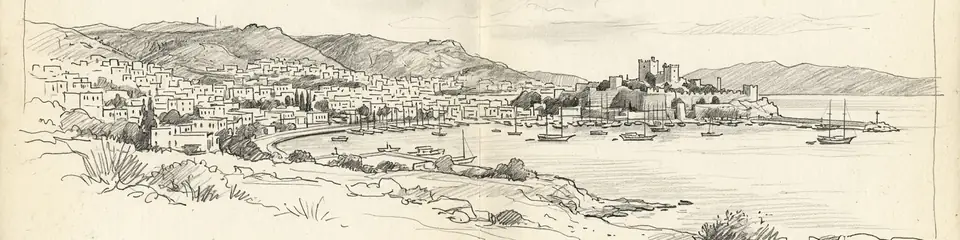
Graphite pencil sketch banner of Bodrum (Halicarnassus)

Halicarnassus gave the world two gifts of incalculable value: history as a discipline, through Herodotus, and the concept of the monumental tomb as memorial, through the Mausoleum.”

De Wikipedia

Halicarnassus (modern Bodrum) was home to the Mausoleum, one of the Seven Wonders of the Ancient World, and the birthplace of Herodotus, the Father of History.

Leer el artículo completo en Wikipedia

Ubicación

Resumen

Bodrum, ancient Halicarnassus, occupies a commanding position on a peninsula jutting into the turquoise Aegean waters of southwestern Turkey. The city's fame rests on two extraordinary legacies: the birth of Herodotus, the world's first historian, and the Mausoleum — the monumental tomb of King Mausolus of Caria that became one of the Seven Wonders of the Ancient World and gave the English language the word "mausoleum."

Founded by Dorian Greeks but deeply influenced by its Carian population, Halicarnassus embodied the cultural fusion that characterized southwestern Anatolia. The city reached its zenith under Mausolus (ruled 377-353 BCE), the Carian dynast who governed as a semi-independent satrap of the Persian Empire. Mausolus moved the Carian capital from Mylasa to Halicarnassus and embarked on an ambitious building program that transformed the city into one of the most splendid in the Greek world.

"Halicarnassus is the royal seat of the Carians, and the birthplace of Herodotus the historian."
— Strabo, Geography (c. 7 BCE - 23 CE)

The Mausoleum, begun during Mausolus's lifetime and completed after his death by his wife-sister Artemisia II, was a towering structure combining Greek, Near Eastern, and Egyptian architectural elements. Ancient sources describe it as rising approximately 45 meters high on a massive rectangular podium, crowned by a pyramid of 24 steps bearing a marble chariot. The greatest Greek sculptors of the era — Scopas, Bryaxis, Timotheus, and Leochares — carved the sculptural frieze that adorned its base. Though the building was destroyed by successive earthquakes between the 12th and 15th centuries, fragments of its sculptures now in the British Museum attest to their extraordinary quality.

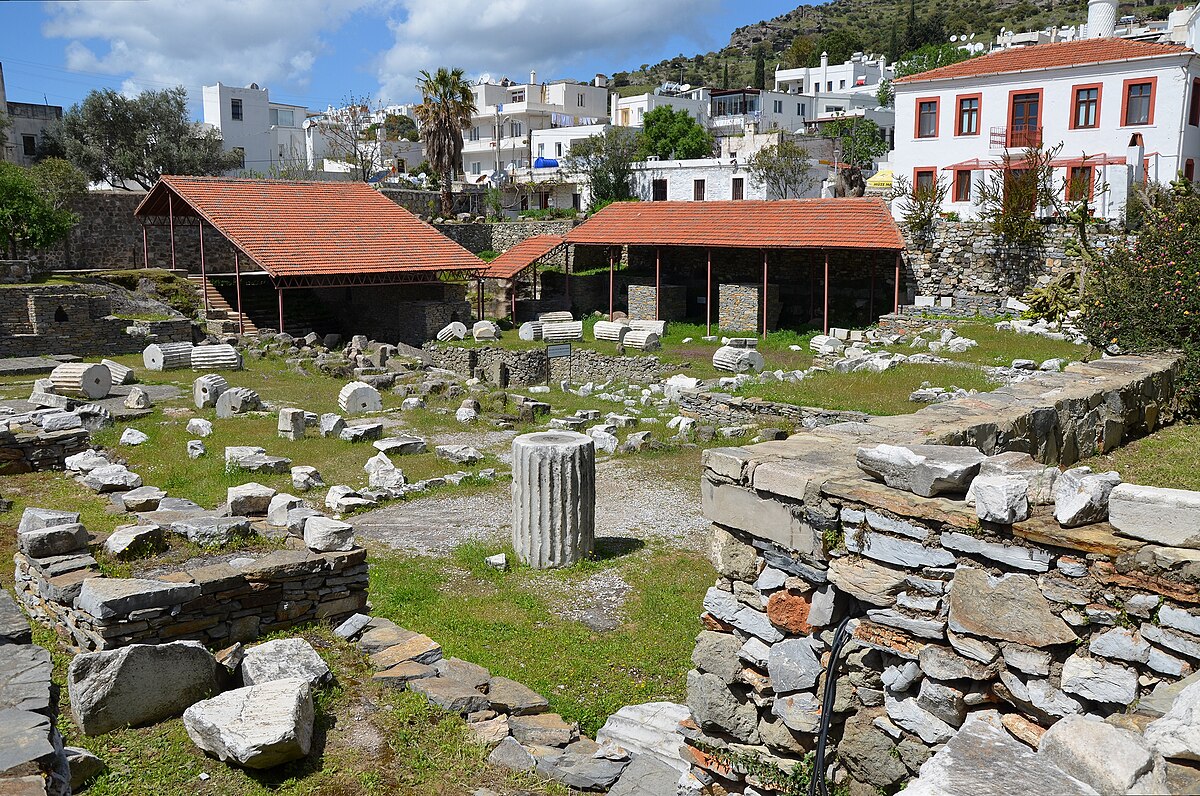
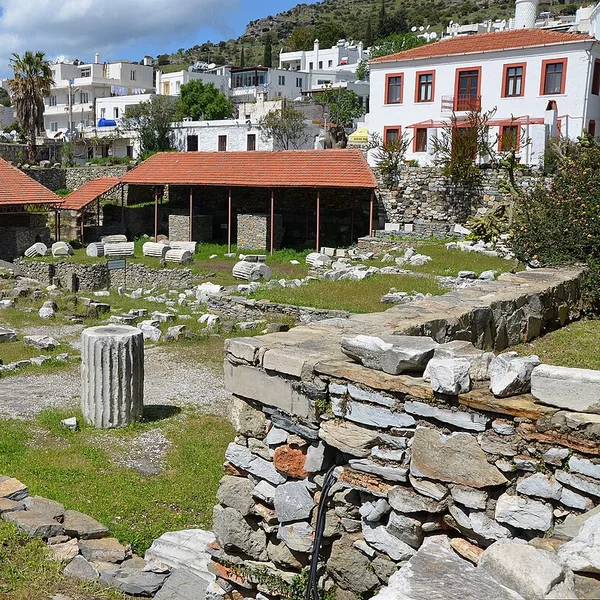
The site of the Mausoleum, excavated by Charles Thomas Newton in 1857, remains visible in the city center as a partially reconstructed foundation with an explanatory museum. The Crusader-era Castle of St. Peter, built by the Knights Hospitaller in the 15th century using stones from the ruined Mausoleum, now houses the Museum of Underwater Archaeology — one of the finest maritime museums in the world, with reconstructed ancient shipwrecks and artifacts recovered from the Aegean seabed.
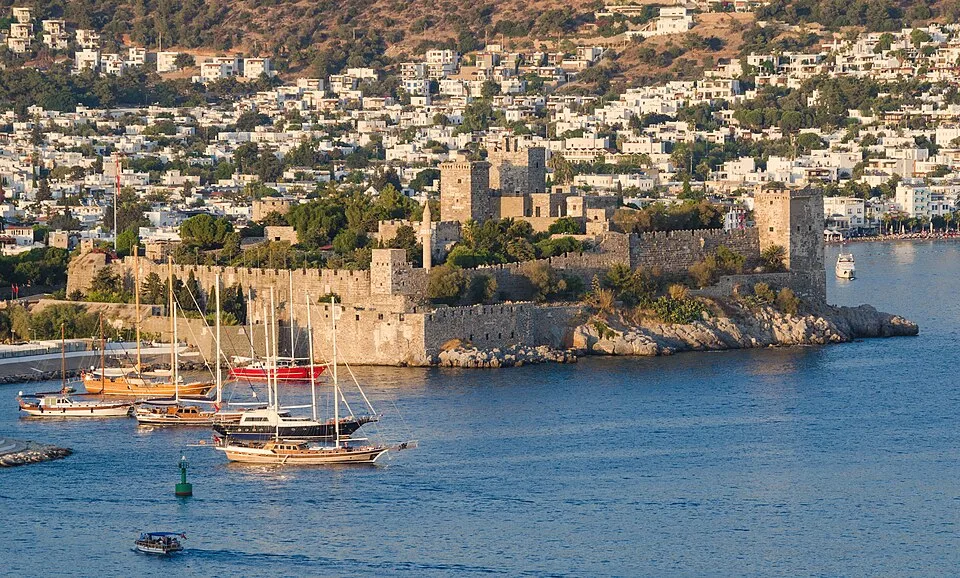
Bodrum Castle (2017)
Bodrum Castle (2017) | Serhio Magpie (CC BY 4.0)

Herodotus, born in Halicarnassus around 484 BCE, traveled the ancient world from Egypt to Babylon gathering the material for his Histories — the first systematic attempt to record and explain human events, and the foundation of the Western historical tradition. Though he spent most of his adult life abroad, his Carian-Greek heritage informed his uniquely cosmopolitan perspective on the ancient world.

Por qué es importante

Halicarnassus gave the world two gifts of incalculable value: history as a discipline, through Herodotus, and the concept of the monumental tomb as memorial, through the Mausoleum. The word "mausoleum" itself testifies to the lasting impact of Mausolus's funerary monument on Western culture. The Mausoleum's unique blend of Greek, Near Eastern, and Egyptian elements exemplifies the cultural synthesis that made Caria a creative laboratory of the ancient world. As one of the Seven Wonders, Halicarnassus belongs to the canon of sites that have defined humanity's architectural ambition across millennia.

Evidencia e interpretación

Distinguir lo bien establecido de lo que sigue en debate.

Hechos bien establecidos

4
  • Pliny the Elder (Natural History 36.30-31) describes the Mausoleum in detail, including its dimensions, sculptors, and the chariot group crowning the pyramid, corroborated by excavated foundations and fragments.
  • Sculptural fragments from the Mausoleum, including portions of the Amazon frieze and chariot horses, are preserved in the British Museum and match ancient descriptions of the monument.
  • Herodotus identifies himself as a native of Halicarnassus in the opening of his Histories (1.1), and his detailed knowledge of Carian customs confirms his local origins.
  • Stones from the ruined Mausoleum were documented by the Knights Hospitaller as having been reused in the construction of the Castle of St. Peter beginning in 1402.

Inferencias académicas

1
  • The eclectic architectural style of the Mausoleum — combining Greek columns, a Near Eastern podium, and an Egyptian pyramid — reflects the multicultural identity of the Hecatomnid dynasty ruling a Carian-Greek population under Persian suzerainty.

Interpretaciones debatidas

1
  • The exact height and detailed proportions of the Mausoleum remain debated, with various reconstructions ranging from 40 to 50 meters based on different interpretations of the ancient literary evidence and excavated remains.

Descubrimiento y excavación

1857

Newton's Mausoleum excavation

Dirigido por Charles Thomas Newton

Charles Thomas Newton excavated the site of the Mausoleum for the British Museum, recovering sculptural fragments, architectural elements, and the foundation plan of the ancient Wonder.

1966–1977

Danish Mausoleum project

Dirigido por Kristian Jeppesen

Kristian Jeppesen led comprehensive re-excavation and architectural analysis that produced the definitive reconstruction of the Mausoleum's original form.

1990–2010

Underwater archaeology

Excavations of ancient shipwrecks in Bodrum harbor and the surrounding coast recovered thousands of artifacts now displayed in the Museum of Underwater Archaeology.

2010

City wall investigations

Archaeological work documented the Mausolus-era city fortifications, confirming the ambitious scale of his urban rebuilding program.

2017

Mausoleum site conservation

Major conservation and interpretation project improved the presentation of the Mausoleum foundation remains and updated the site museum.

Fotos de la comunidad

Comparte tu experiencia

¿Has visitado este sitio? Sube tus fotos para ayudar a otros a descubrirlo.

Cómo citar esta página

Atlas Anatolia. (1000). Bodrum (Halicarnassus). Atlas Anatolia. https://atlasanatolia.com/es/site/bodrum

Contenido bajo licencia CC BY-SA 4.0 — se requiere atribución al reutilizar.

Leer el artículo completo en World History Encyclopedia
World History Encyclopedia · CC BY-NC-SA

Fuentes

  • The Mausoleum at Halicarnassus: Reports of the Danish Archaeological ExpeditionKristian Jeppesen (2000)
  • Halicarnassus: From the 5th Century BC to ByzantiumPoul Pedersen (2013)
  • Wikipedia — HalicarnassusEnlace

Preguntas frecuentes

¿Dónde se encuentra Bodrum (Halicarnassus)?

Bodrum (Halicarnassus) se encuentra en Muğla, Aegean, Türkiye.

¿Qué antigüedad tiene Bodrum (Halicarnassus)?

Bodrum (Halicarnassus) se fecha aproximadamente en 1000 a. C. – 400 d. C..

¿Qué civilizaciones se relacionan con Bodrum (Halicarnassus)?

Bodrum (Halicarnassus) se relaciona con Carian, Greek.

¿Por qué es importante Bodrum (Halicarnassus)?

Halicarnassus gave the world two gifts of incalculable value: history as a discipline, through Herodotus, and the concept of the monumental tomb as memorial, through the Mausoleum.

¿Bodrum (Halicarnassus) es Patrimonio Mundial de la UNESCO?

Bodrum (Halicarnassus) no está inscrito actualmente en la Lista del Patrimonio Mundial de la UNESCO.