
تخط إلى المحتوى
Atlas Anatolia
أخبارأسنان من العصر الجليدي في سولاويزي تدفع استخدام التنبول إلى ما يصل إلى 25,000 عاماكتشاف فسيفساء رومانية ورأس إيروس في بازيليكا بومبيوبوليس، كاستامونو
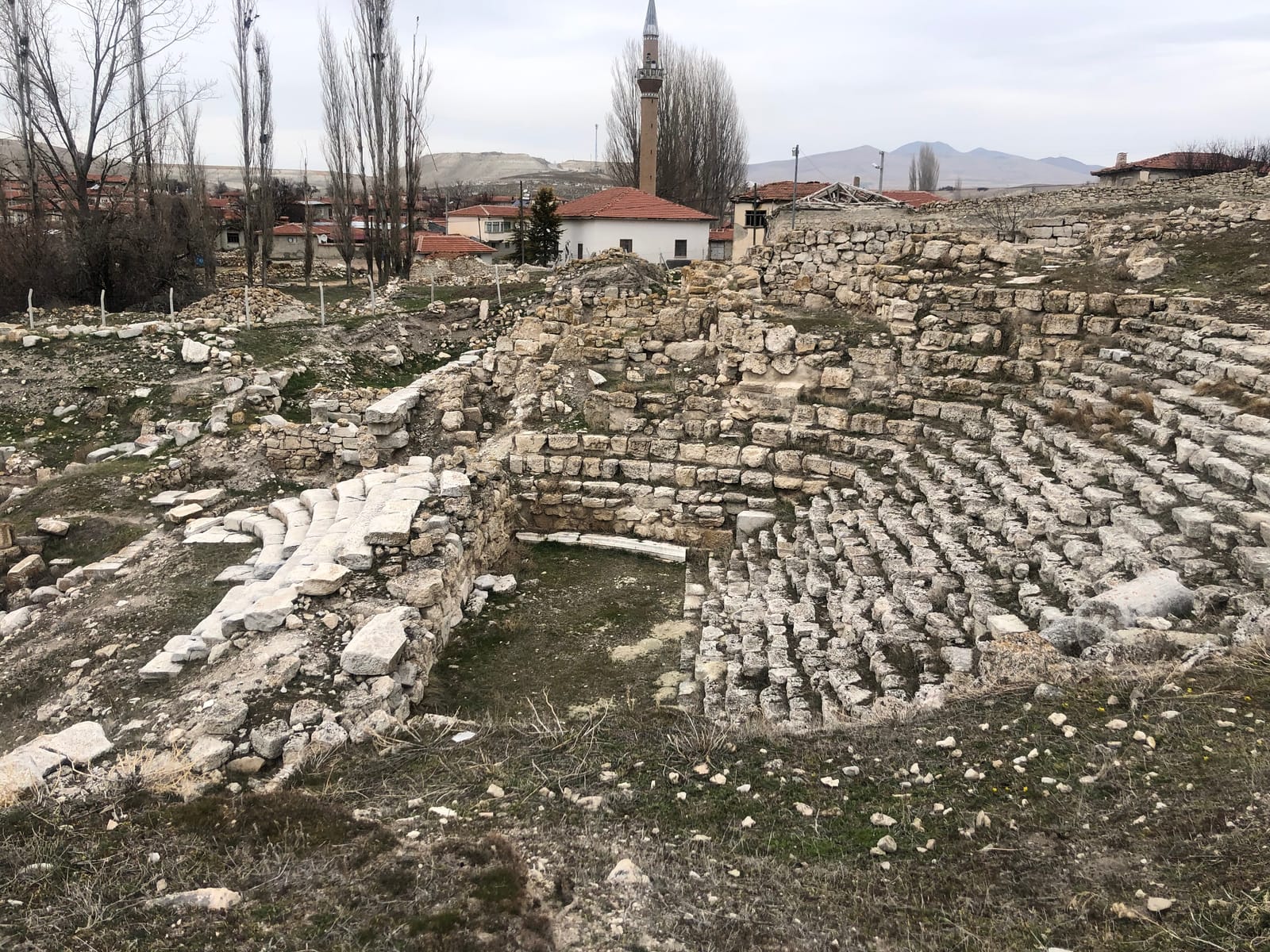
Ruins of the ancient sanctuary at Pessinus

Wikimedia Commons

ملاذ مقدس

Pessinus

Seyfi Cem Baskin

Ballihisar800 ق.م – 400 م

The sacred city of Cybele, the Great Mother goddess, from whose temple the Romans carried a sacred black stone to Rome in 204 BCE — an event that changed the religious landscape of the Roman world.

312
اهتمام 46

الموقع

Eskisehir · Central Anatolia · تركيا

39.34°N · 31.57°E · آسيا

Deity

Cybele — the Great Mother of the Gods

Sacred Stone

Sent to Rome in 204 BCE (Sibylline prophecy)

Priesthood

Galloi — eunuch priests of Cybele

Religious Impact

First eastern cult officially adopted by Rome

Major Architectural Feature

A large, well-preserved Roman-era colonnaded street (cardo maximus) and a monumental marble temple podium, likely from the Imperial period.

Water Management

An extensive, sophisticated system of water channels and cisterns, including a large nymphaeum, indicating advanced hydraulic engineering for the sanctuary and city.

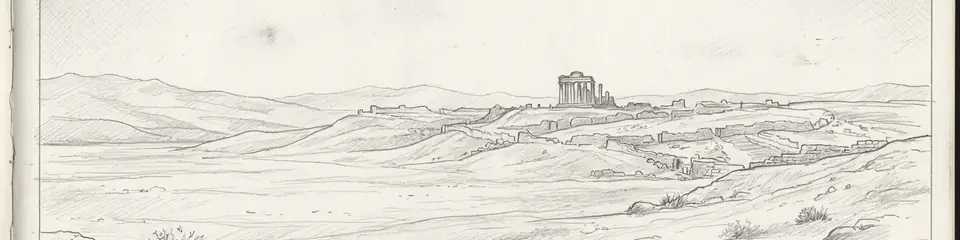
Graphite pencil sketch banner of Pessinus

“Pessinus represents one of the most consequential cultural transfers in ancient history.”

من ويكيبيديا

Pessinus was the chief cult center of Cybele, the Great Mother goddess, in ancient Phrygia, from where the sacred stone was transferred to Rome in 204 BCE.

اقرأ المقال الكامل على ويكيبيديا →

الموقع

نظرة عامة

Pessinus was the chief cult center of Cybele (Kybele), the Great Mother of the Gods — the most powerful indigenous goddess of Anatolia. The city's Temple of Cybele was one of the holiest sanctuaries in the ancient world, tended by eunuch priests called Galloi who performed ecstatic rituals including self-castration in devotion to the goddess.

In 204 BCE, during the desperate final years of the Second Punic War, the Romans — following a Sibylline prophecy — sent an embassy to Pessinus to acquire the sacred stone (baetyl) of Cybele. This black meteorite, believed to embody the goddess, was transported to Rome and installed on the Palatine Hill, marking the official introduction of an Anatolian deity into the Roman state religion.

"Pessinus is the most famous city of the Phrygians, sacred to the Mother of the Gods."
— Strabo, c. 7 BCE - 23 CE

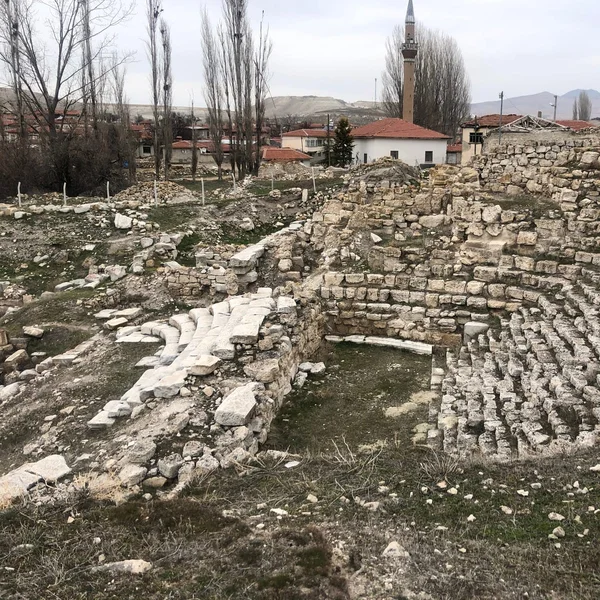
The city lies near modern Ballihisar in Eskisehir province, in the Sakarya (ancient Sangarios) river basin. Under Phrygian, Galatian, and Roman administration, Pessinus remained a pilgrimage destination. Archaeological excavations have revealed a large temple complex, a Roman theatre, colonnaded streets, and a significant Imperial-era market area.

The cult of Cybele, originating in the Phrygian highlands around Pessinus, became one of the most widespread religions of the ancient Mediterranean, influencing mystery cults, early Christianity, and concepts of divine motherhood that persist in religious thought today.
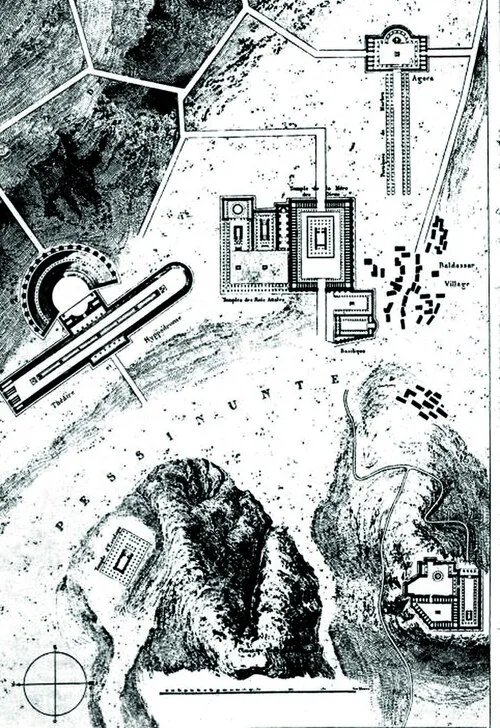
Plan of Ballihisar, Charles Texier 1834

*Plan of Ballihisar, Charles Texier 1834 | Charles Texier

(Life time: 1871) (Public domain)*

The city's prosperity was not solely religious. As Strabo noted, it was a major commercial hub. Its location on the Sangarius River and key trade routes facilitated a thriving economy based on wool, textiles, and the pilgrimage trade. Excavations have revealed a sophisticated urban layout from the Hellenistic and Roman periods, including a large theater, an agora, and a monumental colonnaded street (cardo) flanked by shops. The sanctuary itself evolved architecturally; the original Phrygian temple was later superseded by a grand Roman marble complex, reflecting the site's continued importance under the Empire.

Following the official adoption of Christianity, the cult of Cybele declined. The temple complex was systematically dismantled, and its marble was quarried for use in early Christian buildings, a common fate for pagan sanctuaries. By the 5th century CE, Pessinus had diminished from a major religious center to a modest bishopric, its sacred stone in Rome a distant memory of a pivotal moment in religious history. The city was eventually abandoned, with the modern village of Ballıhisar situated nearby.

لماذا يهم

Pessinus represents one of the most consequential cultural transfers in ancient history. The transportation of Cybele's sacred stone from Pessinus to Rome in 204 BCE was the first official adoption of an eastern deity into the Roman state religion — a precedent that opened the door for subsequent eastern cults (Isis, Mithras, Christianity) that transformed Western civilization. The cult of Cybele at Pessinus embodies the deep religious traditions of Anatolian civilization that predated and ultimately reshaped both Greek and Roman religion.

الأدلة والتفسير

التمييز بين ما هو راسخ وما لا يزال موضع نقاش.

حقائق راسخة

3
  • Livy (Ab Urbe Condita 29.10-14) records the Roman embassy to Pessinus in 204 BCE to acquire the sacred stone of Cybele, transported to Rome on the orders of the Senate.
  • Archaeological excavations have revealed a large temple complex at Pessinus consistent with literary descriptions of the sanctuary of the Great Mother.
  • Strabo (Geography 12.5.3) describes Pessinus as the greatest emporium in that region and center of the Cybele cult with a temple of considerable size.

استنتاجات علمية

1
  • The cult of Cybele at Pessinus likely originated in Neolithic-era mother goddess worship traditions of central Anatolia, predating the Phrygian period.

تفسيرات متنازع عليها

2
  • The nature of the sacred stone (baetyl) — whether a meteorite or another type of sacred object — and its precise original location within the temple are debated.
  • The extent to which the ecstatic practices of the Galloi, including self-castration, were practiced at Pessinus versus later Roman-era elaborations remains uncertain.

الاكتشاف والتنقيب

1967–1973

Belgian excavations

بقيادة Paul Lambrechts

Paul Lambrechts and the University of Ghent conducted the first systematic excavations, identifying the temple area and market complex.

1987–2008

Ghent University continued excavations

بقيادة John Devreker

John Devreker led expanded excavations revealing the theatre, colonnaded streets, and residential quarters.

1990

Theatre and City Center Excavations

بقيادة John Devreker (Ghent University)

Excavations led by John Devreker focused on uncovering the Roman theatre and adjacent public buildings, clarifying the urban layout of the city center.

2009–2015

Turkish-Belgian joint excavations

Continued research on the temple precinct and surrounding structures, with focus on the Imperial-period city.

صور المجتمع

شارك تجربتك

هل قمت بزيارة هذا الموقع؟ ارفع صورك لمساعدة الآخرين في اكتشافه.

كيفية الاستشهاد بهذه الصفحة

Atlas Anatolia. (800). Pessinus. Atlas Anatolia. https://atlasanatolia.com/ar/site/pessinus

المحتوى مرخّص بموجب CC BY-SA 4.0 — يجب ذكر المصدر عند إعادة الاستخدام.

المصادر

  • Cybele, Attis and Related Cults — Eugene N. Lane (1996)
  • Pessinus: The Temple-State of the Mother of the Gods — John Devreker (2003)
  • Wikipedia — Pessinusرابط

الأسئلة الشائعة

أين يقع Pessinus؟

يقع Pessinus في Eskisehir, Central Anatolia, Türkiye.

كم يبلغ عمر Pessinus؟

يعود تاريخ Pessinus إلى حوالي 800 ق.م – 400 م.

ما هي الحضارات المرتبطة بـ Pessinus؟

يرتبط Pessinus بحضارة Phrygian, Greek, Roman.

لماذا يعتبر Pessinus مهماً؟

Pessinus represents one of the most consequential cultural transfers in ancient history.

هل Pessinus موقع تراث عالمي لليونسكو؟

Pessinus غير مدرج حالياً في قائمة التراث العالمي لليونسكو.