Overview
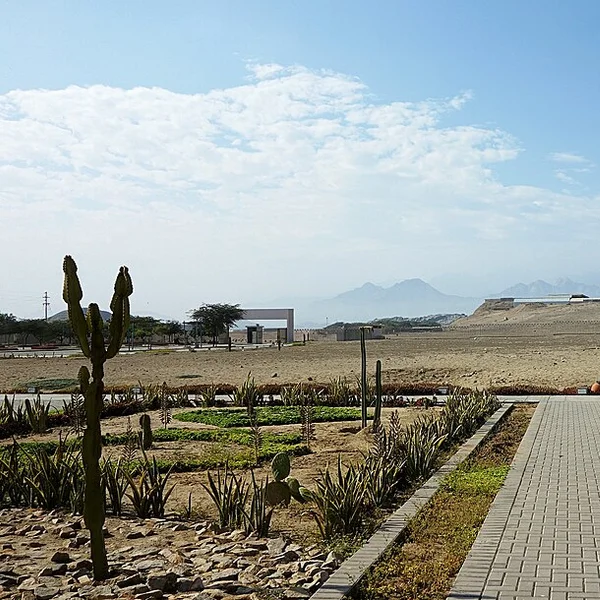
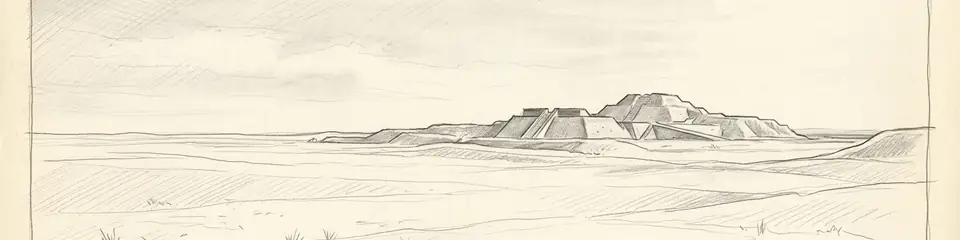
Sipán, locally known as Huaca Rajada ("cracked or split mound"), lies in the Lambayeque Valley near Chiclayo on the arid north coast of Peru. The site consists of two large eroded adobe pyramids and a lower platform mound, built by the Moche (or Mochica) civilisation, which flourished along the northern Peruvian coast from roughly 100 to 700 CE. The Moche left no writing, but they were master metallurgists and produced some of the most technically and artistically accomplished ceramics and goldwork of the ancient Americas.
In early 1987, the platform mound was being plundered by looters, who broke into a rich tomb and flooded the local market with gold artefacts. Alerted by the sudden appearance of these objects, the Peruvian archaeologist Walter Alva, then director of the Brüning Museum, intervened with police and began an emergency scientific excavation. What followed was one of the most significant archaeological discoveries of the 20th century. Alva's team uncovered a series of intact elite burials, the most spectacular of which was the tomb of an adult male, around 35 to 45 years old, who became known as the Lord of Sipán (El Señor de Sipán).
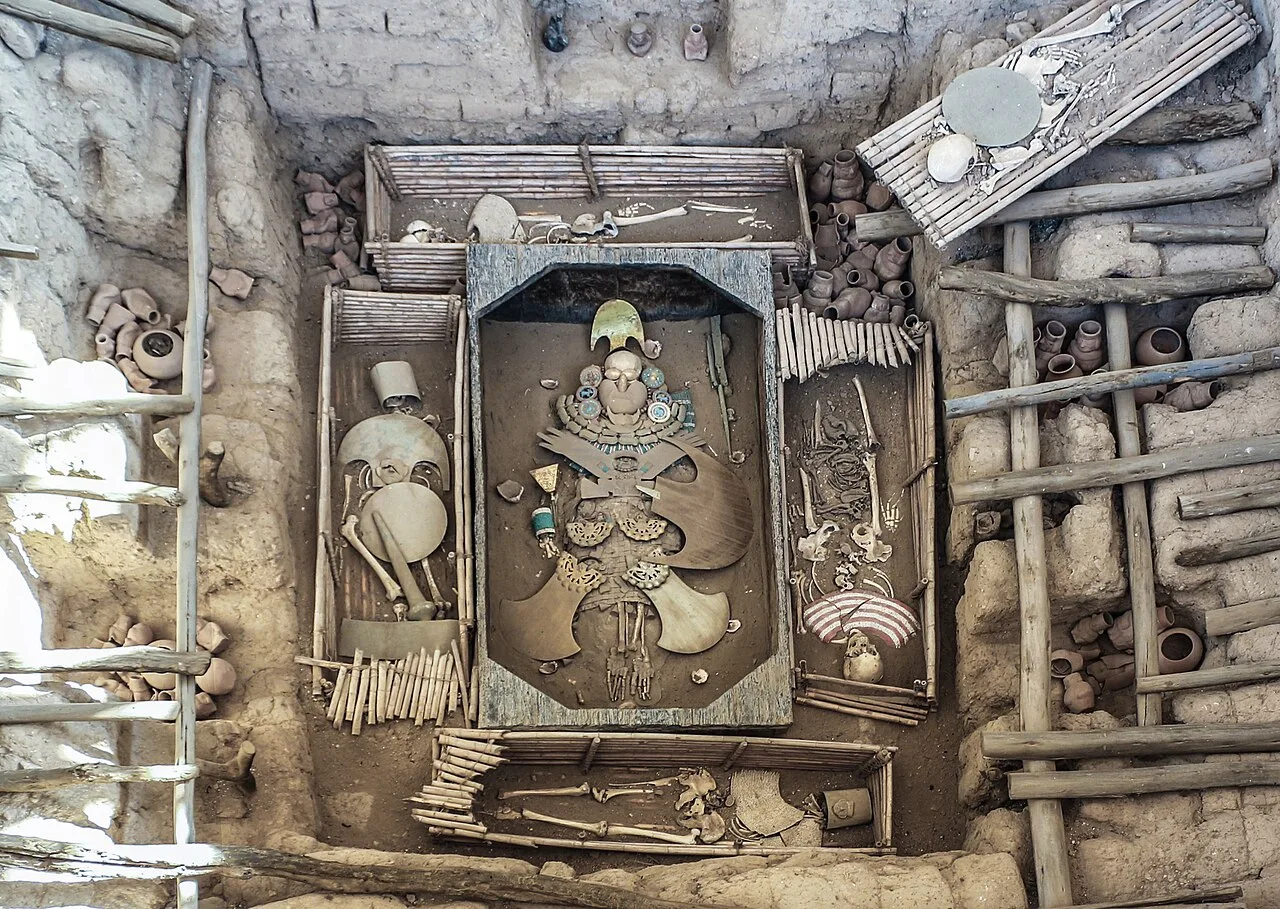
The Lord of Sipán was buried in a wooden coffin around 250 CE, accompanied by a wealth of grave goods that had never been seen intact for a Moche ruler. He wore gold and silver ornaments, turquoise and gilded-copper jewellery, banners sewn with gilded plaques, and an array of headdresses, necklaces, nose ornaments, ear spools, and a gold-and-silver sceptre. Among the most famous objects is a necklace of large beads in the form of peanuts — ten of gold for the right side, ten of silver for the left. He was accompanied in death by other individuals — including women, a military attendant, a child, and a dog — and by hundreds of ceramic vessels. Nearby tombs included the "Old Lord of Sipán," an earlier and even older ruler, and a priest.
Crucially, because the tomb was excavated scientifically rather than looted, the precise position of every object was recorded, allowing the regalia to be matched to figures depicted in Moche art — particularly the central figure of the "Sacrifice Ceremony," a ritual repeatedly portrayed on Moche pottery. This made it possible to identify the Lord of Sipán not merely as a rich man but as a specific kind of priest-ruler who enacted a known religious role. The finds are displayed in the purpose-built Royal Tombs of Sipán Museum (Museo Tumbas Reales de Sipán) in Lambayeque, opened in 2002.