


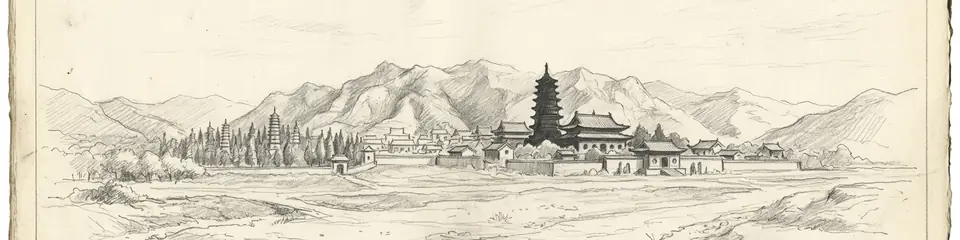
Overview
Shaolin Monastery stands in the foothills of Mount Song near Dengfeng in Henan Province, central China. Tradition credits its founding to the Indian monk Batuo (Buddhabhadra) in the 5th century CE under Northern Wei patronage; the monastery became a centre of Chan (Zen) Buddhism and, in popular lore, the cradle of Chinese martial arts. The Tang dynasty general Wang Shichong campaign (621 CE) produced stories of monk-defenders rewarded by the emperor — tales that later fed the kung fu legend.
The complex suffered repeated destruction and rebuilding — most famously in 1928 when warlord Shi Yousan burned many halls. What visitors see today mixes genuine historical layers with modern reconstruction. The Pagoda Forest (Talin) holds more than 240 brick stupas marking abbots and eminent monks from the Tang through Qing periods — an outdoor archive of monastic genealogy. Inscriptions, steles, and mural fragments document martial and medical traditions.
UNESCO listed "Historic Monuments of Dengfeng in 'The Centre of Heaven and Earth'" in 2010, including Shaolin and nearby Songyang Academy and observatory sites. The monastery's global fame far exceeds scholarly certainty about when fighting monks became central to its identity, but the material record proves an unbroken religious institution for more than 1,500 years on one of China's sacred mountains.