


Overview
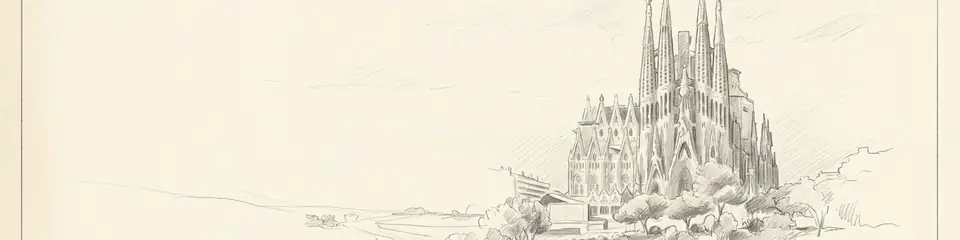
The Basílica de la Sagrada Família rises in the Eixample district of Barcelona, Catalonia, Spain. The bookseller Josep Maria Bocabella founded the Expiatory Temple of the Holy Family in 1882; Antoni Gaudí took over the project in 1883 and devoted the last decades of his life to it, dying in 1926 with only a fraction complete. Work continues under successive architects funded by donations and ticket sales.
Gaudí fused Gothic verticality with Art Nouveau organic forms: branching columns modelled on trees, ruled-surface geometry, and facades narrating Christ's birth, passion, and glory in stone. The Nativity Facade (largely Gaudí's) contrasts with the starker Passion Facade by Josep Maria Subirachs (20th century). The interior forest of columns and stained glass transforms sunlight into coloured bands across the nave.
UNESCO inscribed the nativity façade and crypt in 2005 as part of Gaudí's works. A final completion target in the 2030s would make it the longest-running major church construction in modern history. Pair with medieval Alhambra for Spain's arc from Islamic palace to modern sacred architecture.