
Skip to content
Atlas AnatoliaAtlas Anatolia
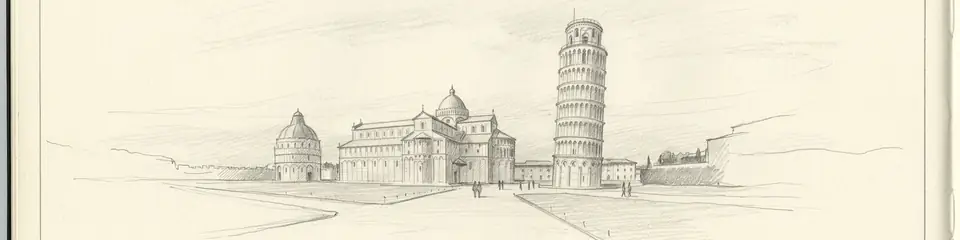
The Leaning Tower of Pisa with the cathedral and baptistery behind

Country Record

Oldest Complex in Italy

Piazza dei Miracoli

Piazza del Duomo1063 CE – 1400 CE

Cathedral

Begun 1063 CE; Pisan Romanesque with spolia columns

Leaning Tower

Campanile begun 1173; ~56 m high, ~4° lean after stabilisation

Baptistery

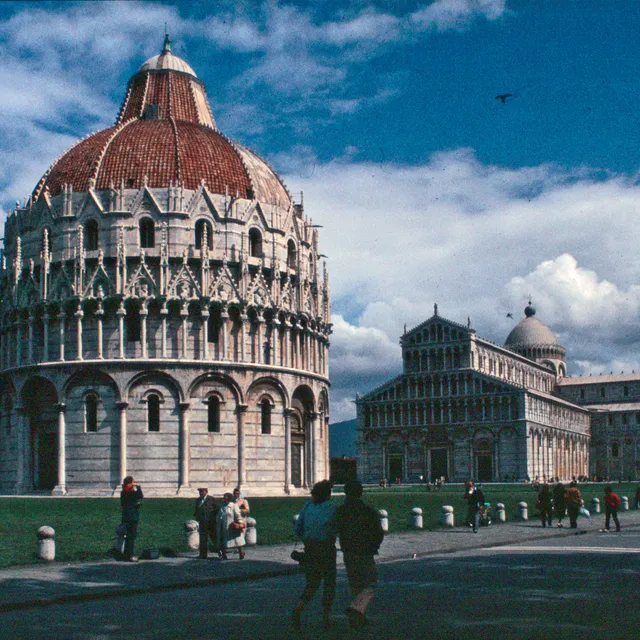
Largest in Italy; construction 1152–1363

UNESCO

Piazza del Duomo, Pisa (1987)

The Pisa ensemble documents the wealth and cosmopolitan taste of a medieval maritime republic — Romanesque architecture enriched by Mediterranean booty and trade.”

Location

Overview

The Piazza del Duomo — popularly the Piazza dei Miracoli ("Field of Miracles") — occupies the northwest edge of historic Pisa, Tuscany, Italy. The cathedral (Duomo di Pisa), begun in 1063 after a naval victory at Palermo, displays Pisan Romanesque architecture with Byzantine and Islamic influences in its bronze doors and granite columns spolia. The freestanding baptistery (1152–1363) is the largest in Italy; the camposanto (monumental cemetery) retains medieval fresco cycles damaged in 1944.

The campanile — the Leaning Tower of Pisa — began in 1173 and started tilting during construction due to soft subsoil on the south side. Work paused and resumed over centuries; the 8-storey white marble cylinder reaches about 56 metres at a roughly 4-degree lean (reduced after 1990s–2000s stabilisation). Galileo's legendary gravity experiments are apocryphal but cement the tower in scientific folklore.

UNESCO inscribed the Piazza del Duomo in 1987. The ensemble draws millions of visitors annually and anchors Pisa's identity alongside its former maritime republic history.

Why It Matters

The Pisa ensemble documents the wealth and cosmopolitan taste of a medieval maritime republic — Romanesque architecture enriched by Mediterranean booty and trade. The leaning campanile is a global icon of engineering failure turned heritage triumph, after modern stabilisation saved it for future centuries.

Stay curious

New stories and sites, once a month. No spam.

Evidence & Interpretation

Distinguishing what is well-established from what remains debated.

Well-Established Facts

2
  • Foundation inscriptions and donor records document cathedral and campanile construction phases from the 11th–14th centuries.
  • Geotechnical studies confirm tilt caused by compressible alluvial soil and asymmetric loading; stabilisation works 1990–2001 reduced lean.

Scholarly Inferences

1
  • Byzantine and Islamic decorative elements reflect Pisa's 11th–12th-century Mediterranean trade and booty; exact provenance of many spolia pieces is not always documented.

More Photos

Museum Artifacts

Community Photos

Share your experience

Have you visited this site? Upload your photos to help others discover it.

How to cite this page

Atlas Anatolia. (1063). Piazza dei Miracoli. Atlas Anatolia. https://atlasanatolia.com/site/pisa-cathedral

Content licensed CC BY-SA 4.0 — attribution required when reusing.

Sources

  • Coins and Coinage of the Pisa RepublicTravaini, Lucia (2009)
  • UNESCO — Piazza del Duomo, PisaLink

Research Papers

Frequently Asked Questions

Where is Piazza dei Miracoli located?

Piazza dei Miracoli is located in Italy.

How old is Piazza dei Miracoli?

Piazza dei Miracoli dates to approximately 1063 CE – 1400 CE.

Which civilizations are associated with Piazza dei Miracoli?

Piazza dei Miracoli is associated with the Roman.

Why is Piazza dei Miracoli important?

The Pisa ensemble documents the wealth and cosmopolitan taste of a medieval maritime republic — Romanesque architecture enriched by Mediterranean booty and trade.

Is Piazza dei Miracoli a UNESCO World Heritage Site?

Yes — Piazza dei Miracoli is inscribed as a UNESCO World Heritage Site.