



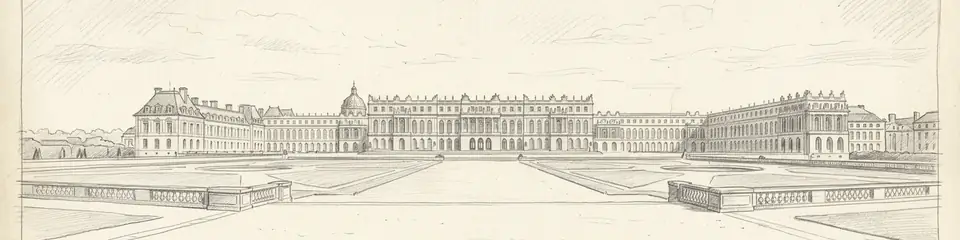
Overview
The Palace of Versailles stands in the town of Versailles, Île-de-France, about 20 kilometres southwest of Paris. Louis XIII built a hunting lodge; his son Louis XIV transformed it from the 1660s into the principal residence of the French court and the symbolic centre of absolute monarchy. Architects Louis Le Vau, Jules Hardouin-Mansart, and André Le Nôtre shaped the palace, gardens, and hydraulic displays into a unified gesamtkunstwerk.
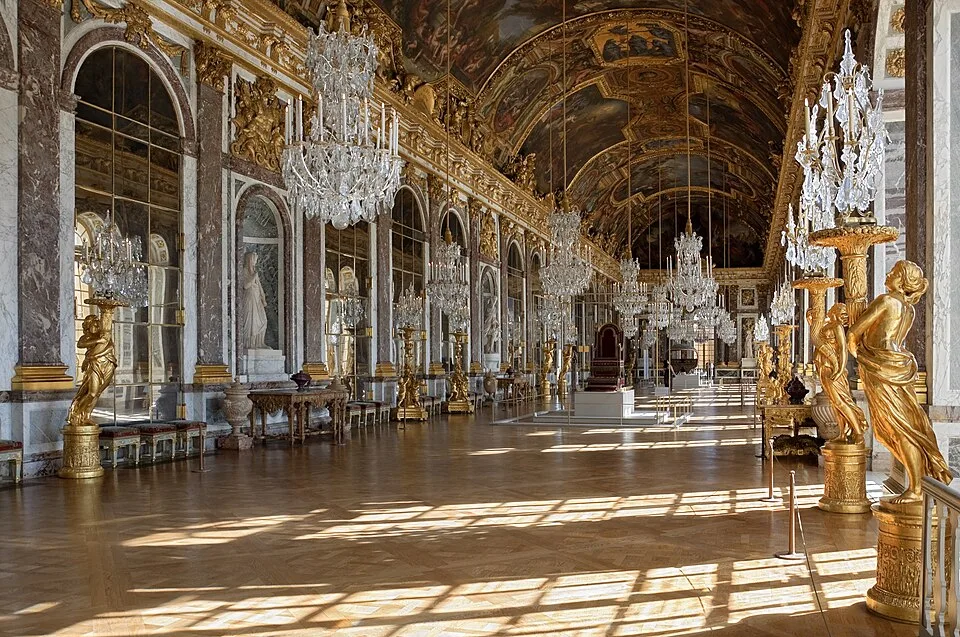
The Galerie des Glaces (Hall of Mirrors), completed 1684, looks over the Grand Canal axis where ambassadors witnessed French power. Hundreds of nobles lived in the palace under surveillance, their lives choreographed around the king's daily lever and coucher. The Treaty of Versailles (1919) was signed in the same hall, linking the site to 20th-century geopolitics.
"L'État, c'est moi — yet it was at Versailles that the spectacle of monarchy was stage-managed so that every corridor proclaimed the glory of the Sun King."
— Paraphrase of Louis XIV court ideology as recorded by Saint-Simon (early 18th c.)
The French Revolution emptied the court in 1789; the complex became a museum of French history under later republics. UNESCO inscribed the Palace and Park of Versailles in 1979. Annual visitor numbers rank among the highest of any historic house in the world.