Overview
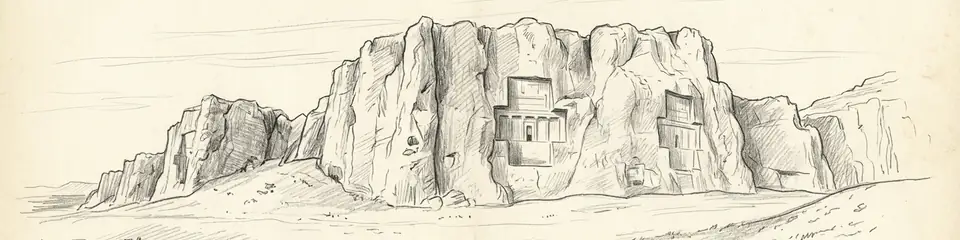
Naqsh-e Rostam ("the picture of Rostam," a name from later Persian legend) is a sheer cliff face about 12 kilometres northwest of Persepolis in the Fars region of southern Iran, the heartland of the ancient Persian empires. It is one of the most important monuments of pre-Islamic Iran, bringing together works from the Elamite, Achaemenid, and Sasanian periods in a single dramatic setting.
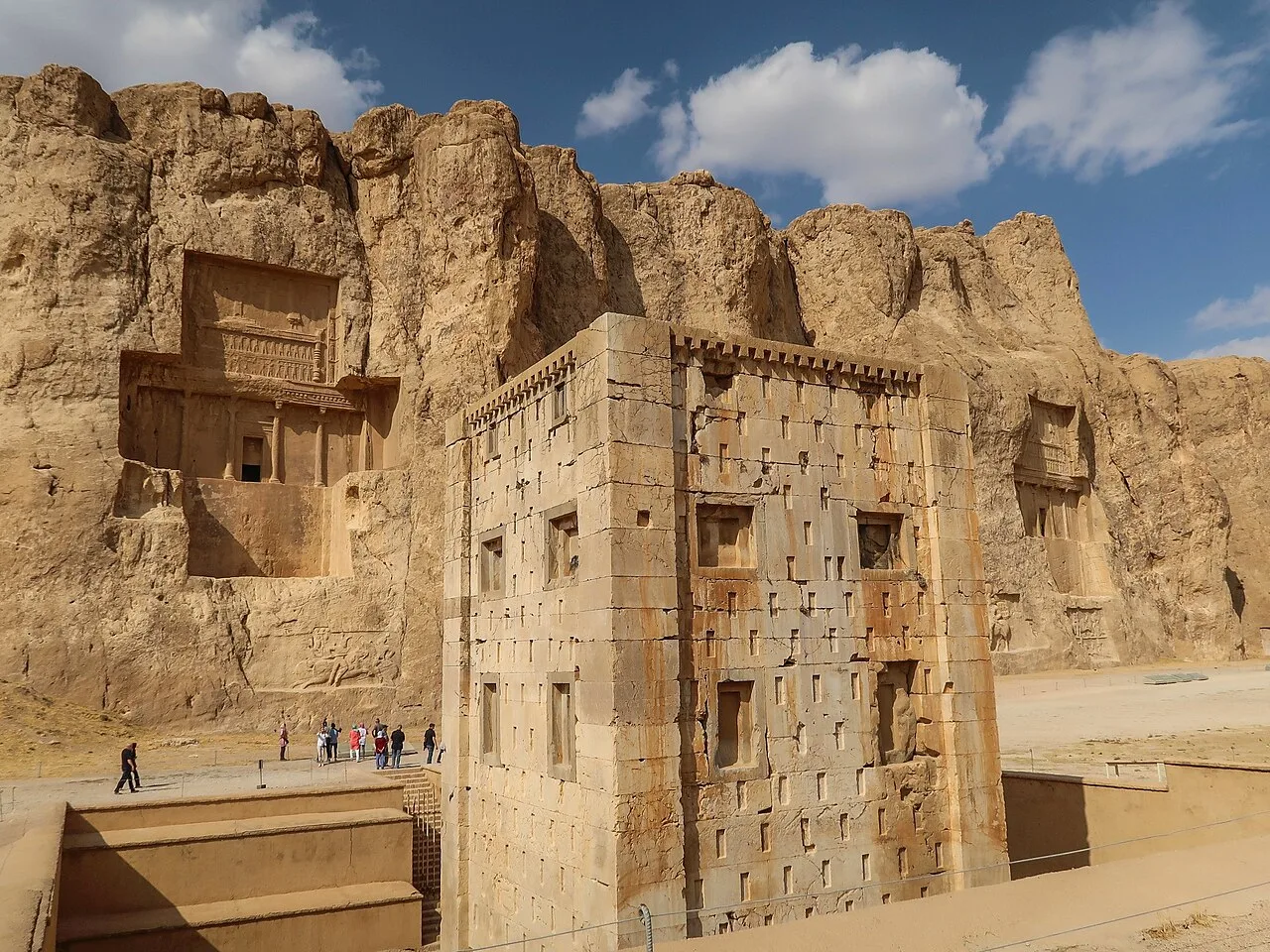
High on the cliff are cut four monumental rock tombs, each carved in the shape of a cross, that belonged to kings of the Achaemenid dynasty (c. 550–330 BCE). The tombs are identified, with varying certainty, as those of Darius I (the Great), Xerxes I, Artaxerxes I, and Darius II. Only the tomb of Darius the Great is securely identified, because it carries long trilingual inscriptions — in Old Persian, Elamite, and Babylonian — in which the king proclaims his rule, his god Ahura Mazda, and his ideals of justice; these are among the most important texts of the Achaemenid empire. The tomb façades depict the king standing on a platform borne by the peoples of his empire, worshipping before a fire altar beneath the winged symbol associated with Ahura Mazda. In front of the cliff stands a puzzling square stone tower, the Ka'ba-ye Zartosht ("Cube of Zoroaster"), whose original function — fire temple, tomb, or repository for sacred objects — is still debated.
More than five centuries after the fall of the Achaemenids, the kings of the Sasanian dynasty (224–651 CE) chose the same sacred cliff to carve large reliefs proclaiming their own power, deliberately associating themselves with the glory of their Persian predecessors. The most famous of these shows the triumph of Shapur I over two Roman emperors: the kneeling, captured Valerian and the submissive Philip the Arab — a vivid monument to one of the greatest humiliations Rome suffered in the East. Other reliefs depict royal investitures, in which a king receives the ring of sovereignty from a god, and equestrian combats.