


Overview
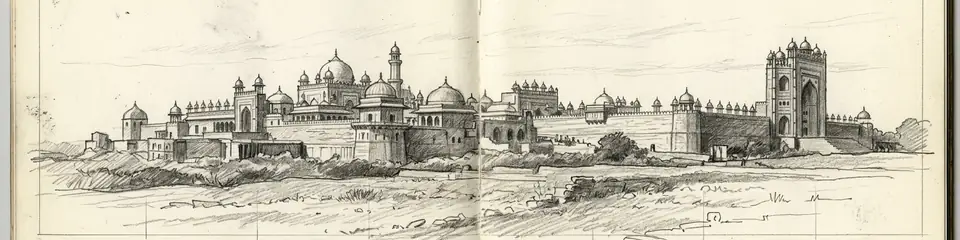
Fatehpur Sikri stands on a rocky ridge west of Agra in Uttar Pradesh, India. The emperor Akbar (r. 1556–1605) began construction here in the 1570s after the Sufi saint Shaikh Salim Chishti of Sikri reportedly foretold the birth of his heir Jahangir. The city served as Akbar's principal capital from about 1571 until he relocated the court back to Agra in 1585–1586; reasons for abandonment are debated (water shortage, strategic shift to the northwest, completion of symbolic programme) but the site was never wholly depopulated.
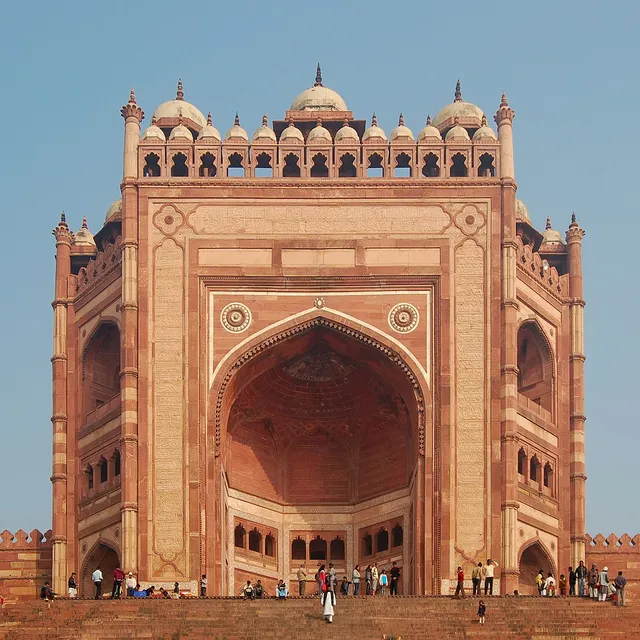
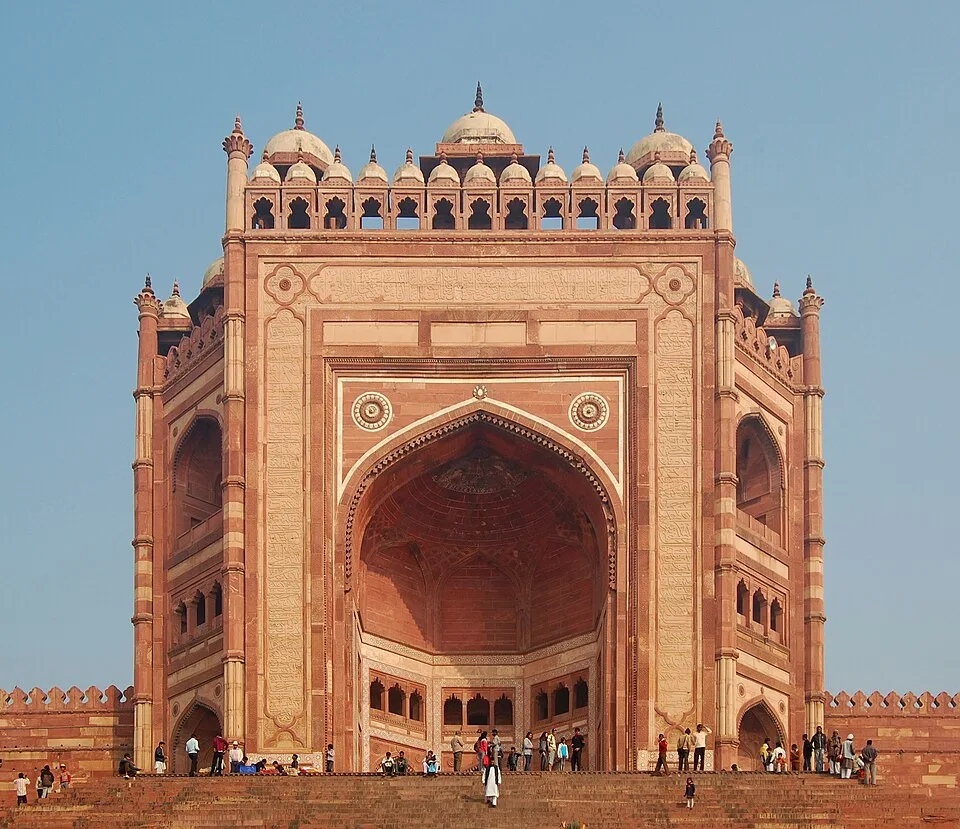
The city is built chiefly of red sandstone with white marble accents, synthesising Persian, Hindu, and Jain architectural elements in a court that pursued religious dialogue. The Buland Darwaza ("Lofty Gate") — approached by a monumental stair — commemorates Akbar's Gujarat campaign (1573). The Diwan-i-Khas (Hall of Private Audience) contains the central pillar with serpentine bracketed balcony where Akbar is said to have received scholars of many faiths. The Panch Mahal is a five-storey pavilion of decreasing size; the Jama Masjid and Shaikh Salim Chishti's white marble tomb remain active pilgrimage destinations.
"His Majesty gives audience to all sorts and conditions of men, and holds disputations on religion with learned men of every faith."
— Abu'l-Fazl, Akbarnama, on Akbar's court at Fatehpur Sikri (c. 1590s)
Fatehpur Sikri forms part of the Golden Triangle tourist circuit with Agra (Taj Mahal) and Delhi. The Archaeological Survey of India administers the ruins; UNESCO inscribed it in 1986. Despite its short occupation, the city is indispensable for understanding Akbar's statecraft, syncretic court culture, and Mughal urban design.