


Overview
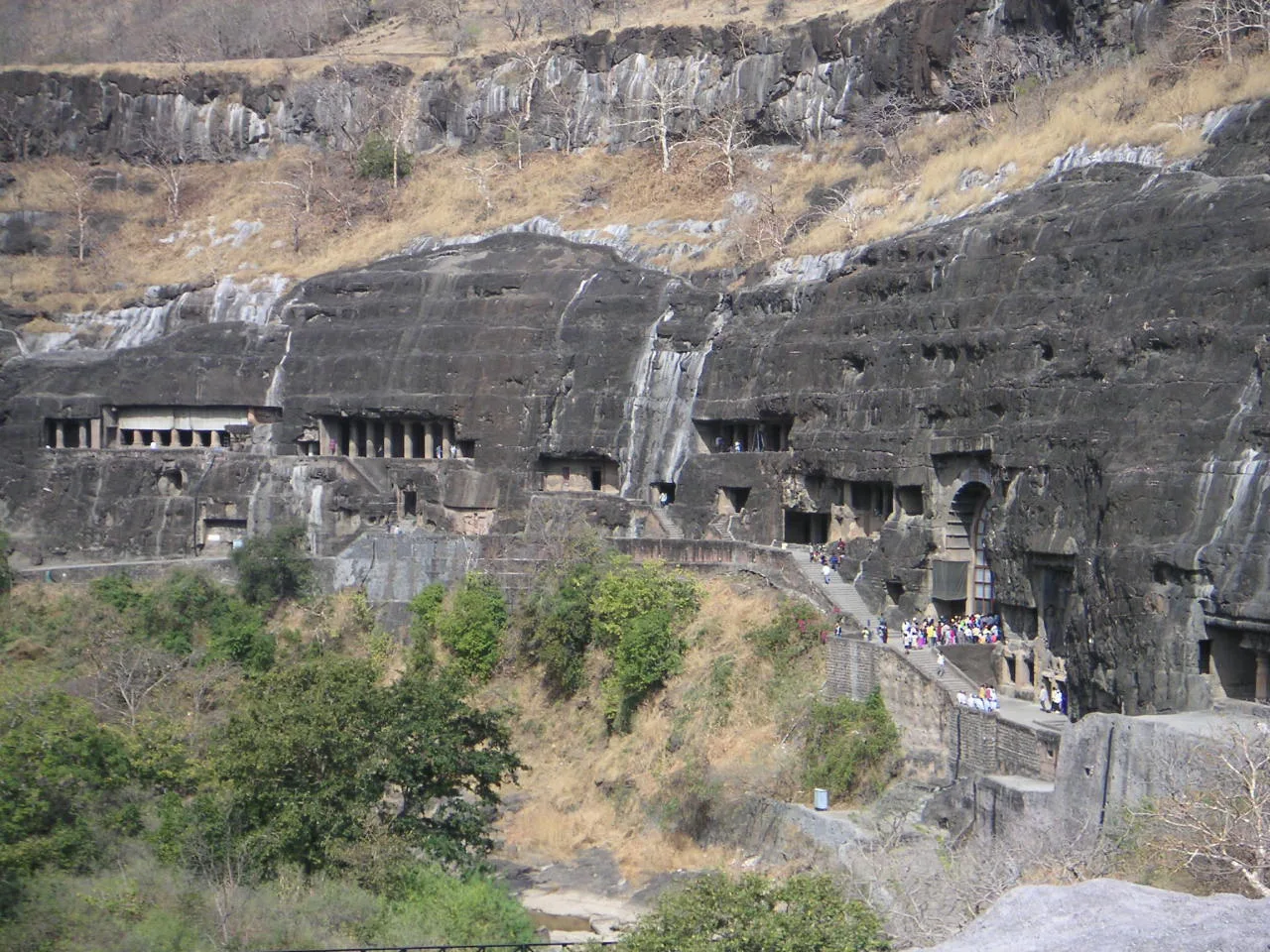
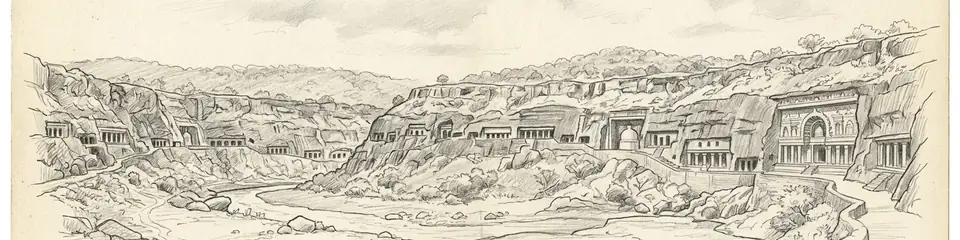
The Ajanta Caves are located in a secluded horseshoe-shaped gorge cut by the Waghora River in the Sahyadri Hills of Maharashtra, about 100 kilometres from Aurangabad. The 30 caves — cut directly from the basalt cliff face between the 2nd century BCE and the 6th century CE — served as Buddhist monasteries (viharas) and prayer halls (chaityas) for monastic communities and pilgrims. They were abandoned around 480 CE as the patronage of the Vakatakas collapsed, and lay largely forgotten for centuries until a British officer, John Smith, rediscovered them in 1819 while tiger hunting.
Ajanta's fame rests primarily on its paintings. The earliest phase (Phase 1: c. 2nd century BCE – 1st century CE) produced narrative sculptures and relief carvings in Caves 9, 10, 12, and 13. The main phase of painting (Phase 2: c. 4th–5th century CE, Gupta-Vakataka period) generated the extraordinary murals now visible in Caves 1, 2, 16, 17, and 19 — entire ceilings and walls covered with depictions of the Jataka tales (previous lives of the Buddha), scenes of court life, and standing Bodhisattva figures of radiant beauty.
The Ajanta paintings represent the apex of classical Indian painting. Their technique is sophisticated: the rock surface was prepared with a layer of mud, cow dung, and rice husks, then plastered and burnished; outlines were drawn in red ochre, then painted in earth pigments (red, yellow, brown, white, lapis lazuli blue), and the final wash was burnished to produce a luminous effect. The subjects range from royal processions and amorous couples to crowds of pilgrims, animals, and forest scenes — a comprehensive portrait of Indian life in the Gupta age.
Cave 1 contains the most celebrated paintings: the Bodhisattva Padmapani (holding a lotus) and Bodhisattva Vajrapani (holding a thunderbolt) flanking the main shrine, and a narrative frieze depicting the story of Simhala. Cave 17 has the most complete programme of paintings, covering virtually every surface. Cave 26, a late chaitya hall, contains a magnificent reclining parinirvana (dying) Buddha over 9 metres long.
Ajanta and Ellora were jointly inscribed as UNESCO World Heritage Sites in 1983. The murals at Ajanta have suffered significant deterioration from moisture, tourists, and earlier amateur restoration attempts; conservation efforts have intensified since the 1990s.