
Pular para o conteúdo
Atlas Anatolia
NotíciasIce Age teeth in Sulawesi push betel-nut use back as far as 25,000 yearsRoman mosaic and Eros head uncovered in the basilica at Pompeiopolis, Kastamonu
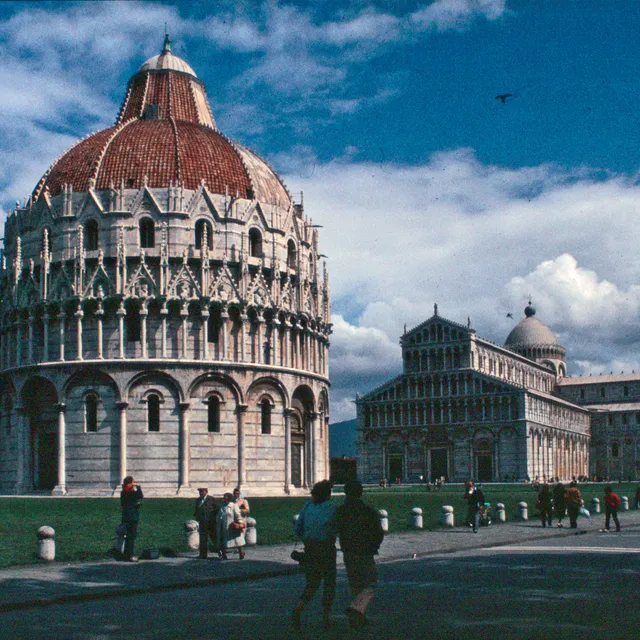
The Leaning Tower of Pisa with the cathedral and baptistery behind

Wikimedia Commons

Country Record

Known by the Most Names in Italy

PatrimônioComplexoUNESCODestaque

Piazza dei Miracoli

Seyfi Cem Baskin

Piazza del Duomo1063 d.C. – 1400 d.C.

The UNESCO cathedral square at Pisa — Romanesque cathedral, baptistery, camposanto, and the famous leaning campanile — one of Italy's most visited monuments and a defining ensemble of medieval Tuscan architecture and engineering.

21
Interesse 68

Localização

Itália

43.72°N · 10.40°E · Europa

Cathedral

Begun 1063 CE; Pisan Romanesque with spolia columns

Leaning Tower

Campanile begun 1173; ~56 m high, ~4° lean after stabilisation

Baptistery

Largest in Italy; construction 1152–1363

UNESCO

Piazza del Duomo, Pisa (1987)

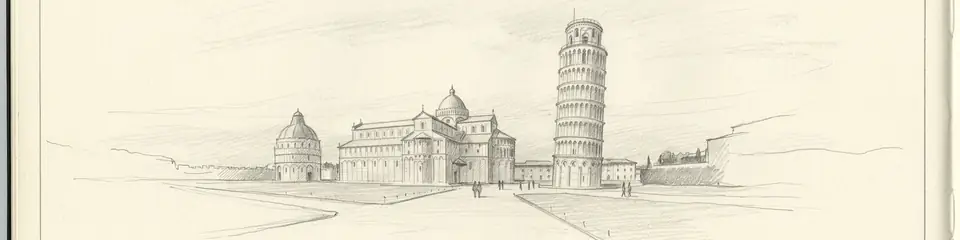
Graphite pencil sketch banner of Piazza dei Miracoli

“The Pisa ensemble documents the wealth and cosmopolitan taste of a medieval maritime republic — Romanesque architecture enriched by Mediterranean booty and trade.”

Localização

Visão geral

The Piazza del Duomo — popularly the Piazza dei Miracoli ("Field of Miracles") — occupies the northwest edge of historic Pisa, Tuscany, Italy. The cathedral (Duomo di Pisa), begun in 1063 after a naval victory at Palermo, displays Pisan Romanesque architecture with Byzantine and Islamic influences in its bronze doors and granite columns spolia. The freestanding baptistery (1152–1363) is the largest in Italy; the camposanto (monumental cemetery) retains medieval fresco cycles damaged in 1944.

The campanile — the Leaning Tower of Pisa — began in 1173 and started tilting during construction due to soft subsoil on the south side. Work paused and resumed over centuries; the 8-storey white marble cylinder reaches about 56 metres at a roughly 4-degree lean (reduced after 1990s–2000s stabilisation). Galileo's legendary gravity experiments are apocryphal but cement the tower in scientific folklore.

UNESCO inscribed the Piazza del Duomo in 1987. The ensemble draws millions of visitors annually and anchors Pisa's identity alongside its former maritime republic history.

Por que isso importa

The Pisa ensemble documents the wealth and cosmopolitan taste of a medieval maritime republic — Romanesque architecture enriched by Mediterranean booty and trade. The leaning campanile is a global icon of engineering failure turned heritage triumph, after modern stabilisation saved it for future centuries.

Evidências e interpretação

Distinguir o que está bem estabelecido do que permanece em debate.

Fatos bem estabelecidos

2
  • Foundation inscriptions and donor records document cathedral and campanile construction phases from the 11th–14th centuries.
  • Geotechnical studies confirm tilt caused by compressible alluvial soil and asymmetric loading; stabilisation works 1990–2001 reduced lean.

Inferências acadêmicas

1
  • Byzantine and Islamic decorative elements reflect Pisa's 11th–12th-century Mediterranean trade and booty; exact provenance of many spolia pieces is not always documented.

Fotos da comunidade

Compartilhe sua experiência

Você visitou este sítio? Envie suas fotos para ajudar outros a descobri-lo.

Como citar esta página

Atlas Anatolia. (1063). Piazza dei Miracoli. Atlas Anatolia. https://atlasanatolia.com/pt/site/pisa-cathedral

Conteúdo licenciado sob CC BY-SA 4.0 — atribuição necessária ao reutilizar.

Fontes

  • Coins and Coinage of the Pisa Republic — Travaini, Lucia (2009)
  • UNESCO — Piazza del Duomo, PisaLink

Perguntas frequentes

Onde fica Piazza dei Miracoli?

Piazza dei Miracoli está localizado em Italy.

Qual é a antiguidade de Piazza dei Miracoli?

Piazza dei Miracoli data de aproximadamente 1063 d.C. – 1400 d.C..

Quais civilizações estão associadas a Piazza dei Miracoli?

Piazza dei Miracoli está associado à civilização Roman.

Por que Piazza dei Miracoli é importante?

The Pisa ensemble documents the wealth and cosmopolitan taste of a medieval maritime republic — Romanesque architecture enriched by Mediterranean booty and trade.

Piazza dei Miracoli é um Patrimônio Mundial da UNESCO?

Sim — Piazza dei Miracoli está inscrito na Lista do Patrimônio Mundial da UNESCO.