
콘텐츠로 건너뛰기
Atlas Anatolia
디그
뉴스술라웨시 빙하기 치아에서 빈랑 사용 25,000년 전까지 소급카스타모누 폼페이오폴리스 바실리카에서 로마 모자이크와 에로스 두상 발견
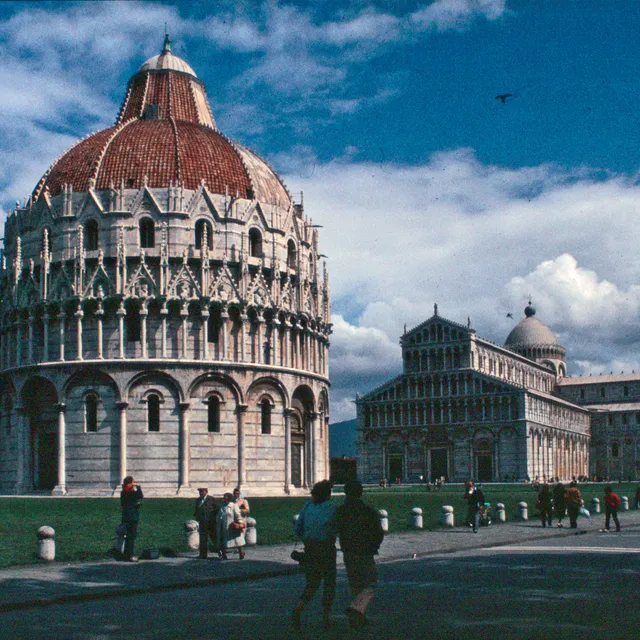
The Leaning Tower of Pisa with the cathedral and baptistery behind

Wikimedia Commons

Country Record

Known by the Most Names in Italy

유산복합 단지유네스코주요

Piazza dei Miracoli

Seyfi Cem Baskin

Piazza del Duomo1063 서기 – 1400 서기

The UNESCO cathedral square at Pisa — Romanesque cathedral, baptistery, camposanto, and the famous leaning campanile — one of Italy's most visited monuments and a defining ensemble of medieval Tuscan architecture and engineering.

21
관심 68

위치

이탈리아

43.72°N · 10.40°E · 유럽

Cathedral

Begun 1063 CE; Pisan Romanesque with spolia columns

Leaning Tower

Campanile begun 1173; ~56 m high, ~4° lean after stabilisation

Baptistery

Largest in Italy; construction 1152–1363

UNESCO

Piazza del Duomo, Pisa (1987)

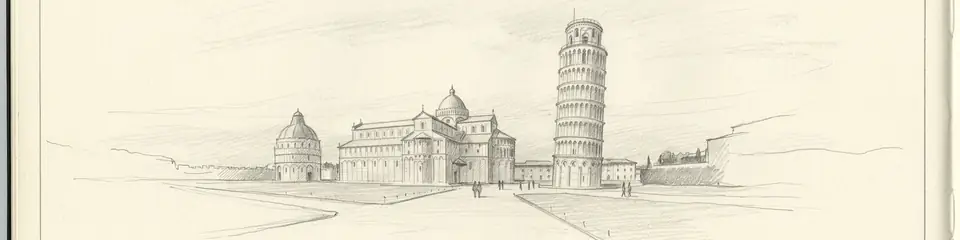
Graphite pencil sketch banner of Piazza dei Miracoli

“The Pisa ensemble documents the wealth and cosmopolitan taste of a medieval maritime republic — Romanesque architecture enriched by Mediterranean booty and trade.”

위치

개요

The Piazza del Duomo — popularly the Piazza dei Miracoli ("Field of Miracles") — occupies the northwest edge of historic Pisa, Tuscany, Italy. The cathedral (Duomo di Pisa), begun in 1063 after a naval victory at Palermo, displays Pisan Romanesque architecture with Byzantine and Islamic influences in its bronze doors and granite columns spolia. The freestanding baptistery (1152–1363) is the largest in Italy; the camposanto (monumental cemetery) retains medieval fresco cycles damaged in 1944.

The campanile — the Leaning Tower of Pisa — began in 1173 and started tilting during construction due to soft subsoil on the south side. Work paused and resumed over centuries; the 8-storey white marble cylinder reaches about 56 metres at a roughly 4-degree lean (reduced after 1990s–2000s stabilisation). Galileo's legendary gravity experiments are apocryphal but cement the tower in scientific folklore.

UNESCO inscribed the Piazza del Duomo in 1987. The ensemble draws millions of visitors annually and anchors Pisa's identity alongside its former maritime republic history.

중요성

The Pisa ensemble documents the wealth and cosmopolitan taste of a medieval maritime republic — Romanesque architecture enriched by Mediterranean booty and trade. The leaning campanile is a global icon of engineering failure turned heritage triumph, after modern stabilisation saved it for future centuries.

증거와 해석

확립된 사실과 논쟁 중인 사항을 구분합니다.

잘 확립된 사실

2
  • Foundation inscriptions and donor records document cathedral and campanile construction phases from the 11th–14th centuries.
  • Geotechnical studies confirm tilt caused by compressible alluvial soil and asymmetric loading; stabilisation works 1990–2001 reduced lean.

학술적 추론

1
  • Byzantine and Islamic decorative elements reflect Pisa's 11th–12th-century Mediterranean trade and booty; exact provenance of many spolia pieces is not always documented.

커뮤니티 사진

당신의 경험을 공유하세요

이 유적지를 방문하셨나요? 다른 탐험가들을 위해 사진을 업로드해 보세요.

이 페이지 인용 방법

Atlas Anatolia. (1063). Piazza dei Miracoli. Atlas Anatolia. https://atlasanatolia.com/ko/site/pisa-cathedral

콘텐츠는 CC BY-SA 4.0 라이선스에 따라 제공됩니다 — 재사용 시 출처 표시가 필요합니다.

출처

  • Coins and Coinage of the Pisa Republic — Travaini, Lucia (2009)
  • UNESCO — Piazza del Duomo, Pisa링크

자주 묻는 질문

Piazza dei Miracoli은(는) 어디에 위치해 있나요?

Piazza dei Miracoli은(는) Italy에 위치해 있습니다.

Piazza dei Miracoli의 연대는 언제인가요?

Piazza dei Miracoli의 연대는 대략 1063 서기 – 1400 서기로 거슬러 올라갑니다.

Piazza dei Miracoli과(와) 관련된 고대 문명은 무엇인가요?

Piazza dei Miracoli은(는) Roman 문명과 관련이 있습니다.

Piazza dei Miracoli이(가) 중요한 이유는 무엇인가요?

The Pisa ensemble documents the wealth and cosmopolitan taste of a medieval maritime republic — Romanesque architecture enriched by Mediterranean booty and trade.

Piazza dei Miracoli은(는) 유네스코 세계유산인가요?

예 — Piazza dei Miracoli은(는) 유네스코 세계유산으로 등재되어 있습니다.