
콘텐츠로 건너뛰기
Atlas Anatolia
디그
뉴스술라웨시 빙하기 치아에서 빈랑 사용 25,000년 전까지 소급카스타모누 폼페이오폴리스 바실리카에서 로마 모자이크와 에로스 두상 발견
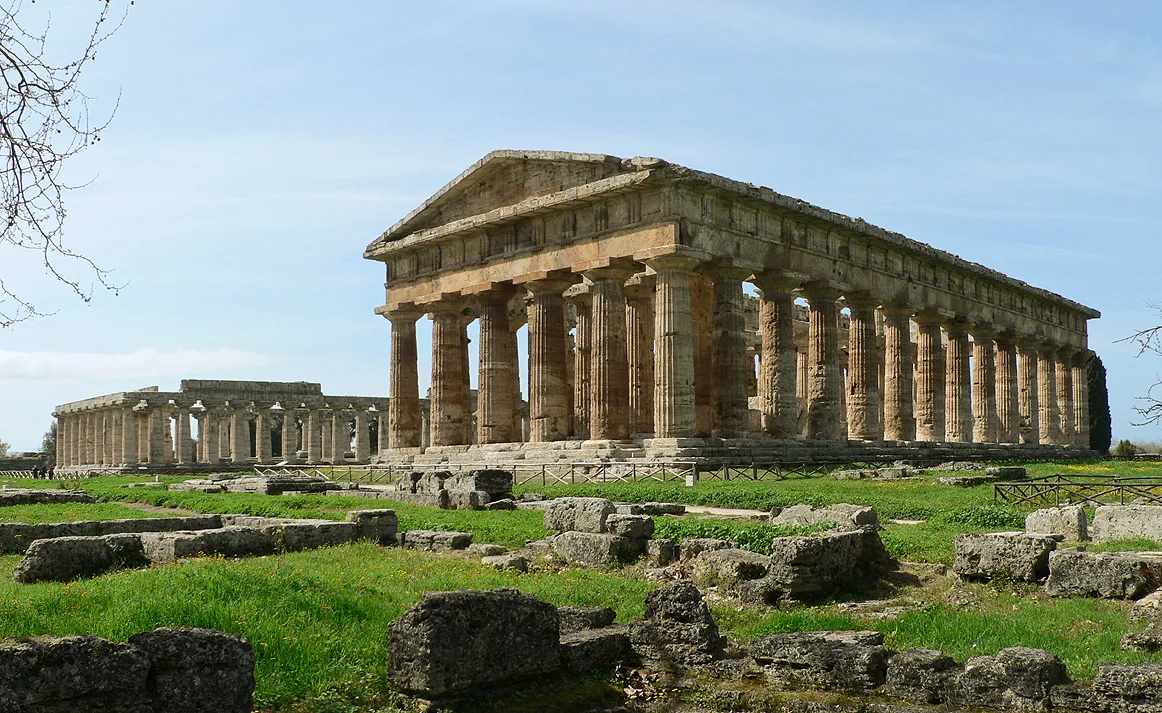
The three Greek temples at Paestum, with the Temple of Hera II in the foreground

Wikimedia Commons

Country Record

Longest Continuously Occupied Site in Italy

도시유네스코주요

Paestum

Seyfi Cem Baskin

600 기원전 – 700 서기

A Greek colonial city on the Tyrrhenian coast of southern Italy (Campania) containing three of the best-preserved ancient Greek temples in the world — older and more complete than most surviving temples in Greece itself.

21
관심 66

위치

이탈리아

40.42°N · 15.00°E · 유럽

Founded

c. 600 BCE by Greek settlers from Sybaris

Temple of Hera II date

c. 460 BCE (finest surviving Doric temple)

Tomb of the Diver

Found 1968; only complete Greek narrative mural from Classical period

Rediscovered

1746, during road survey

Distance from Naples

85 km south

UNESCO

World Heritage Site (with Cilento) since 1998

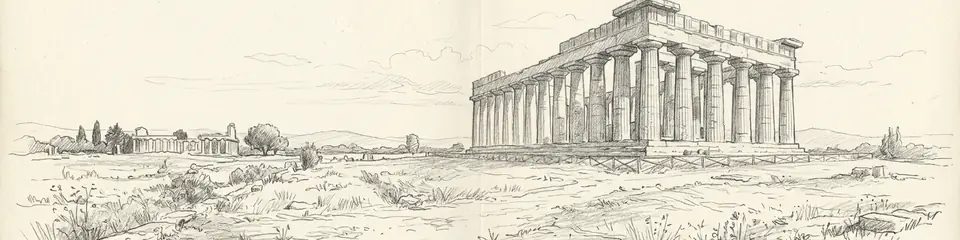
Graphite pencil sketch banner of Paestum

“Paestum provides what Greece itself rarely does: temples that survive above the level of the column capital, so that the proportions, entablature, and spatial experience intended by their architects can be directly experienced.”

위치

개요

Paestum (originally Poseidonia) lies on a flat coastal plain in the Cilento region of Campania, 85 km south of Naples, 1.5 km from the Tyrrhenian Sea. It was founded by Greek settlers from Sybaris around 600 BCE and retained its Greek character until its conquest by the Lucanians c. 400 BCE and later incorporation into the Roman world c. 273 BCE. Three temples survive in extraordinary condition: the Temple of Hera I (commonly called the "Basilica"), c. 550 BCE, the oldest and largest, with its original 50 squat Doric columns still standing; the Temple of Hera II (commonly misidentified as the Temple of Neptune), c. 460 BCE, the best-preserved Doric temple in the world, with entablature complete to the cornice; and the Temple of Athena (misidentified as "Ceres"), c. 500 BCE, preserving its original painted terracotta roof decorations. The reason for the survival is the region's depopulation: Paestum declined sharply in the late Roman period following the silting of its harbor and the spread of malaria, and the site was gradually covered by vegetation and forgotten. Medieval travelers avoided the area; the temples stood undisturbed. The site was rediscovered by engineers surveying for the Salerno-Reggio Calabria road in 1746.
중요성

Paestum provides what Greece itself rarely does: temples that survive above the level of the column capital, so that the proportions, entablature, and spatial experience intended by their architects can be directly experienced. The Temple of Hera II is, technically, the finest surviving example of the mature Doric order anywhere. Paestum also produced one of the most important single archaeological finds of the twentieth century: the Tomb of the Diver (1968), a fifth-century BCE painted tomb with a complete cycle of banquet and symposium scenes on four walls and a ceiling showing a youth diving into a sea — the only complete Greek narrative mural painting to survive from the Classical period, and the only one of its kind found in the Western Greek world. The paintings transformed understanding of Greek mural traditions, of which almost nothing else survived.

증거와 해석

확립된 사실과 논쟁 중인 사항을 구분합니다.

잘 확립된 사실

2
  • The Temple of Hera II (c. 460 BCE) survives with its complete Doric colonnade, frieze, and most of the entablature intact — the most complete example of Greek Doric architecture above column-height surviving anywhere in the world.
  • The Tomb of the Diver, excavated in 1968, is a painted limestone chamber dated to c. 480–470 BCE. Its five slabs (four walls and a lid) retain vivid red and black figure paintings unique in the Greek world: the only complete Greek figural mural cycle from the Classical period.

학술적 추론

1
  • The three temples have traditionally been misnamed since their rediscovery (the "Temple of Neptune" is almost certainly dedicated to Hera; the "Temple of Ceres" to Athena). Correct identification comes from ceramic deposits, sculptural fragments, and the spatial relationship of the temples to the city's sanctuary zones.

커뮤니티 사진

당신의 경험을 공유하세요

이 유적지를 방문하셨나요? 다른 탐험가들을 위해 사진을 업로드해 보세요.

관련 이야기

이 페이지 인용 방법

Atlas Anatolia. (600). Paestum. Atlas Anatolia. https://atlasanatolia.com/ko/site/paestum

콘텐츠는 CC BY-SA 4.0 라이선스에 따라 제공됩니다 — 재사용 시 출처 표시가 필요합니다.

그래프

관련 유적지와 스토리로의 연결.

출처

  • Paestum: Greek and Roman Architecture — Giovanni Pugliese Carratelli (ed.) (1996)
  • The Tomb of the Diver at Paestum — Mario Napoli (1970)

자주 묻는 질문

Paestum은(는) 어디에 위치해 있나요?

Paestum은(는) Italy에 위치해 있습니다.

Paestum의 연대는 언제인가요?

Paestum의 연대는 대략 600 기원전 – 700 서기로 거슬러 올라갑니다.

Paestum과(와) 관련된 고대 문명은 무엇인가요?

Paestum은(는) Greek, Roman 문명과 관련이 있습니다.

Paestum이(가) 중요한 이유는 무엇인가요?

Paestum provides what Greece itself rarely does: temples that survive above the level of the column capital, so that the proportions, entablature, and spatial experience intended by their architects can be directly experienced.

Paestum은(는) 유네스코 세계유산인가요?

예 — Paestum은(는) 유네스코 세계유산으로 등재되어 있습니다.