
콘텐츠로 건너뛰기
Atlas Anatolia
디그
뉴스술라웨시 빙하기 치아에서 빈랑 사용 25,000년 전까지 소급카스타모누 폼페이오폴리스 바실리카에서 로마 모자이크와 에로스 두상 발견
The Leaning Tower of Pisa beside the cathedral, Tuscany

Wikimedia Commons (CC BY-SA 4.0)

유산기념물유네스코주요

Leaning Tower of Pisa

Seyfi Cem Baskin

Torre pendente di Pisa1173 서기 – 1372 서기

The white-marble campanile beside Pisa Cathedral — famous for its four-degree lean caused by soft subsoil — is among the most searched Italian monuments worldwide and complements the [Piazza dei Miracoli](/site/pisa-cathedral) ensemble.

21
관심 88

위치

이탈리아

43.72°N · 10.40°E · 유럽

Begun

1173; lean visible by third storey

Height

~56 m on low side; ~57 m on high side

Stabilization

1990–2001 and 2008 works reduced tilt

UNESCO

Piazza del Duomo, Pisa (1987)

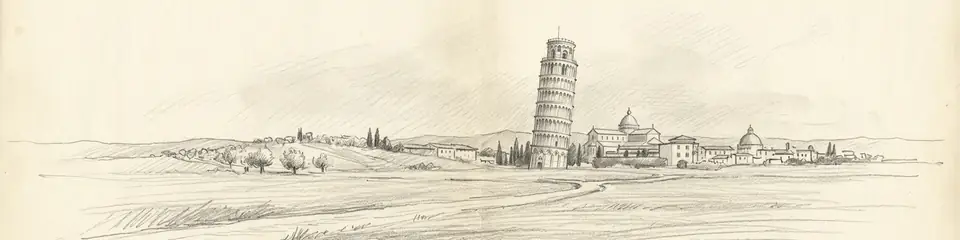
Graphite pencil sketch banner of Leaning Tower of Pisa

“The Leaning Tower is a case study in engineering failure turned icon — soft ground, interrupted construction, and modern stabilization science.”

위치

개요

The Leaning Tower of Pisa is the freestanding bell tower (campanile) of Pisa Cathedral in the Piazza del Duomo (Campo dei Miracoli), Tuscany, Italy. Construction began in 1173; by the time workers reached the third storey the tower had begun to tilt on unstable alluvial soil. Work stopped and resumed across centuries; the cylindrical structure of white marble wraps eight storeys with a spiral staircase of 294 steps.

The lean reached more than 5 degrees before 20th–21st-century stabilization injected soil and adjusted mass, reducing tilt to safer levels while preserving the signature angle tourists expect. Ghiberti and other Renaissance masters referenced Pisa's marble ensemble as a benchmark of Tuscan Romanesque.

The tower is not separate from the cathedral complex UNESCO inscribed in 1987 — it is the most photographed element. Climbing the tilted stairs remains a bucket-list ritual; the view encompasses the Arno plain and Tuscan coast.

중요성

The Leaning Tower is a case study in engineering failure turned icon — soft ground, interrupted construction, and modern stabilization science. Its search volume dwarfs many authentic Roman ruins because the lean makes it instantly legible in photographs and popular culture.

증거와 해석

확립된 사실과 논쟁 중인 사항을 구분합니다.

잘 확립된 사실

2
  • Building phases and pause/resume cycles documented in Pisan archives and fabric joints.
  • Soil extraction and counterweight engineering (1990s–2000s) measured tilt reduction geodetically.

학술적 추론

1
  • Original intended vertical height unknown due to centuries of corrective building.

커뮤니티 사진

당신의 경험을 공유하세요

이 유적지를 방문하셨나요? 다른 탐험가들을 위해 사진을 업로드해 보세요.

이 페이지 인용 방법

Atlas Anatolia. (1173). Leaning Tower of Pisa. Atlas Anatolia. https://atlasanatolia.com/ko/site/leaning-tower-pisa

콘텐츠는 CC BY-SA 4.0 라이선스에 따라 제공됩니다 — 재사용 시 출처 표시가 필요합니다.

출처

  • The Tower of Pisa — Pieroni, Daniele (2001)
  • UNESCO — Piazza del Duomo, Pisa링크

자주 묻는 질문

Leaning Tower of Pisa은(는) 어디에 위치해 있나요?

Leaning Tower of Pisa은(는) Italy에 위치해 있습니다.

Leaning Tower of Pisa의 연대는 언제인가요?

Leaning Tower of Pisa의 연대는 대략 1173 서기 – 1372 서기로 거슬러 올라갑니다.

Leaning Tower of Pisa과(와) 관련된 고대 문명은 무엇인가요?

Leaning Tower of Pisa은(는) Roman, Renaissance Italian 문명과 관련이 있습니다.

Leaning Tower of Pisa이(가) 중요한 이유는 무엇인가요?

The Leaning Tower is a case study in engineering failure turned icon — soft ground, interrupted construction, and modern stabilization science.

Leaning Tower of Pisa은(는) 유네스코 세계유산인가요?

예 — Leaning Tower of Pisa은(는) 유네스코 세계유산으로 등재되어 있습니다.