
콘텐츠로 건너뛰기
Atlas Anatolia
디그
뉴스술라웨시 빙하기 치아에서 빈랑 사용 25,000년 전까지 소급카스타모누 폼페이오폴리스 바실리카에서 로마 모자이크와 에로스 두상 발견
The perfectly preserved Roman theatre at Aspendos

Wikimedia Commons (CC BY-SA)

도시

Aspendos

Seyfi Cem Baskin

1000 기원전 – 1300 서기

Home to the best-preserved Roman theatre in the world, seating 15,000. The theatre's acoustics are so perfect that a coin dropped on stage can be heard from the top row.

21
관심 55

위치

Antalya · Mediterranean · 튀르키예

36.94°N · 31.17°E · 아시아

Theatre Capacity

~15,000

Built

161–180 CE

Architect

Zenon

Status

Still used for performances

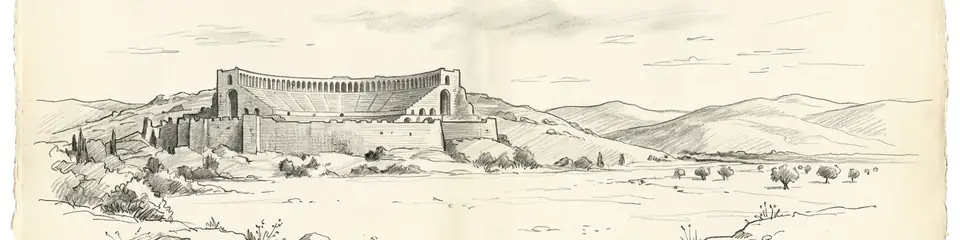
Graphite pencil sketch banner of Aspendos

“The Theatre of Aspendos is the gold standard for Roman theatre preservation worldwide.”

위키백과에서

Aspendos was an ancient Greco-Roman city in Antalya province of Turkey. It is notable for having the best-preserved theatre of antiquity.

위키백과에서 전체 기사 읽기 →

위치

개요

Aspendos was an ancient Greco-Roman city in Pamphylia, located near the modern village of Belkıs in Antalya Province. The city was founded around the 10th century BCE and prospered under Persian, Hellenistic, and Roman rule.

The Theatre of Aspendos, built during the reign of Marcus Aurelius (161–180 CE) by the architect Zenon, is the best-preserved ancient theatre in the world. Its remarkable state of preservation is partly due to its continuous use as a Seljuk caravanserai in the 13th century, which involved adding stonework that inadvertently protected the structure.

"The theatre of Aspendos is the best preserved in all the ancient world — it is a marvel of Roman engineering."
— Atatürk, on visiting Aspendos, 1930

The theatre seats approximately 15,000 spectators and retains its original stage building, acoustic design, and most of its seating. It continues to be used for performances today, including the annual Aspendos International Opera and Ballet Festival.

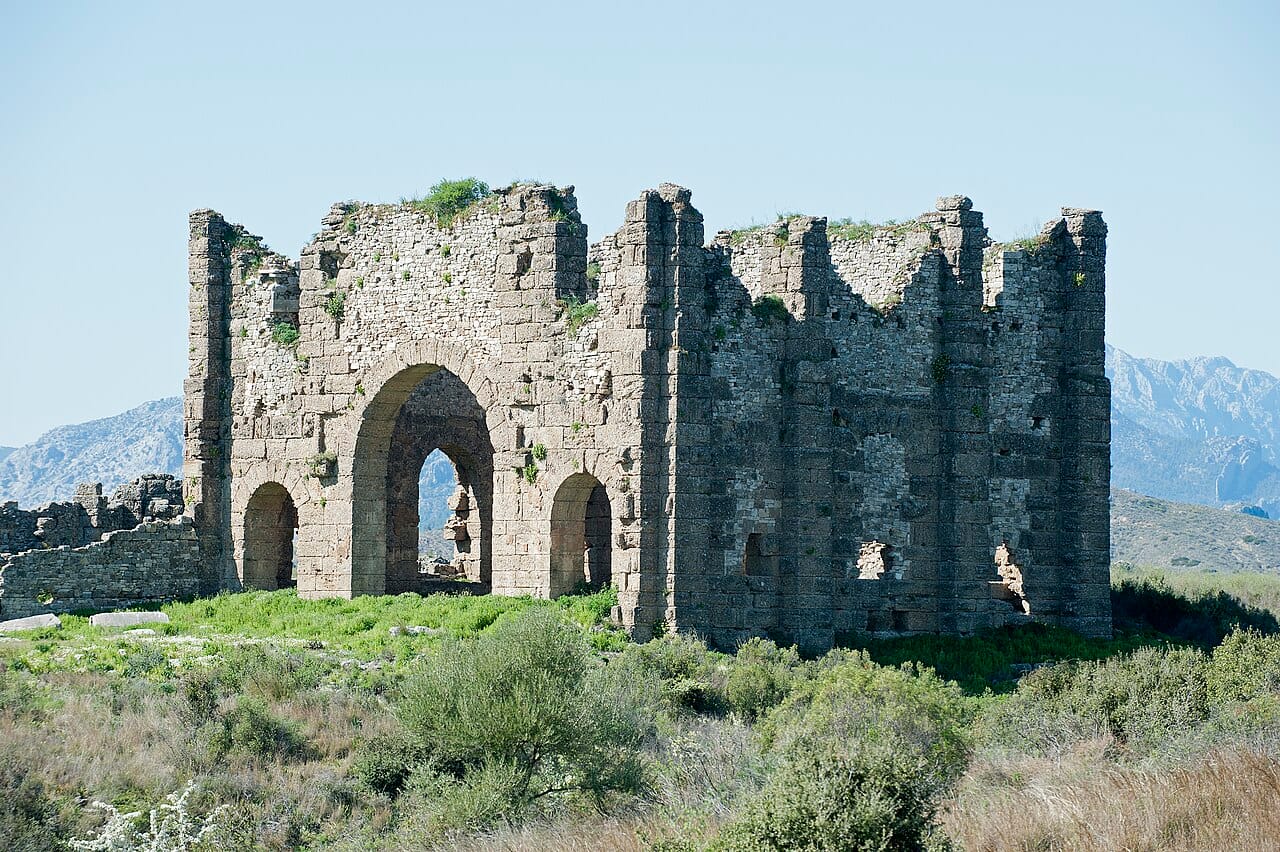
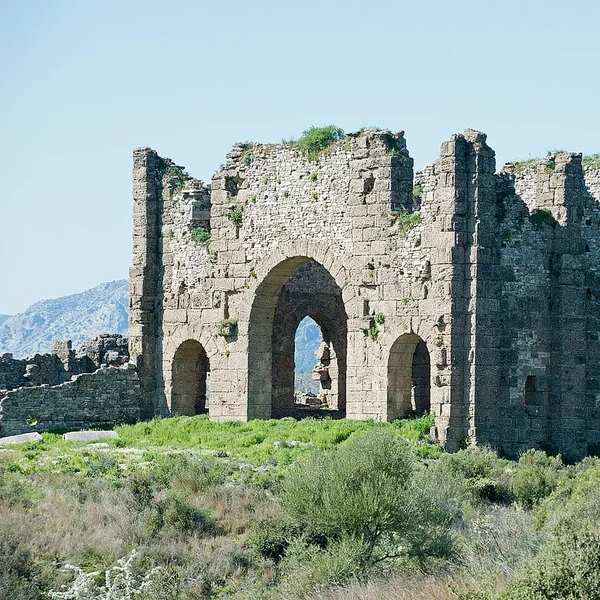
Beyond the theatre, Aspendos was a major commercial hub. Its acropolis features the remains of a basilica, agora, nymphaeum, and a monumental fountain connected to one of antiquity's most sophisticated pressurized water systems, delivered via a lengthy aqueduct. The city minted distinctive silver coins depicting two wrestlers, a symbol of local identity. Its prosperity was built on trade, particularly salt from the nearby Eurymedon River (modern Kopruçay) and agricultural products like wine and olive oil. The city declined in the Byzantine era, likely due to Arab raids and a shift in trade routes, but its theatre endured through Seljuk adaptation.
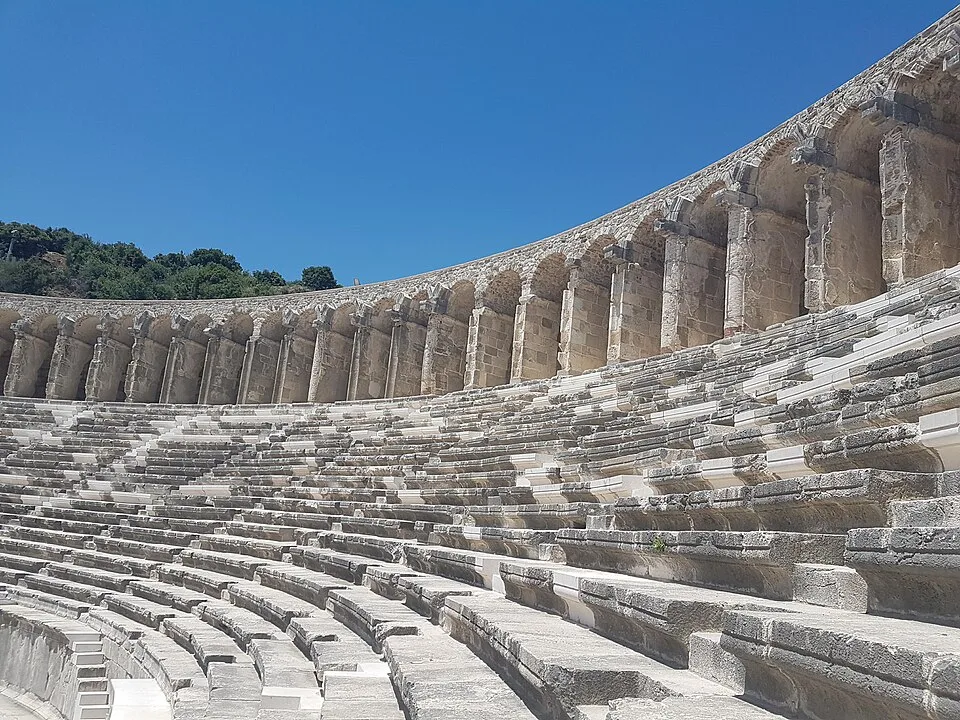
Aspendos Theatre, Turkey (39045)
Aspendos Theatre, Turkey (39045) | Lee Vilenski (CC BY-SA 4.0)

Beyond the theatre, Aspendos was a major economic hub, famous for its high-quality silver coinage minted from the 5th century BCE onward. The city's advanced hydraulic engineering is exemplified by its 15 km-long aqueduct, featuring a monumental inverted siphon bridge that carried water across a valley to the acropolis. This system supplied the monumental nymphaeum, baths, and fountains, showcasing Roman urban luxury. The city's acropolis features a well-preserved basilica, agora, and a striking market building (macellum), outlining a prosperous urban center. Aspendos began to decline in the 3rd century CE, likely due to silting of the Eurymedon River hindering trade and regional political instability. Its final significant use was as a Seljuk frontier outpost and caravanserai before being largely abandoned by the late medieval period.

중요성

The Theatre of Aspendos is the gold standard for Roman theatre preservation worldwide. Its near-complete state provides unmatched insight into Roman theatrical architecture, engineering, and acoustics. The site demonstrates how Seljuk-era reuse inadvertently preserved a Roman structure — a rare example of cross-cultural architectural conservation. As a complete urban entity with a world-class theatre, advanced hydraulic engineering, and a known economic base, Aspendos offers a holistic case study of a prosperous Roman provincial city. Its preservation allows for detailed analysis of Roman construction techniques, urban planning, and the long-term interaction between classical and medieval Anatolian civilizations.

증거와 해석

확립된 사실과 논쟁 중인 사항을 구분합니다.

잘 확립된 사실

2
  • The theatre was built during the reign of Marcus Aurelius (161–180 CE) based on inscriptions.
  • The Seljuks used the theatre as a caravanserai in the 13th century, adding stonework repairs.

학술적 추론

1
  • The architect Zenon designed the theatre based on a dedicatory inscription.

발견과 발굴

1871

First documentation

지휘 Charles de Vogüé

Count Charles-Jean-Melchior de Vogüé documented the theatre.

커뮤니티 사진

당신의 경험을 공유하세요

이 유적지를 방문하셨나요? 다른 탐험가들을 위해 사진을 업로드해 보세요.

이 페이지 인용 방법

Atlas Anatolia. (1000). Aspendos. Atlas Anatolia. https://atlasanatolia.com/ko/site/aspendos

콘텐츠는 CC BY-SA 4.0 라이선스에 따라 제공됩니다 — 재사용 시 출처 표시가 필요합니다.

World History Encyclopedia에서 전체 기사 읽기
World History Encyclopedia · CC BY-NC-SA

출처

  • Roman Theatres: An Architectural Study — Frank Sear (2006)

자주 묻는 질문

Aspendos은(는) 어디에 위치해 있나요?

Aspendos은(는) Antalya, Mediterranean, Türkiye에 위치해 있습니다.

Aspendos의 연대는 언제인가요?

Aspendos의 연대는 대략 1000 기원전 – 1300 서기로 거슬러 올라갑니다.

Aspendos과(와) 관련된 고대 문명은 무엇인가요?

Aspendos은(는) Greek, Roman 문명과 관련이 있습니다.

Aspendos이(가) 중요한 이유는 무엇인가요?

The Theatre of Aspendos is the gold standard for Roman theatre preservation worldwide.

Aspendos은(는) 유네스코 세계유산인가요?

Aspendos은(는) 현재 유네스코 세계유산 목록에 등재되어 있지 않습니다.