Vai al contenuto
Atlas Anatolia
NotizieIce Age teeth in Sulawesi push betel-nut use back as far as 25,000 yearsRoman mosaic and Eros head uncovered in the basilica at Pompeiopolis, Kastamonu
Stonehenge — United Kingdom

Wikimedia Commons (CC BY-SA)

Record continentale

Most-Visited Ancient Site in Europe

MonumentoUNESCOIn evidenza

Stonehenge

Seyfi Cem Baskin

3100 a.C. – 1600 a.C.

Stonehenge is a prehistoric megalithic monument in Wiltshire, England, erected in phases between 3100 and 1600 BCE. Its iconic sarsen stones and bluestones form a complex of ceremonial and astronomical significance.

332
Interesse 91

Posizione

Wiltshire · South West England · Regno Unito

51.18°N · 1.83°W · Europa

Built

3100–1600 BCE, in multiple phases

Civilization

Neolithic and Bronze Age Britons

Material

Sarsen sandstone, bluestone (Preseli Hills)

First Excavated

1620s by George Villiers, Duke of Buckingham

Status

UNESCO World Heritage Site (1986)

Alignment

Summer solstice sunrise and winter solstice sunset

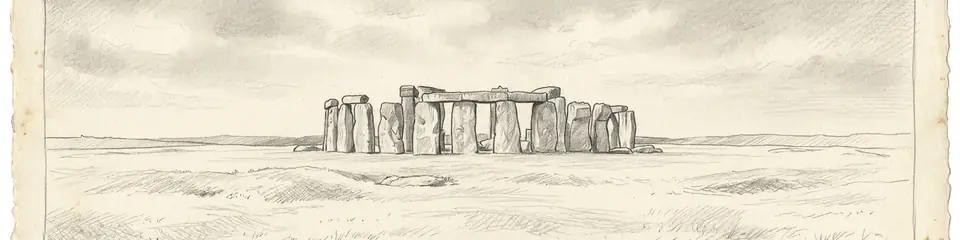
Graphite pencil sketch banner of Stonehenge

As one of the most famous prehistoric monuments in the world, Stonehenge exemplifies the engineering and organizational capabilities of Neolithic societies.”

Posizione

Panoramica

Discovery and Early Investigation

Stonehenge has been a recognizable feature on Salisbury Plain for millennia, mentioned in medieval chronicles and depicted by artists. The first recorded excavation occurred in the 1620s when George Villiers, Duke of Buckingham, dug a pit at the center under royal permission, reporting the discovery of animal bones and charcoal. John Aubrey's observations in 1666 provided the first systematic description, attributing the monument to the Druids—a theory later disproven. William Stukeley in the 1740s recognized the solstitial alignment, pioneering the field of archaeoastronomy.

"Some say it was reared by the Britons, in memory of Aurelius Ambrosius. Others, that the giants brought the stones from Africa to Ireland, and Merlin removed them by his art to Britain."
— Geoffrey of Monmouth, Historia Regum Britanniae IX.12, c. 1136
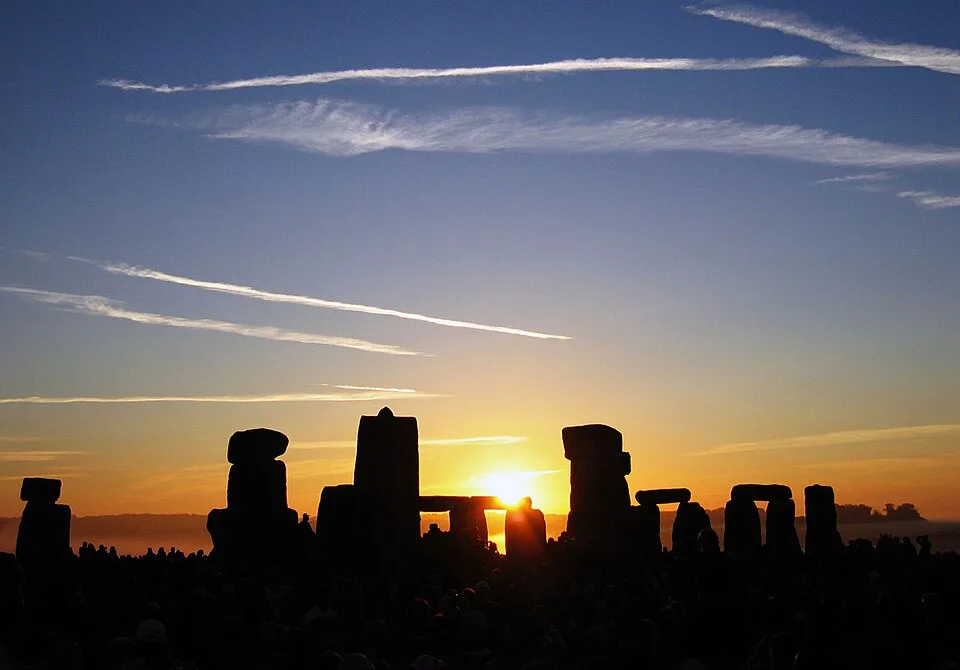
Summer Solstice Sunrise over Stonehenge 2005
Summer Solstice Sunrise over Stonehenge 2005 | Wikimedia Commons (CC BY-SA 2.0)

Construction Phases

Constructed over 1500 years, Stonehenge evolved through several distinct phases. The earliest monument, dating to around 3100 BCE, comprised a circular earthwork enclosure with a ring of 56 pits known as the Aubrey Holes, which held cremation burials and possibly timber posts. Around 2600 BCE, the builders transported massive sarsen stones from the Marlborough Downs and smaller bluestones from the Preseli Hills in Wales, arranging them in the iconic trilithons and outer circle. The final phase, around 1600 BCE, saw the reworking of the bluestones into inner circles and the extension of external avenues.

"The stones of Stonehenge have watched over Wessex for three thousand years and more — not a ruin so much as a calendar written in rock."
— Paraphrase of archaeoastronomy interpretations of Stonehenge

Astronomical Alignments
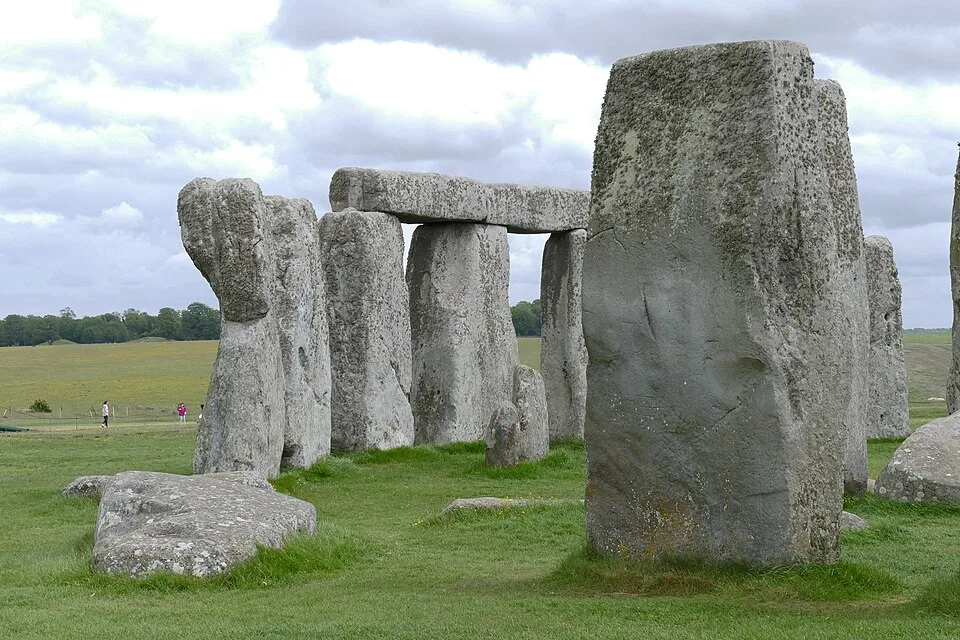
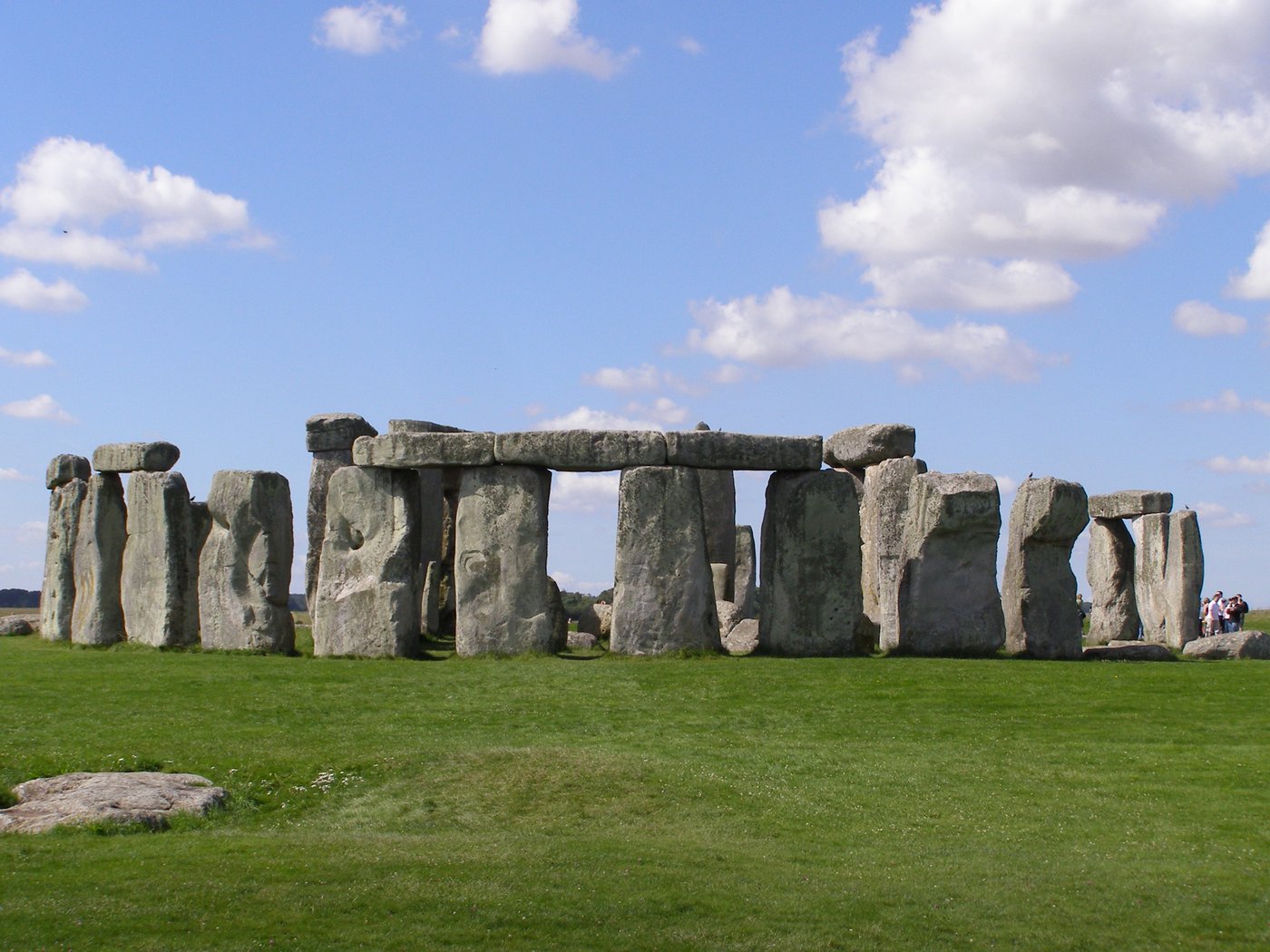
Stonehenge, Sarsen Stones - geograph.org.uk - 4520207
Stonehenge, Sarsen Stones - geograph.org.uk - 4520207 | Alan Hunt  (CC BY-SA 2.0)

The axis of Stonehenge aligns with the midsummer sunrise and midwinter sunset, indicating intentional solar orientation. The Heel Stone, positioned outside the main circle, marks the point on the horizon where the sun rises at the summer solstice. Some researchers also argue for lunar alignments, though these are less certain. The precision of these alignments suggests that the monument functioned as a calendar for agricultural or ritual purposes.

Burial and Ritual Landscape
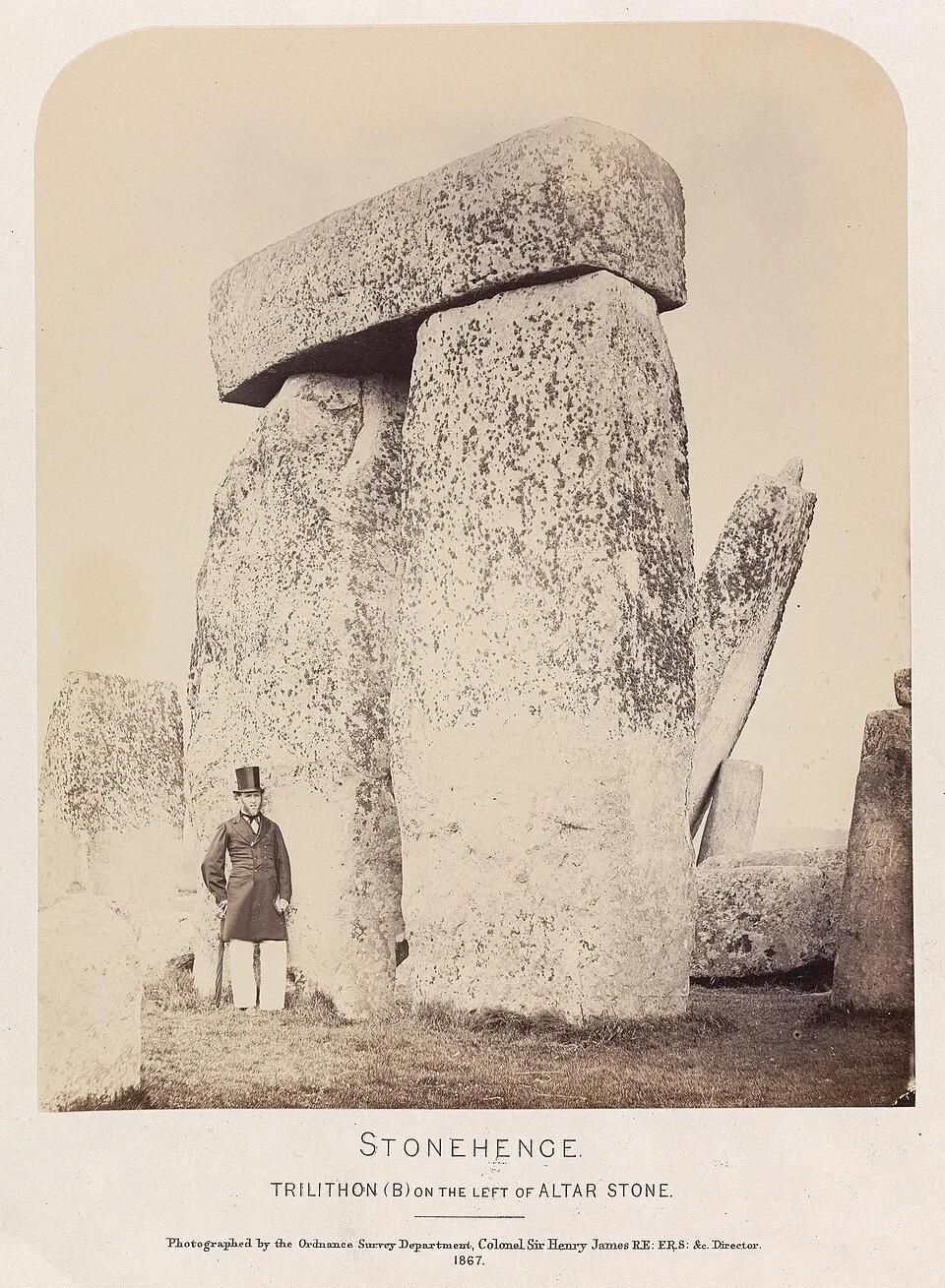
Stonehenge Heel Stone
Stonehenge Heel Stone | DeFacto (CC BY-SA 4.0)

Excavations have uncovered over 50 cremation burials within the Aubrey Holes, dating to the earliest phase, making Stonehenge one of the largest Neolithic cemeteries in Britain. The surrounding landscape is dotted with hundreds of burial mounds, the Cursus, Woodhenge, and Durrington Walls, indicating that Stonehenge was part of a vast ceremonial complex. Isotope analysis of human remains reveals that some individuals came from as far as Wales, suggesting the site held widespread significance.

Conservation and Modern Research

Restoration campaigns in the 20th century re-erected fallen stones and stabilized the monument. The 2008 excavation led by Timothy Darvill and Geoffrey Wainwright confirmed the presence of bluestone debitage and altered the dating of the stone circles. Recent non-invasive surveys using ground-penetrating radar and magnetometry have uncovered previously hidden features, including a 'super-henge' at Durrington Walls, reshaping our understanding of the entire Stonehenge landscape.
Perché è importante

As one of the most famous prehistoric monuments in the world, Stonehenge exemplifies the engineering and organizational capabilities of Neolithic societies. Its solar alignments and possible lunar connections reflect sophisticated astronomical knowledge, while its enduring presence has made it a symbol of Britain's ancient heritage and a focus for modern pagan and tourist interest.

Evidenze e interpretazione

Distinguere ciò che è ben consolidato da ciò che rimane dibattuto.

Fatti ben consolidati

3
  • The sarsen stones were sourced from the Marlborough Downs, approximately 25 km north of Stonehenge.
  • The bluestones originate from the Preseli Hills in southwest Wales, over 200 km away.
  • The Aubrey Holes, a ring of 56 pits, date to the earliest phase (c. 3000 BCE) and may have held timber posts or bluestones.

Deduzioni accademiche

3
  • Stonehenge was likely a ceremonial center, possibly associated with ancestor worship or healing rituals.
  • The monument was intentionally aligned to mark the solstices, serving as an astronomical calendar.
  • The building of Stonehenge required significant labor organization, indicating a complex hierarchical society.

Interpretazioni dibattute

2
  • The method of transporting the bluestones from Wales to Salisbury Plain remains contested; theories include glacial transport and human haulage over land and sea.
  • The primary function of Stonehenge is still debated, with hypotheses ranging from a temple to a burial ground to an astronomical observatory.

Scoperta e scavo

1620

First recorded excavation

Diretto da George Villiers (overseen by King James I)

George Villiers, Duke of Buckingham, dug a central pit under royal warrant, finding animal bones and charcoal.

1901

Restoration and excavation

Diretto da William Gowland

William Gowland conducted the first proper archaeological excavation, re-erecting a fallen sarsen and recording stratigraphy.

1919–1926

Society of Antiquaries excavations

Diretto da William Hawley

William Hawley extensively excavated half the site, uncovering the Aubrey Holes and many cremation burials.

1950–1964

Atkinson, Piggott, and Stone excavations

Diretto da Richard Atkinson et al.

Richard Atkinson, Stuart Piggott, and J.F.S. Stone led major excavations, re-dating the monument and uncovering carvings.

2008

Bluestone excavation

Diretto da Tim Darvill and Geoffrey Wainwright

Tim Darvill and Geoffrey Wainwright excavated to retrieve dating samples from the bluestone sockets, supporting the healing site hypothesis.

Foto della comunità

Condividi la tua esperienza

Hai visitato questo sito? Carica le tue foto per aiutare gli altri a scoprirlo.

Storie correlate

Come citare questa pagina

Atlas Anatolia. (3100). Stonehenge. Atlas Anatolia. https://atlasanatolia.com/it/site/stonehenge

Contenuto con licenza CC BY-SA 4.0 — è richiesta l'attribuzione in caso di riutilizzo.

Grafico

Collegamenti a siti e storie correlati.

Fonti

  • Parker Pearson, M. (2012). Stonehenge: A New Understanding.Mike Parker Pearson (2012)
  • North, J. (1996). Stonehenge: Neolithic Man and the Cosmos.John North (1996)
  • Parker Pearson, M. et al. (2007). 'The Age of Stonehenge' in Antiquity 81, pp. 617-639.Mike Parker Pearson et al. (2007)
  • Johnson, A. (2008). Solving Stonehenge: The New Key to an Ancient Enigma.Anthony Johnson (2008)
  • UNESCO World Heritage Centre. 'Stonehenge, Avebury and Associated Sites'.Collegamento

Domande frequenti

Dove si trova Stonehenge?

Stonehenge si trova in Wiltshire, South West England, United Kingdom.

A quando risale Stonehenge?

Stonehenge risale all'incirca al 3100 a.C. – 1600 a.C..

Quali civiltà sono associate a Stonehenge?

Stonehenge è associato alla civiltà Megalithic European.

Perché Stonehenge è importante?

As one of the most famous prehistoric monuments in the world, Stonehenge exemplifies the engineering and organizational capabilities of Neolithic societies.

Stonehenge è un sito Patrimonio Mondiale dell'UNESCO?

Sì — Stonehenge è iscritto nella lista del Patrimonio Mondiale dell'UNESCO.