
Vai al contenuto
Atlas Anatolia
NotizieIce Age teeth in Sulawesi push betel-nut use back as far as 25,000 yearsRoman mosaic and Eros head uncovered in the basilica at Pompeiopolis, Kastamonu
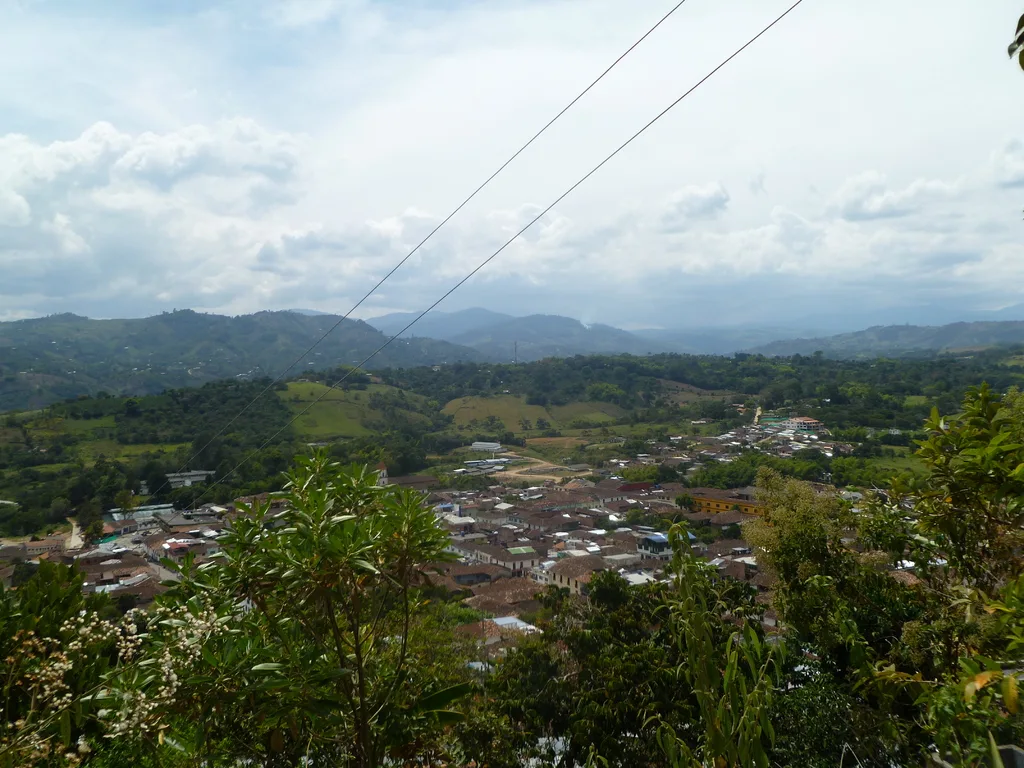
Monumental stone statues at the San Agustín Archaeological Park, Huila, Colombia

Wikimedia Commons

Record continentale

Oldest Necropolis in South America

NecropoliUNESCO

San Agustín

Seyfi Cem Baskin

1 d.C. – 900 d.C.

The largest collection of megalithic religious sculpture in South America — hundreds of monumental stone statues, some over four metres tall, depicting gods, warriors, and composite human-animal beings, carved by a culture whose name, language, and social structure remain almost entirely unknown. With no written records and no surviving descendants who can be linked with certainty to the sculptors, archaeologists refer to its makers simply as the San Agustín culture, one of the more genuine mysteries in South American archaeology.

212
Interesse 54

Posizione

Huila · Colombia

1.88°N · 76.27°W · America del Sud

Statuary

Several hundred monumental stone statues, some over 4 m tall

Period

c. 1st–9th century CE

Builders

Unknown — no writing, chronicle, or confirmed descendant tradition survives

Fuente de Lavapatas

Ceremonial water channels carved directly into bedrock

UNESCO

World Heritage Site 1995

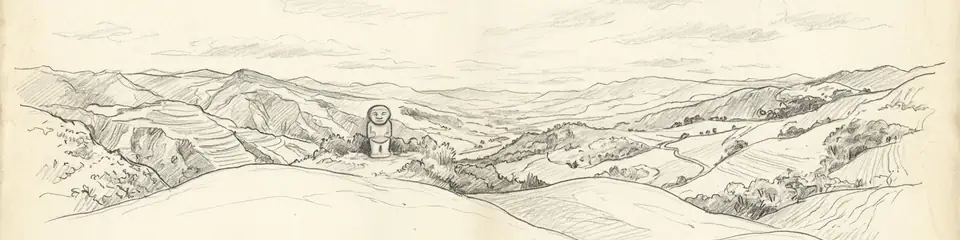
Graphite pencil sketch banner of San Agustín

San Agustín is one of the clearest reminders that even well-excavated, well-studied archaeological sites can preserve a genuine, unresolved mystery at their core.”

Posizione

Panoramica

San Agustín lies in the Colombian Andes, in the department of Huila, near the headwaters of the Magdalena River. Between roughly the 1st and 9th centuries CE, a society archaeologists know only as the San Agustín culture carved several hundred monumental statues from volcanic rock and arranged them across burial mounds, ceremonial terraces, and funerary temples scattered over an area of several hundred square kilometres — the largest concentration of pre-Columbian megalithic sculpture anywhere on the continent.

The statues range from simple, blocky anthropomorphic forms to extraordinarily elaborate composite figures combining human and animal features — jaguars, eagles, frogs, and snakes recur frequently, often merged with human faces in ways that suggest shamanic transformation, a recurring theme in the iconography of many Andean and Amazonian cultures in which ritual specialists were believed to transform into powerful animal spirits. Many statues functioned explicitly as tomb guardians, carved to stand watch over the burial chambers and sarcophagi of important individuals within artificial mounds; others appear to have stood at ceremonial sites without an obviously associated burial.

The most striking single feature at the site is the "Fuente de Lavapatas," a ceremonial stream bed carved directly into the bedrock with an intricate network of channels, pools, and sculpted serpent and lizard figures, through which water was directed to flow over and around the carved forms — interpreted as a ritual bathing or purification site, its precise function still debated. Nearby, the Alto de los Ídolos and Alto de las Piedras sectors preserve additional major statue groupings and burial mound complexes.

Despite more than a century of archaeological attention beginning with 18th-century Spanish colonial reports and intensifying with 20th-century excavation, remarkably little is confirmed about who built San Agustín. No writing system associated with the culture has been identified, no historical chronicle names them, and the site had already been abandoned for centuries by the time Spanish colonisers arrived in the region, meaning there was no living oral tradition to record for later ethnographers, unlike many other indigenous South American cultures. The reasons for the culture's decline and disappearance sometime after the 9th century CE remain unknown, with proposed explanations ranging from environmental change to social collapse, none conclusively established. San Agustín was inscribed as a UNESCO World Heritage Site in 1995.

Perché è importante

San Agustín is one of the clearest reminders that even well-excavated, well-studied archaeological sites can preserve a genuine, unresolved mystery at their core. Unlike most major archaeological sites, where at least the broad cultural identity of the builders is established through writing, oral tradition, or clear continuity with known descendant peoples, San Agustín's makers remain essentially anonymous — a rare case where the "who" of a major monumental culture is still an open scientific question rather than settled background information. The scale and technical sophistication of the statuary — carved from hard volcanic rock without metal tools, some pieces weighing several tonnes and transported non-trivial distances to their final locations — demonstrates a level of social organisation, specialised craft labour, and religious investment comparable to much better-known contemporary societies elsewhere in the Americas, despite leaving no textual record of its own history. The recurring jaguar-human and other animal-human composite imagery links San Agustín to a much broader pattern of shamanic transformation iconography found across many independent pre-Columbian cultures from Mesoamerica through the Andes and Amazon, offering comparative researchers a valuable, if still only partially understood, data point in the study of ancient South American religious cosmology.

Evidenze e interpretazione

Distinguere ciò che è ben consolidato da ciò che rimane dibattuto.

Fatti ben consolidati

2
  • Radiocarbon dating of organic material associated with burial mounds and statuary places the main period of monument construction between approximately the 1st and 9th centuries CE.
  • Excavation has confirmed that many statues functioned as tomb guardians, standing in direct association with sarcophagi and burial chambers within artificial mounds.

Deduzioni accademiche

1
  • The recurring jaguar, eagle, and serpent motifs merged with human forms are widely interpreted as representing shamanic transformation, based on comparison with better-documented shamanic iconographic traditions elsewhere in South America, rather than any direct textual confirmation from the San Agustín culture itself.

Interpretazioni dibattute

2
  • The cultural, linguistic, and ethnic identity of the San Agustín culture's builders remains unresolved; no writing system, historical chronicle, or securely established descendant oral tradition has been identified to confirm who they were.
  • The cause of the culture's decline and eventual abandonment of the site sometime after the 9th century CE is not established, with environmental and social explanations both proposed but unconfirmed.

Scoperta e scavo

1757

Early colonial documentation

Spanish Franciscan friar Juan de Santa Gertrudis produces the first written European account of the San Agustín statues.

1913

Konrad Theodor Preuss expedition

First systematic archaeological documentation and excavation of the statuary and mounds by the German ethnologist.

1943–1966

Luis Duque Gómez excavations

Extensive Colombian-led excavation programme establishing the modern chronological and typological framework for San Agustín sculpture.

Foto della comunità

Condividi la tua esperienza

Hai visitato questo sito? Carica le tue foto per aiutare gli altri a scoprirlo.

Come citare questa pagina

Atlas Anatolia. (1). San Agustín. Atlas Anatolia. https://atlasanatolia.com/it/site/san-agustin

Contenuto con licenza CC BY-SA 4.0 — è richiesta l'attribuzione in caso di riutilizzo.

Fonti

  • San Agustín: Reseña ArqueológicaDuque Gómez, Luis (1966)
  • Chiefdoms in Northern South AmericaDrennan, Robert D. (1995)
  • UNESCO — San Agustín Archaeological ParkCollegamento

Domande frequenti

Dove si trova San Agustín?

San Agustín si trova in Huila, Colombia.

A quando risale San Agustín?

San Agustín risale all'incirca al 1 d.C. – 900 d.C..

Quali civiltà sono associate a San Agustín?

San Agustín è associato alla civiltà San Agustín Culture.

Perché San Agustín è importante?

San Agustín is one of the clearest reminders that even well-excavated, well-studied archaeological sites can preserve a genuine, unresolved mystery at their core.

San Agustín è un sito Patrimonio Mondiale dell'UNESCO?

Sì — San Agustín è iscritto nella lista del Patrimonio Mondiale dell'UNESCO.