
सामग्री पर जाएँ
Atlas Anatolia
समाचारसुलावेसी में हिमयुगीन दाँतों से सुपारी के उपयोग का प्रमाण 25,000 वर्ष पुरानापोम्पेइओपोलिस, कस्तमोनू के बेसिलिका में रोमन मोज़ेक और इरोस का सिर मिला
Waterfront façade of Dolmabahçe Palace on the Bosphorus, Istanbul

Wikimedia Commons (CC BY-SA 4.0)

Country Record

Longest Recorded History in Turkey

धरोहरभवन परिसरविशेष रुप से प्रदर्शित

Dolmabahçe Palace

Seyfi Cem Baskin

Dolmabahçe Sarayı1843 ईस्वी – 1938 ईस्वी

The 19th-century Ottoman palace on the Istanbul Bosphorus — 285 rooms, crystal staircase, and the deathbed of Atatürk — draws heavy Turkish Wikipedia traffic and completes the city's Ottoman palace story beside [Topkapı](/site/topkapi-palace).

21
रुचि 71

Built

1843–1856 under Abdülmecid I

Architects

Garabet and Nigoğayos Balyan (Armenian-Ottoman)

Rooms

285; waterfront length ~600 m

Atatürk

Died here 10 November 1938; room preserved

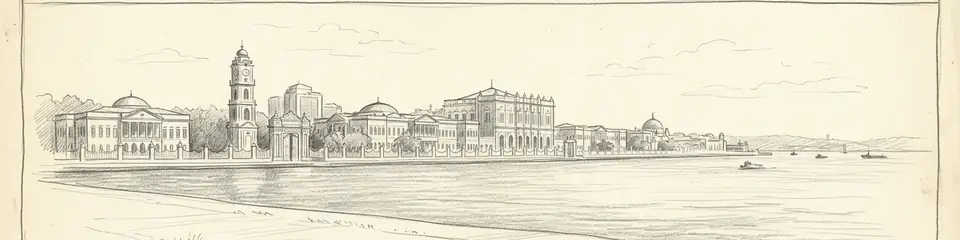
Graphite pencil sketch banner of Dolmabahçe Palace

“Dolmabahçe marks the Ottoman Empire's 19th-century pivot toward European court culture — Bosphorus façade, crystal, and ceremonial scale replacing Topkapı's secluded courtyards.”

स्थान

अवलोकन

Dolmabahçe Palace stands on the European shore of the Bosphorus in Beşiktaş, Istanbul, where the Ottoman sultans moved after centuries at the Topkapı complex. Sultan Abdülmecid I ordered construction in 1843; architects Garabet and Nigoğayos Balyan delivered a hybrid of Ottoman tradition and European Baroque/neoclassical forms along a 600-metre waterfront façade.

The Ceremonial Hall (Muayede Salonu) holds one of the world's largest Bohemian crystal chandeliers — a gift from Queen Victoria. The crystal staircase in the Ambarlı Hall shows Balyan iron-and-glass skill. Abdülhamid II preferred Yıldız Palace, but later sultans returned; Mustafa Kemal Atatürk died here on 10 November 1938 — his room is preserved.

The palace opened as a museum in 1952 while remaining symbolically charged for the Turkish Republic. It is not a UNESCO site but dominates domestic heritage tourism and TR-language search alongside Sultanahmet monuments.

यह क्यों महत्वपूर्ण है

Dolmabahçe marks the Ottoman Empire's 19th-century pivot toward European court culture — Bosphorus façade, crystal, and ceremonial scale replacing Topkapı's secluded courtyards. Atatürk's death chamber links imperial decay to republican founding in one building, explaining its outsized Turkish search volume.

साक्ष्य और व्याख्या

जो सुस्थापित है और जो विवादास्पद है, उनमें अंतर करना।

सुस्थापित तथ्य

2
  • Imperial decrees and Balyan family archives document construction costs and European material imports.
  • Republican records preserve Atatürk's death in the palace and subsequent museum conversion.

विद्वानों के अनुमान

1
  • Move from Topkapı reflects 19th-century diplomatic need for European-style state rooms — inferred from reform-era policy.

समुदाय तस्वीरें

अपना अनुभव साझा करें

क्या आपने इस स्थल का दौरा किया है? दूसरों को इसे खोजने में मदद करने के लिए अपनी तस्वीरें अपलोड करें।

इस पृष्ठ को कैसे उद्धृत करें

Atlas Anatolia. (1843). Dolmabahçe Palace. Atlas Anatolia. https://atlasanatolia.com/hi/site/dolmabahce-palace

सामग्री CC BY-SA 4.0 के अंतर्गत लाइसेंस प्राप्त है — पुनः उपयोग करते समय श्रेय देना आवश्यक है।

स्रोत

  • A History of Ottoman Architecture — Goodwin, Godfrey (1971)
  • Turkish National Palaces — Dolmabahçeलिंक

अक्सर पूछे जाने वाले प्रश्न

Dolmabahçe Palace कहाँ स्थित है?

Dolmabahçe Palace, Turkey में स्थित है।

Dolmabahçe Palace कितना पुराना है?

Dolmabahçe Palace लगभग 1843 ईस्वी – 1938 ईस्वी काल का है।

Dolmabahçe Palace किन सभ्यताओं से जुड़ा है?

Dolmabahçe Palace, Ottoman सभ्यता से संबंधित है।

Dolmabahçe Palace क्यों महत्वपूर्ण है?

Dolmabahçe marks the Ottoman Empire's 19th-century pivot toward European court culture — Bosphorus façade, crystal, and ceremonial scale replacing Topkapı's secluded courtyards.

क्या Dolmabahçe Palace एक यूनेस्को विश्व धरोहर स्थल है?

Dolmabahçe Palace वर्तमान में यूनेस्को विश्व धरोहर सूची में शामिल नहीं है।