
تخط إلى المحتوى
Atlas Anatolia
أخبارأسنان من العصر الجليدي في سولاويزي تدفع استخدام التنبول إلى ما يصل إلى 25,000 عاماكتشاف فسيفساء رومانية ورأس إيروس في بازيليكا بومبيوبوليس، كاستامونو
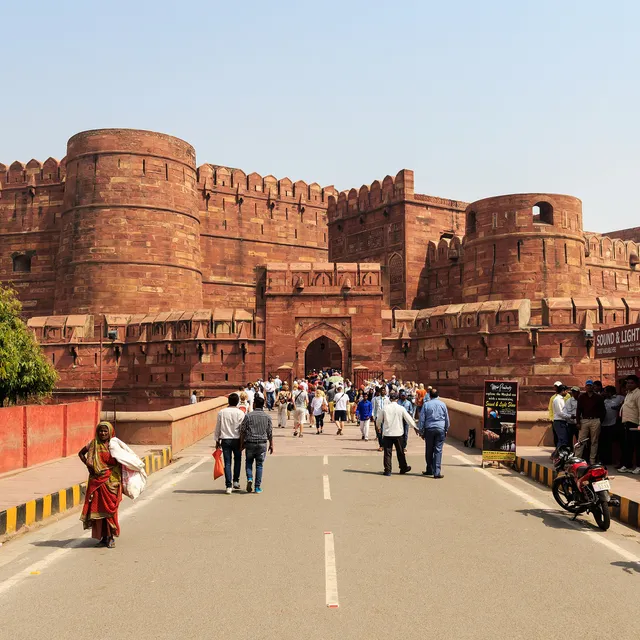
Red sandstone walls and gates of Agra Fort, India

Wikimedia Commons

Country Record

Oldest Fortress in India

تراثقلعةاليونسكومميز

Agra Fort

Seyfi Cem Baskin

आगरा किला1565 م – 1857 م

The massive red-sandstone fortress on the Yamuna at Agra — seat of Akbar, Jahangir, and Shah Jahan before the Mughal court moved to Delhi — whose palaces and mosques face the Taj Mahal across the river and draw millions of visitors on India's Golden Triangle circuit.

21
اهتمام 75

Built

Major phase c. 1565–1573 CE under Akbar; later marble works by Shah Jahan

Material

Red sandstone with white marble imperial apartments

View

Musamman Burj overlooks the Taj Mahal across the Yamuna

UNESCO

World Heritage Site (1983)

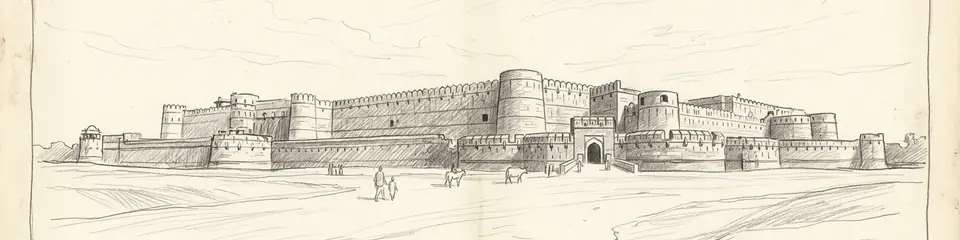
Graphite pencil sketch banner of Agra Fort

“Agra Fort is the military and residential counterpart to the Taj Mahal — together they document Mughal power, aesthetics, and riverine urban planning at its peak.”

الموقع

نظرة عامة

Agra Fort (Lal Qila) rises on the right bank of the Yamuna River in Agra, Uttar Pradesh, forming a crescent-shaped walled complex roughly 2.5 kilometres in circumference. Akbar the Great ordered its reconstruction in red sandstone beginning about 1565 on the site of an earlier fort; successive emperors added marble palaces, audience halls, and gardens. Shah Jahan's white-marble Musamman Burj tower — where he was imprisoned by Aurangzeb — offers the famous view toward the Taj Mahal.

The fort combines military architecture (double ramparts, moat, angled bastions) with refined residential courts: the Jahangir Mahal, Khas Mahal, Diwan-i-Am, and Diwan-i-Khas. Pietra dura, carved brackets, and inlaid marble reflect the same workshops that later built the Taj. After the Mughal decline the fort passed through Maratha and British control; much of the interior was adapted for barracks and administration.

The Archaeological Survey of India now manages the monument. UNESCO listed Agra Fort in 1983 alongside the Taj Mahal as a defining Mughal ensemble of the Yamuna corridor.

لماذا يهم

Agra Fort is the military and residential counterpart to the Taj Mahal — together they document Mughal power, aesthetics, and riverine urban planning at its peak. Its continuous occupation from the 16th century preserves one of the largest and best-studied Islamic fort-palaces in South Asia.

الأدلة والتفسير

التمييز بين ما هو راسخ وما لا يزال موضع نقاش.

حقائق راسخة

2
  • Mughal court chronicles and inscriptions attribute the Akbar-period rebuilding and Shah Jahan marble additions to documented imperial workshops.
  • Architectural analysis confirms Timurid–Mughal vaulting, jali screens, and pietra dura consistent with 16th–17th-century imperial ateliers.

استنتاجات علمية

1
  • The fort's riverfront orientation was intended to integrate Yamuna transport and garden-tomb axes linking Agra's palatial and funerary landscapes.

صور المجتمع

شارك تجربتك

هل قمت بزيارة هذا الموقع؟ ارفع صورك لمساعدة الآخرين في اكتشافه.

كيفية الاستشهاد بهذه الصفحة

Atlas Anatolia. (1565). Agra Fort. Atlas Anatolia. https://atlasanatolia.com/ar/site/agra-fort

المحتوى مرخّص بموجب CC BY-SA 4.0 — يجب ذكر المصدر عند إعادة الاستخدام.

المصادر

  • Mughal Architecture — Koch, Ebba (1991)
  • UNESCO — Agra Fortرابط

الأسئلة الشائعة

أين يقع Agra Fort؟

يقع Agra Fort في India.

كم يبلغ عمر Agra Fort؟

يعود تاريخ Agra Fort إلى حوالي 1565 م – 1857 م.

ما هي الحضارات المرتبطة بـ Agra Fort؟

يرتبط Agra Fort بحضارة Mughal.

لماذا يعتبر Agra Fort مهماً؟

Agra Fort is the military and residential counterpart to the Taj Mahal — together they document Mughal power, aesthetics, and riverine urban planning at its peak.

هل Agra Fort موقع تراث عالمي لليونسكو؟

نعم — Agra Fort مدرج في قائمة التراث العالمي لليونسكو.