
Pular para o conteúdo
Atlas Anatolia
NotíciasIce Age teeth in Sulawesi push betel-nut use back as far as 25,000 yearsRoman mosaic and Eros head uncovered in the basilica at Pompeiopolis, Kastamonu
The Gothic west front of Westminster Abbey, London

Wikimedia Commons (CC BY-SA 4.0)

Country Record

Oldest Monument in United Kingdom

PatrimônioMonumentoUNESCODestaque

Westminster Abbey

Seyfi Cem Baskin

1245 d.C. – 2023 d.C.

The coronation church beside the Palace of Westminster — Gothic nave, Poets' Corner, and royal tombs from Edward the Confessor to Elizabeth II — among the highest combined pageviews of any UK monument in our EN/DE/TR/ZH audit.

21
Interesse 87

Localização

Reino Unido

51.50°N · 0.13°W · Europa

Gothic rebuild

Henry III from 1245; choir and transepts 13th century

Coronations

Every English/British monarch since 1066 (except two)

Poets' Corner

Burials and memorials from Chaucer onward

UNESCO

Palace of Westminster and Westminster Abbey (1987)

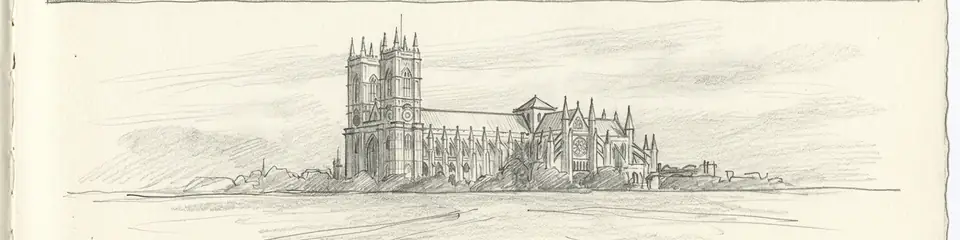
Graphite pencil sketch banner of Westminster Abbey

“Westminster Abbey is where English monarchy is sacramentally renewed — coronation liturgy, royal burials, and national memory in one Gothic fabric.”

Localização

Visão geral

Westminster Abbey stands on Thorney Island by the River Thames in the City of Westminster, London. A monastery existed from the 10th century; Edward the Confessor rebuilt it in Romanesque style (consecrated 1065). Henry III began the present Gothic abbey in 1245, creating one of England's finest French-inspired interiors with soaring choir, triforium, and nave completed over centuries.

British coronations have taken place here since William the Conqueror (1066). The abbey is a royal peculiar outside diocesan control. Poets' Corner memorialises writers from Chaucer to Ted Hughes; scientists including Newton and Darwin lie buried or commemorated. Recent royal weddings and funerals keep the church in global news cycles.

The adjacent Westminster Palace (Houses of Parliament) and St Margaret's Church share the UNESCO World Heritage Site "Palace of Westminster and Westminster Abbey" (1987). The 2020s restoration of the exterior continues conservation of soft Caen stone.

Por que isso importa

Westminster Abbey is where English monarchy is sacramentally renewed — coronation liturgy, royal burials, and national memory in one Gothic fabric. Its Poets' Corner and scientist graves make it a pilgrimage site for literature and science as much as for crown and church.

Evidências e interpretação

Distinguir o que está bem estabelecido do que permanece em debate.

Fatos bem estabelecidos

2
  • Coronation orders, royal tombs, and building accounts document Gothic phases and liturgical use.
  • Edward the Confessor's shrine and later royal burials excavated and recorded across centuries.

Inferências acadêmicas

1
  • Henry III's French-inspired design reflects post-1226 Capetian court contacts — inferred from patronage networks.

Fotos da comunidade

Compartilhe sua experiência

Você visitou este sítio? Envie suas fotos para ajudar outros a descobri-lo.

Como citar esta página

Atlas Anatolia. (1245). Westminster Abbey. Atlas Anatolia. https://atlasanatolia.com/pt/site/westminster-abbey

Conteúdo licenciado sob CC BY-SA 4.0 — atribuição necessária ao reutilizar.

Fontes

  • Westminster Abbey — Mortimer, Richard (2010)
  • UNESCO — Palace of Westminster and Westminster AbbeyLink

Perguntas frequentes

Onde fica Westminster Abbey?

Westminster Abbey está localizado em United Kingdom.

Qual é a antiguidade de Westminster Abbey?

Westminster Abbey data de aproximadamente 1245 d.C. – 2023 d.C..

Quais civilizações estão associadas a Westminster Abbey?

Westminster Abbey está associado à civilização British.

Por que Westminster Abbey é importante?

Westminster Abbey is where English monarchy is sacramentally renewed — coronation liturgy, royal burials, and national memory in one Gothic fabric.

Westminster Abbey é um Patrimônio Mundial da UNESCO?

Sim — Westminster Abbey está inscrito na Lista do Patrimônio Mundial da UNESCO.