
Pular para o conteúdo
Atlas Anatolia
NotíciasIce Age teeth in Sulawesi push betel-nut use back as far as 25,000 yearsRoman mosaic and Eros head uncovered in the basilica at Pompeiopolis, Kastamonu
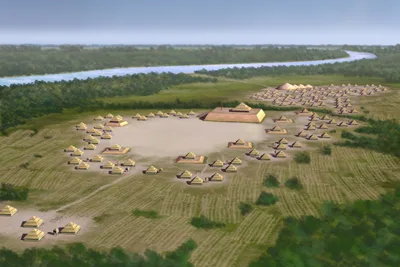
Craig Mound at Spiro Mounds Archaeological Center, LeFlore County, Oklahoma

Wikimedia Commons

Country Record

Oldest Complex in United States

Complexo

Spiro Mounds

Seyfi Cem Baskin

800 d.C. – 1450 d.C.

A major ceremonial and trade centre of the Caddoan Mississippian world, built along the Arkansas River in what is now eastern Oklahoma between roughly 800 and 1450 CE. Its Craig Mound yielded one of the most extraordinary archaeological caches in North America — thousands of finely worked shell, copper, textile, and wood artefacts preserved in near-perfect condition by a rare set of internal environmental conditions, offering an unmatched window into the art and long-distance trade networks of the Mississippian world.

311
Interesse 51

Localização

LeFlore County · Oklahoma · United States

35.28°N · 94.63°W · América do Norte

Peak

c. 1200–1450 CE — major Caddoan Mississippian ceremonial and trade centre

Mounds

12 mounds around a central plaza; Craig Mound is the largest

Great Mortuary

Unique preservation conditions inside Craig Mound saved rare organic artefacts

Trade

Gulf Coast marine shell and Great Lakes copper confirm long-distance exchange networks

1930s looting

"Pocola Mining Company" caused major, irreversible loss before salvage excavation began in 1936

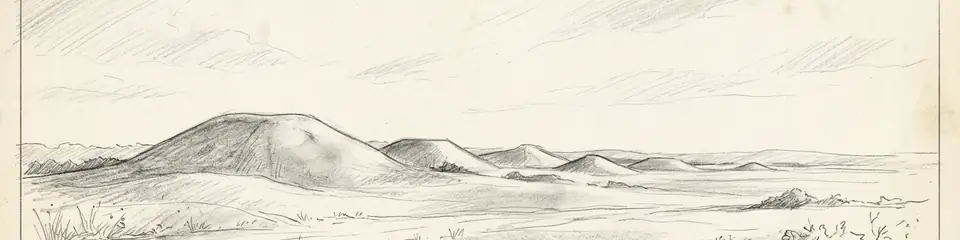
Graphite pencil sketch banner of Spiro Mounds

“The Craig Mound "Great Mortuary" is one of the only places in North American archaeology where organic materials — cloth, basketry, feathers, worked wood — survive from the Mississippian period in significant quantity, because such materials almost universally decompose within a few centuries under normal burial conditions.”

Localização

Visão geral

Spiro Mounds sits on a bluff above the Arkansas River in what is now LeFlore County, Oklahoma, at the western edge of the broader Mississippian cultural world that stretched across much of the eastern and southeastern United States. Occupied from around 800 CE, the site grew into a major ceremonial, political, and trade centre for Caddoan-speaking peoples, reaching its peak of construction and influence between approximately 1200 and 1450 CE.

The site comprises twelve mounds arranged around a central plaza, serving a range of functions including elite residences, temples, and burials — a layout characteristic of major Mississippian ceremonial centres elsewhere, such as Cahokia, though Spiro developed its own distinctive regional artistic and religious tradition, often described by archaeologists as part of the wider Southeastern Ceremonial Complex, a shared iconographic and ritual system linking Mississippian centres across a huge geographic area through common symbols, motifs, and probably shared beliefs.

Spiro's global archaeological significance rests overwhelmingly on Craig Mound, the largest and most complex mound at the site, and specifically on a chamber within it that came to be known as the "Great Mortuary." When looters began digging into the mound in the 1930s — during the Great Depression, when a group of local men formed the "Pocola Mining Company" specifically to excavate and sell artefacts — they discovered an internal wooden-log-lined chamber whose unusual construction had created unintentional but remarkably effective environmental conditions: a stable temperature and humidity that preserved organic materials — woven textiles, worked wood, basketry, and feather objects — that almost never survive in the archaeological record anywhere in North America, alongside spectacular worked shell engravings, copper repoussé plates, and stone effigy pipes.

The looting caused catastrophic and irreversible loss of archaeological context before the University of Oklahoma and the Works Progress Administration intervened with salvage excavations from 1936, working to document and recover what remained. Despite the damage, the surviving corpus of Spiro material — much of it now held by the Smithsonian Institution, the University of Oklahoma, and other institutions — remains one of the richest bodies of Mississippian-era art and material culture ever recovered, and the shell engravings in particular preserve detailed depictions of costume, weaponry, and ritual regalia that have become central reference material for understanding Southeastern Ceremonial Complex iconography across the entire Mississippian world.

Analysis of raw materials found at Spiro — marine shell from the Gulf of Mexico, copper likely from the Great Lakes region, and other non-local minerals — confirms the site functioned as a hub within extensive North American trade networks reaching well beyond the immediate region. Spiro was largely abandoned by around 1450 CE, for reasons that remain unclear, predating sustained European contact with the region by more than a century. The site is now protected as the Spiro Mounds Archaeological Center, operated by the Oklahoma Historical Society.

Por que isso importa

The Craig Mound "Great Mortuary" is one of the only places in North American archaeology where organic materials — cloth, basketry, feathers, worked wood — survive from the Mississippian period in significant quantity, because such materials almost universally decompose within a few centuries under normal burial conditions. This accidental preservation gives researchers direct physical evidence for artistic and craft traditions that, at most other Mississippian sites, can only be inferred indirectly from stone, shell, or ceramic remains. Spiro's engraved shell corpus has become one of the primary reference collections for reconstructing the Southeastern Ceremonial Complex, the shared symbolic and religious system that linked Mississippian centres across a vast area of North America — meaning that understanding of Mississippian religion and iconography well beyond Spiro itself depends significantly on material excavated at this one site. The 1930s looting of Craig Mound also stands as a frequently cited cautionary case in the history of American archaeology and heritage law, illustrating the scale of scientific and cultural loss caused by unregulated digging for saleable artefacts, and contributing to the broader development of legal protections for archaeological sites on U.S. land in the decades that followed.

Evidências e interpretação

Distinguir o que está bem estabelecido do que permanece em debate.

Fatos bem estabelecidos

3
  • Compositional analysis of shell and copper artefacts recovered at Spiro traces their raw material sources to the Gulf of Mexico and the Great Lakes region respectively, confirming the site's role in long-distance North American trade networks.
  • The unusual log-chamber construction within Craig Mound created internal conditions that preserved organic materials — textiles, wood, basketry, feather work — that do not typically survive elsewhere in the Mississippian archaeological record.
  • University of Oklahoma and Works Progress Administration salvage excavations, beginning in 1936, documented the site's stratigraphy and recovered surviving material following the earlier commercial looting.

Inferências acadêmicas

1
  • Spiro's iconography is understood as part of the broader Southeastern Ceremonial Complex shared across Mississippian centres based on comparative motif analysis, though the specific religious meanings encoded in individual engraved designs are not independently confirmed by any surviving textual source.

Interpretações debatidas

1
  • The reasons for Spiro's abandonment by around 1450 CE are not established, with proposed explanations including environmental change, resource depletion, and shifting regional trade or political dynamics.

Descoberta e escavação

1933–1935

Pocola Mining Company looting

Commercially motivated digging by local investors caused severe, irreversible damage to Craig Mound's archaeological context ahead of formal study.

1936–1941

University of Oklahoma / WPA salvage excavation

Formal archaeological salvage effort documenting the site and recovering surviving material following the earlier looting.

Fotos da comunidade

Compartilhe sua experiência

Você visitou este sítio? Envie suas fotos para ajudar outros a descobri-lo.

Como citar esta página

Atlas Anatolia. (800). Spiro Mounds. Atlas Anatolia. https://atlasanatolia.com/pt/site/spiro-mounds

Conteúdo licenciado sob CC BY-SA 4.0 — atribuição necessária ao reutilizar.

Fontes

  • The Spiro Ceremonial Center: The Archaeology of Arkansas Valley Caddoan Culture — Brown, James A. (1996)
  • Spiro and Its Central Mississippi Valley Contemporaries — Brown, James A. and Kelley, David (2000)
  • Oklahoma Historical Society — Spiro MoundsLink

Perguntas frequentes

Onde fica Spiro Mounds?

Spiro Mounds está localizado em LeFlore County, Oklahoma, United States.

Qual é a antiguidade de Spiro Mounds?

Spiro Mounds data de aproximadamente 800 d.C. – 1450 d.C..

Quais civilizações estão associadas a Spiro Mounds?

Spiro Mounds está associado à civilização Mississippian.

Por que Spiro Mounds é importante?

The Craig Mound "Great Mortuary" is one of the only places in North American archaeology where organic materials — cloth, basketry, feathers, worked wood — survive from the Mississippian period in significant quantity, because such materials almost universally decompose within a few centuries under normal burial conditions.

Spiro Mounds é um Patrimônio Mundial da UNESCO?

Spiro Mounds não está atualmente inscrito na Lista do Patrimônio Mundial da UNESCO.