
Pular para o conteúdo
Atlas Anatolia
NotíciasIce Age teeth in Sulawesi push betel-nut use back as far as 25,000 yearsRoman mosaic and Eros head uncovered in the basilica at Pompeiopolis, Kastamonu
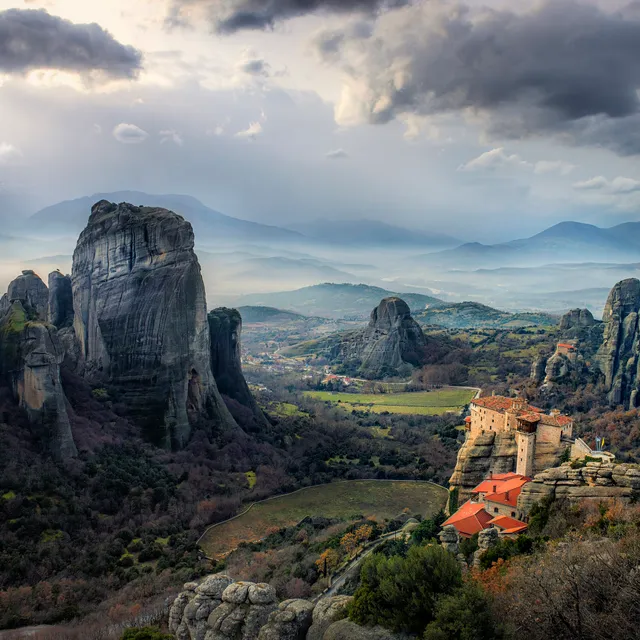
Byzantine monasteries perched on rock pillars at Meteora, Greece

Wikimedia Commons

SantuárioUNESCO

Meteora

Seyfi Cem Baskin

Μετέωρα1100 d.C. – 1900 d.C.

A forest of sandstone pinnacles in Thessaly, Greece — crowned by Byzantine and post-Byzantine monasteries reached by stairs and bridges — among the most dramatic religious landscapes in Europe and a UNESCO site drawing millions of visitors and pilgrims.

21
Interesse 77

Localização

Grécia

39.72°N · 21.63°E · Europa

Geology

Sandstone pinnacles formed by weathering of Thessaly plateau

Monasteries

6 active of 24 historical foundations

Great Meteoron

Founded c. 1340 by Athanasios of Meteora

UNESCO

World Heritage Site (1988)

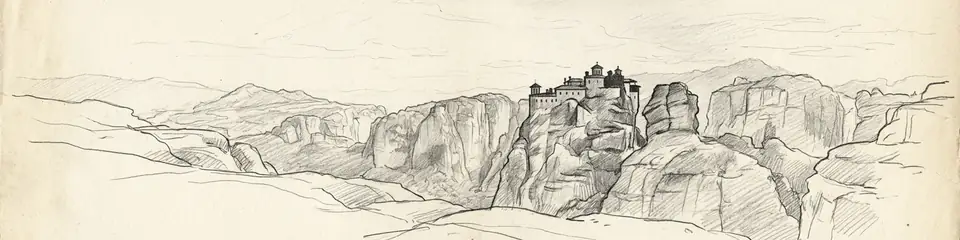
Graphite pencil sketch banner of Meteora

“Meteora is the extreme case of Byzantine monastic adaptation to inaccessible terrain — architecture as spiritual withdrawal elevated literally above the plain.”

Localização

Visão geral

Meteora ("suspended in the air") names a group of immense sandstone pillars and cliffs in central Thessaly, Greece, near the town of Kalabaka (Kalambaka). Hermits occupied caves in the rocks from at least the 11th century; organized monastic communities developed in the 14th century as Athonite monks fled political instability. The Great Meteoron Monastery (Megalo Meteoro), founded by Athanasios of Meteora around 1340, set the model for later foundations.

At the peak of the monastic community in the 16th century, 24 monasteries clung to the pinnacles; six remain active today — Great Meteoron, Varlaam, Rousanou, St. Nicholas Anapausas, St. Stephen, and Holy Trinity — linked by steps, bridges, and (since the 20th century) roads. Fresco cycles inside the katholikon churches preserve post-Byzantine painting of high quality.

UNESCO inscribed Meteora in 1988. The site combines geological wonder with living Orthodox monasticism and appears frequently in travel media as one of Greece's most iconic landscapes outside Athens.
Por que isso importa

Meteora is the extreme case of Byzantine monastic adaptation to inaccessible terrain — architecture as spiritual withdrawal elevated literally above the plain. Its frescoes and manuscript traditions connect the Athonite world to mainland Greece during Ottoman rule.

Evidências e interpretação

Distinguir o que está bem estabelecido do que permanece em debate.

Fatos bem estabelecidos

2
  • Foundation charters, donor inscriptions, and fresco dates document 14th–16th-century monastic building phases.
  • Geological survey confirms pillar formation by erosion of the Thessaly basin sediments after tectonic uplift.

Inferências acadêmicas

1
  • Hermit occupation before organized monasteries is attested in hagiography; archaeological evidence in caves is sparse but consistent.

Fotos da comunidade

Compartilhe sua experiência

Você visitou este sítio? Envie suas fotos para ajudar outros a descobri-lo.

Histórias relacionadas

Como citar esta página

Atlas Anatolia. (1100). Meteora. Atlas Anatolia. https://atlasanatolia.com/pt/site/meteora

Conteúdo licenciado sob CC BY-SA 4.0 — atribuição necessária ao reutilizar.

Gráfico

Conexões com sítios e histórias relacionados.

Fontes

  • The Meteora Monasteries — Nichols, Richard (2000)
  • UNESCO — MeteoraLink

Perguntas frequentes

Onde fica Meteora?

Meteora está localizado em Greece.

Qual é a antiguidade de Meteora?

Meteora data de aproximadamente 1100 d.C. – 1900 d.C..

Quais civilizações estão associadas a Meteora?

Meteora está associado à civilização Greek, Byzantine.

Por que Meteora é importante?

Meteora is the extreme case of Byzantine monastic adaptation to inaccessible terrain — architecture as spiritual withdrawal elevated literally above the plain.

Meteora é um Patrimônio Mundial da UNESCO?

Sim — Meteora está inscrito na Lista do Patrimônio Mundial da UNESCO.