
सामग्री पर जाएँ
Atlas Anatolia
समाचारसुलावेसी में हिमयुगीन दाँतों से सुपारी के उपयोग का प्रमाण 25,000 वर्ष पुरानापोम्पेइओपोलिस, कस्तमोनू के बेसिलिका में रोमन मोज़ेक और इरोस का सिर मिला
Brunelleschi's dome and marble façade of Florence Cathedral

Wikimedia Commons (CC BY-SA 4.0)

धरोहरस्मारकयूनेस्कोविशेष रुप से प्रदर्शित

Florence Cathedral

Seyfi Cem Baskin

Cattedrale di Santa Maria del Fiore1296 ईस्वी – 1436 ईस्वी

Filippo Brunelleschi's red-tiled dome over Florence's Gothic cathedral — still the largest masonry dome ever built — anchors the Tuscan skyline and ranks among the most searched Renaissance monuments in EN/DE/TR/ZH pageviews.

Dome

Brunelleschi, 1420–1436; largest masonry dome

Span

Octagonal crossing ~42 m

Façade

Gothic basilica; 19th-c. marble front completed

UNESCO

Historic Centre of Florence (1982)

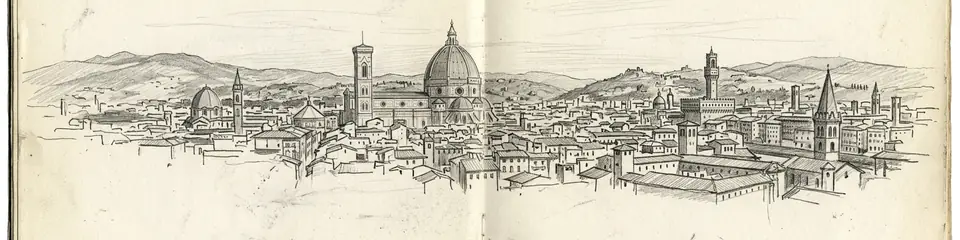
Graphite pencil sketch banner of Florence Cathedral

“The Duomo dome is Brunelleschi's proof that Renaissance engineers could surpass antiquity without Gothic buttresses — a turning point in architectural history.”

स्थान

अवलोकन

Florence Cathedral (Santa Maria del Fiore) dominates the Piazza del Duomo in Florence, Tuscany. Arnolfo di Cambio began the Gothic basilica in 1296; the polychrome marble façade (green, white, pink) was completed in the 19th century in historicising style. The great challenge was roofing the octagonal crossing — 42 metres across — without buttresses.

Filippo Brunelleschi won the commission (1418) and built a double-shell dome between 1420 and 1436 using herringbone brick courses and horizontal chains, inventing lifting machines documented in his notebooks. Giorgio Vasari and Federico Zuccari frescoed the interior of the drum with the Last Judgment (1572–79). Giotto's campanile stands beside the church; the Baptistery opposite with its bronze doors (including Ghiberti's "Gates of Paradise") predates the cathedral.

UNESCO lists the Historic Centre of Florence (1982). Climbing between Brunelleschi's dome shells remains a defining Florence experience. Pair with the Leaning Tower of Pisa for Tuscan Romanesque–Renaissance contrasts.

यह क्यों महत्वपूर्ण है

The Duomo dome is Brunelleschi's proof that Renaissance engineers could surpass antiquity without Gothic buttresses — a turning point in architectural history. Florence Cathedral's marble ensemble defines the visual identity of the Italian Renaissance city-state at peak cultural power.

साक्ष्य और व्याख्या

जो सुस्थापित है और जो विवादास्पद है, उनमें अंतर करना।

सुस्थापित तथ्य

2
  • Brunelleschi's contracts, hoist patents, and brick herringbone courses documented in Florentine archives.
  • Structural analysis confirms double-shell dome with horizontal tension chains.

विद्वानों के अनुमान

1
  • Brunelleschi studied Roman Pantheon and ruins — inferred from notebooks and Renaissance historiography.

समुदाय तस्वीरें

अपना अनुभव साझा करें

क्या आपने इस स्थल का दौरा किया है? दूसरों को इसे खोजने में मदद करने के लिए अपनी तस्वीरें अपलोड करें।

इस पृष्ठ को कैसे उद्धृत करें

Atlas Anatolia. (1296). Florence Cathedral. Atlas Anatolia. https://atlasanatolia.com/hi/site/florence-cathedral

सामग्री CC BY-SA 4.0 के अंतर्गत लाइसेंस प्राप्त है — पुनः उपयोग करते समय श्रेय देना आवश्यक है।

स्रोत

  • Brunelleschi's Dome — King, Ross (2000)
  • UNESCO — Historic Centre of Florenceलिंक

अक्सर पूछे जाने वाले प्रश्न

Florence Cathedral कहाँ स्थित है?

Florence Cathedral, Italy में स्थित है।

Florence Cathedral कितना पुराना है?

Florence Cathedral लगभग 1296 ईस्वी – 1436 ईस्वी काल का है।

Florence Cathedral किन सभ्यताओं से जुड़ा है?

Florence Cathedral, Renaissance Italian सभ्यता से संबंधित है।

Florence Cathedral क्यों महत्वपूर्ण है?

The Duomo dome is Brunelleschi's proof that Renaissance engineers could surpass antiquity without Gothic buttresses — a turning point in architectural history.

क्या Florence Cathedral एक यूनेस्को विश्व धरोहर स्थल है?

हाँ — Florence Cathedral यूनेस्को विश्व धरोहर स्थल के रूप में सूचीबद्ध है।